Phone:+86-15215969856 E-Mail: 396838165@qq.com

High-volume digital textile printing can lose material long before a rejected roll becomes visible. Reprints, unplanned cleaning, discarded paper, and transfer defects often begin with small mismatches between printer output, ink delivery, paper behavior, heat-transfer capacity, and the actual order target. Rather than treating waste as a paper-only cost, production teams need to examine the full textile printing workflow and the point where a repeatable process first becomes unstable.
Where Does Waste Actually Start in High-Volume Digital Textile Printing?
Setup, Test Runs and Changeover Losses
The scrap bin is a late indicator. Waste often starts while a job is being prepared: a new artwork repeat is loaded, a paper width is changed, a color adjustment is made, or a roll is threaded after a changeover. Each adjustment consumes paper and ink before the production team has confirmed whether the full combination can run steadily. A useful production record therefore separates setup meters, approved meters, and reprint meters instead of treating every printed meter as the same cost.
The important question is not whether a sample looks acceptable. It is whether the cause of any correction is known. If an operator increases ink density to compensate for a transfer issue, the line may create a second problem in drying or paper handling. Keeping the first correction visible stops a temporary workaround from becoming the default process.
Small Process Drift Across Long Production Runs
A five-meter sample can hide defects that become clear after hundreds of meters. Paper tracking may move gradually, drying time may shrink as output rises, and the transfer stage may no longer match the printer. In digital textile printing, the position of the defect matters: a fault that appears at the beginning, middle, or end of a roll points to a different investigation. That is more useful than immediately blaming a single consumable.
How Do Printer and Ink Decisions Create Hidden Waste?
Output Speed Versus Stable Production
High output is useful only when the next production stage can accept it without introducing delays or defects. A printer setting that outruns paper drying, winding, or heat transfer creates a queue of semi-finished material. The meters may be printed quickly, but they are not yet saleable. Printing efficiency should be measured as approved finished fabric per shift, not as the highest figure shown on one machine setting.
例えば 5198-8 sublimation printer is listed with an 1800 mm print dimension and CMYK configuration. Those are practical starting points for checking artwork width, paper width, and target output together. They are not a reason to assume every artwork, ink load, and transfer line should run at the same pace.

Ink Delivery, Printhead Fit and Repeatable Output
Ink-related loss is not limited to obvious nozzle failure. A change in fluency, a printhead mismatch, or a repeated cleaning cycle can raise ink consumption and create reprints before a visible fault becomes dramatic. The right response is to confirm the ink, printhead, RIP setting, and paper load as one operating combination, then run a controlled length before increasing output.
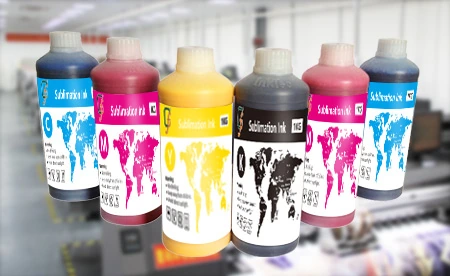
Changfa’s 1963年シリーズ昇華インク is specified for 5198-8 and 6198-8 machines and for Epson DX4, DX5, and DX7 printheads. Its listed characteristics include low viscosity, low ink consumption, good transfer performance, and printing stability. These details support a compatibility check, but a buyer should still qualify the actual printhead condition, image coverage, paper, and transfer process before using the result as a long-run standard.

Why Can Sublimation Paper Multiply Waste on Long Runs?
Paper GSM, Ink Load and Drying Behavior
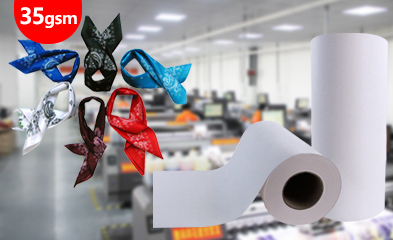
Paper is not simply a carrier between printer and heat press. Its weight, coating, ink load, and drying behavior affect whether the printed image can move through the line without offset, edge damage, or inconsistent release. Lower basis weight can reduce material use, but it must still remain stable for the printer, the image coverage, and the web path. The correct choice is the paper that controls the actual job, not the lightest specification in isolation.
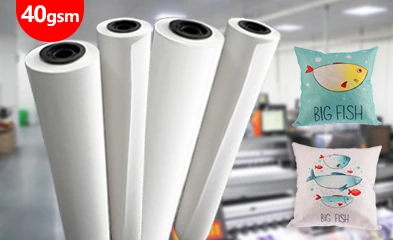
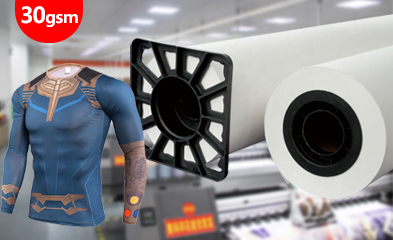
Changfa’s 40gsm昇華転送紙 is listed for disperse ink and polyester fabric in wide-format textile printing, with widths from 132 cm to 190 cm and 1000 m rolls. Its product specification describes a clean coating and fast drying for long runs. That makes it relevant when a team is checking whether paper width, ink load, and continuous feeding suit the planned order.

Roll Width, Feeding Stability and Usable Print Area
A roll can be technically wide enough and still create avoidable loss. If the printed area leaves too little allowance for tracking, trimming, or the artwork repeat, operators may repeatedly correct the web path or discard edge material. Measure usable print width, not nominal roll width, and compare it with the actual graphic width and the downstream transfer width.
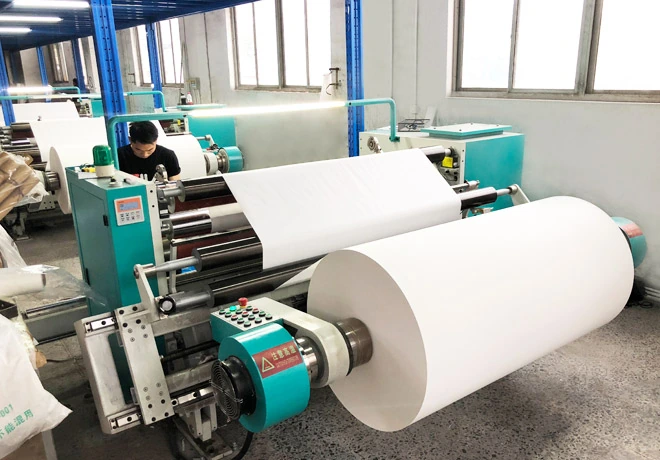
Changfa produces sublimation paper from base paper through coating and slitting. Its paper operation includes four coating lines, four slitting workshops, and 10 slitting machines for 2-inch and 3-inch cores. For buyers, that breadth is useful when a project needs to discuss roll width, core, coating, and packing requirements together rather than treating a paper roll as a generic replacement item.
Where Can Heat Transfer Turn a Good Print Into Scrap?
Printer Output Versus Heat-Transfer Capacity
A printed transfer roll is not a finished textile. If the transfer stage lacks the width, speed, pressure, or feed control required by the printed output, the value already created upstream remains at risk. Compare the printer’s finished-width demand with the heat-transfer machine’s effective width and practical running range before deciding daily capacity. This comparison should be made with the actual fabric, not with paper alone.
「 The JM-800 Roll Heat Transfer Machine is listed with 1700 mm or 1900 mm effective width, a 300-500 m/h transfer-speed range, a double pneumatic pressure system, and automatic conveyor and blanket deviation correction. Those controls address real points of risk in a continuous line: contact across the web, a speed range that can be matched to production, and lateral tracking. They do not remove the need to test the fabric and paper path as a pair.
Alignment Errors, Uneven Transfer and Rework
A sharp printed image can still be rejected after transfer when paper and fabric do not travel together, pressure is uneven, or the web drifts across the working width. Check both edges, repeat registration, and color density at the beginning, middle, and end of a trial. A single central swatch can miss the exact defect that drives a full-roll rejection.
What Should Buyers Validate Before Moving to High-Volume Production?
Run the Actual Printer-Ink-Paper Combination
A meaningful trial uses the printer, ink, paper, artwork coverage, fabric, and transfer machine intended for the order. Substituting one material during testing can make a line appear stable without proving that the production setup is stable. Record the printer model, print width, pass setting, ink configuration, paper GSM and width, fabric construction, transfer width, and the approval criteria before the trial begins.
The record should also identify the first failure mode: banding, wet surface, edge shift, weak transfer, color change, or uneven registration. That turns a later supplier conversation into a technical discussion with evidence rather than a general complaint about quality.
Compare a Short Sample With a Longer Continuous Run
Use the short sample to confirm color direction and artwork position, then use a longer run to confirm repeatability. Compare the first approved meter with later meters at both edges. If the defect develops only after sustained running, preserve the time, output setting, paper roll details, and transfer conditions. Those facts show whether the issue belongs to material behaviour, machine condition, or capacity balance.
How Can Teams Reduce Waste Across the Textile Printing Workflow?
Balance Printing and Heat-Transfer Capacity Before Increasing Output
Reducing material waste means balancing the complete line. Printer output, paper handling, and heat transfer must be planned around the slowest controlled production point. When a buyer raises daily output without checking that balance, the apparent gain can return as reprints, held rolls, or rejected fabric. A capacity map should show the usable width and stable running range at each stage, not only the headline capability of one machine.
This is where Changfa can contribute more than a single product: the 5198-8 printer, 1963 ink, 40gsm paper, and JM-800 transfer machine correspond to separate stages of one production path. Reviewing them against the same order data makes it easier to identify whether the limit lies in print output, ink and paper behaviour, or transfer capacity.
Use a Repeatable Pre-Production Record for Reorders and Process Changes
A repeat order should not restart the troubleshooting cycle. Keep the approved artwork, fabric composition and width, usable print width, paper specification, ink configuration, transfer settings, and beginning-middle-end inspection results together. When one variable changes, run a defined trial rather than adjusting several variables at once. That discipline protects printing efficiency because it gives operators a known baseline and buyers a clearer basis for approving production.
結論
Waste in high-volume digital textile printing rarely has one isolated cause. Printer output, ink behavior, paper handling, heat-transfer capacity, and run-control records all influence how much usable production becomes rework or scrap. A more reliable production plan starts by matching the full textile printing workflow and testing the actual combination before the order scales.
For a practical review, prepare the fabric and print width, target output, printer model, ink configuration, paper GSM and width, transfer width, and the recurring waste or reprint symptom. Then share the production details with Changfa to focus the discussion on the production point that needs to change.
FAQについて
Q1: Where does material waste usually start in high-volume digital textile printing?
A1: It can begin during setup, changeovers, ink delivery, paper feeding, or heat transfer. Visible scrap is often the final result of an earlier mismatch. Separate setup, approved output, and reprint meters so the team can find where material use first moves away from the planned process.
Q2: Why can a setup that passes a short sample create waste on a longer run?
A2: A short sample may not expose gradual drift in feeding, drying, output balance, or transfer conditions. A longer continuous run shows whether paper and fabric remain aligned, whether the image stays stable across the usable width, and whether the transfer stage keeps pace with the printer.
Q3: What information should buyers prepare before improving a textile printing workflow?
A3: Prepare the printer model, print width, planned output, ink configuration, paper GSM and width, transfer width, fabric type, artwork coverage, and the main reprint or waste symptom. This lets a supplier assess the full production path instead of recommending a product from one incomplete specification.