


Comment la vitesse d'impression influence l'efficacité de l'impression par sublimation en 2026
Vente chaude
Application
Phone:+86-15215969856 E-Mail: 396838165@qq.com

La vitesse de la imprimante Ce procédé peut améliorer l'impression par sublimation ; toutefois, il nécessite l'optimisation des autres étapes de la chaîne de production. Pour un acheteur B2B, la vitesse de l'imprimante ne doit pas être évaluée sur un seul tirage, mais plutôt par sa capacité à garantir des résultats constants avec le papier, l'encre, le tissu et la presse à chaud lors d'essais successifs.
Relation entre la vitesse d'impression et l'efficacité de l'impression par sublimation
Dans le domaine de la sublimation textile, la vitesse d'impression influe sur la qualité du résultat, le coût de production et le délai de livraison.
Définition de la vitesse d'impression dans le contexte de l'impression par sublimation
La vitesse d'impression indique la rapidité avec laquelle une imprimante à sublimation dépose des motifs sur des supports tels que le papier transfert ou le tissu. Elle est généralement mesurée en pages par minute ou en mètres carrés par heure. Une imprimante plus rapide offre un potentiel de rendement plus élevé. Cependant, la vitesse influe sur le dépôt d'encre, l'intensité des couleurs et le temps de séchage.
Le lien entre la vitesse d'impression et la productivité du flux de travail
Sur les lignes de sublimation à grande échelle, les imprimantes plus rapides raccourcissent les délais de production des commandes textiles en gros. Les modèles haute vitesse permettent une meilleure planification des tâches entre les équipes et optimisent l'utilisation des ressources entre l'impression et le transfert thermique.
Toutefois, ces gains ne doivent pas compromettre la fidélité des couleurs. Les marques de vêtements et les fabricants d'articles de sport exigent des teintes uniformes pour chaque lot. Un juste équilibre entre rapidité et précision garantit des résultats fiables, même en cas de délais serrés.
Facteurs techniques influençant la vitesse d'impression par sublimation
Plusieurs facteurs mécaniques et chimiques déterminent la vitesse à laquelle une imprimante à sublimation peut fonctionner sans perte de qualité ni de stabilité.
Technologie des têtes d'impression et son rôle dans le débit d'impression
Les têtes d'impression modernes projettent l'encre à haute fréquence tout en maîtrisant la taille des gouttelettes. Conceptions à plusieurs buses Couvrez une plus grande surface en un seul passage et réduisez le nombre de passages nécessaires pour une image complète. Les buses Epson I3200 et Kyocera, par exemple, garantissent des résultats impeccables même lors de longs tirages. Elles permettent une impression continue à 360 ppp sur 20 mètres sans interruption ni point manquant. Cette stabilité permet aux opérateurs de maintenir une cadence élevée tout en minimisant les temps d'arrêt pour maintenance.
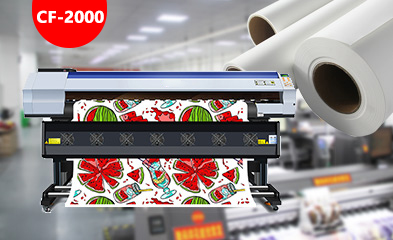
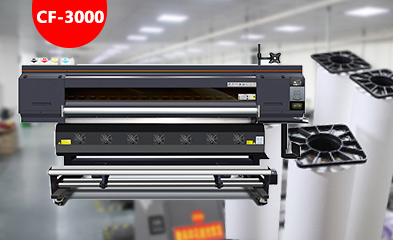
Le CF-3000 de Changfa Digital est équipé d'un dispositif intelligent avancé de nettoyage et d'humidification des buses, offrant des fonctions de nettoyage et d'entretien des buses sûres et pratiques ; l'utilisation et l'entretien sont plus pratiques.
Formulation de l'encre et dynamique de séchage
Encre La chimie des encres contribue également à maintenir l'efficacité à des vitesses élevées. Les formules à séchage rapide réduisent le temps d'attente entre les passages et évitent les bavures lors du rembobinage ou du transfert thermique. Ces encres utilisent des solvants sûrs et offrent une large gamme de couleurs aux résultats éclatants. Elles garantissent des impressions nettes et vives après transfert sur tissus en polyester, même à grande vitesse d'impression. Le contrôle de la température pendant le transfert assure ensuite la profondeur de couleur finale et une homogénéité parfaite d'un lot à l'autre.
Comment la vitesse d'impression influe sur les coûts de production et les délais de livraison des commandes
La vitesse d'impression influe à la fois sur les coûts d'exploitation et sur les délais de livraison. Ces deux paramètres sont essentiels pour les fabricants de textiles qui traitent simultanément de nombreuses commandes clients.
Incidences économiques des imprimantes à sublimation haute vitesse
Les imprimantes à sublimation haute vitesse coûtent souvent plus cher à l'achat car elles utilisent des têtes d'impression plus performantes et des systèmes d'alimentation plus robustes. À terme, elles permettent de réduire les coûts de main-d'œuvre en raccourcissant chaque cycle d'impression. Une meilleure utilisation des machines diminue les temps d'inactivité entre les impressions et augmente la production mensuelle sans investissement supplémentaire. Les équipes d'approvisionnement doivent néanmoins surveiller la consommation d'énergie. Des unités de séchage ou des éléments chauffants plus rapides peuvent consommer davantage d'énergie par heure et légèrement augmenter les factures d'électricité.
Impact sur les délais de livraison des commandes de textiles
L'impression plus rapide réduit les délais de livraison pour les clients ayant besoin de réapprovisionnements rapides ou de lancements saisonniers. Une production à grande vitesse et constante garantit des livraisons fiables tout au long des cycles de production. Cette fiabilité est un atout pour les exportateurs internationaux. Elle renforce la réputation de la marque auprès des acheteurs du monde entier, qui accordent autant d'importance au respect des délais de livraison qu'à la qualité.
Équilibre entre vitesse, qualité et efficacité dans les opérations d'impression par sublimation en 2026
À mesure que l'impression textile numérique évolue vers les normes de 2026, l'équilibre entre le débit et la qualité visuelle devient de plus en plus important pour les fabricants compétitifs.
Gérer les compromis entre vitesse et qualité d'impression
Une vitesse d'impression trop élevée peut entraîner des bandes ou des couleurs irrégulières si l'étalonnage est négligé. Les opérateurs adaptent les modes d'impression au type de tissu, qu'il s'agisse de polyester léger ou de mélanges extensibles, afin de garantir des tons homogènes quelle que soit la vitesse. La vérification des buses avant les longs tirages permet d'assurer l'uniformité des résultats en fonctionnement continu.
Intégrer l'automatisation pour améliorer l'efficacité globale
L'automatisation élimine les étapes manuelles qui ralentissent généralement les flux de production. Les systèmes d'alimentation automatique assurent le passage continu du matériau d'un rouleau à l'autre. Un logiciel de surveillance en temps réel ajuste les paramètres instantanément pour maintenir les vitesses cibles sans sursaturation ni désalignement. L'intégration de ces outils à un logiciel de gestion des flux de production numériques améliore le suivi des commandes, du traitement RIP jusqu'à l'inspection finale.
Conseils en matière d'approvisionnement pour améliorer l'efficacité de l'impression par sublimation en 2026
Les choix en matière d'approvisionnement doivent correspondre aux spécifications des machines en fonction des besoins réels de production plutôt qu'aux seules vitesses maximales annoncées.
Adapter la vitesse d'impression à la capacité de production réelle
Lors de l'évaluation d'imprimantes, tenez compte du volume de commandes journalier, des plannings d'équipe, des compétences des opérateurs et de la stabilité réelle de la production plutôt que des valeurs PPM indiquées. Comparez les modes de passage, les largeurs d'impression et la précision d'alimentation lors des longs tirages afin de vérifier que les paramètres haute vitesse garantissent toujours un repérage précis.
Vérifiez la compatibilité de l'imprimante, du papier, de l'encre et du transfert thermique.
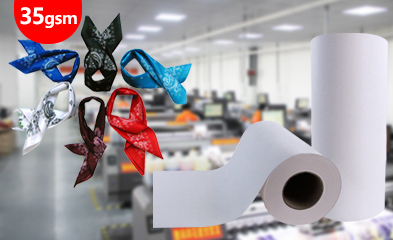
L'ajustement du système est essentiel pour des performances stables à haute vitesse. Consultez notre guide. papier de sublimation L'alimentation et le séchage s'adaptent à la viscosité de votre encre.. Changfa numérique Cette entreprise fabrique depuis plus de 15 ans des papiers couchés pour sublimation, obtenus par découpe de matières premières. Leurs papiers, d'un grammage de 29 à 100 g/m², conviennent à différents types d'imprimantes. L'utilisation d'encres compatibles avec ces papiers garantit une éjection fluide, sans bourrage ni bandes, même à haute vitesse.
Demandez des tests à long terme avant tout achat en gros.
Avant tout achat important, effectuez des tests approfondis avec le tissu lui-même, aux largeurs prévues, par exemple de 160 cm à 180 cm. Surveillez les problèmes tels que l'effet fantôme ou le décalage du papier sur plusieurs centaines de mètres plutôt que sur de courts échantillons.
Comparez le support fournisseur au-delà du prix de la machine. Le support fournisseur va au-delà du prix de la machine. Le support technique est également pris en compte.
Évaluez les fournisseurs sur la base de l'assistance à l'installation, de la formation des opérateurs, de la disponibilité des pièces détachées et du service après-vente, plutôt que sur le seul prix. Collaborer avec un fournisseur proposant à la fois des encres compatibles et des papiers assortis simplifie le dépannage des consommables et garantit la constance des lots lors des commandes répétées.
Dans ce domaine, Changfa Digital se révèle être un fournisseur judicieux. L'entreprise propose du papier de sublimation, des imprimantes, de l'encre de sublimation, des machines de transfert thermique et du papier hygiénique, permettant ainsi aux acheteurs de traiter l'ensemble des équipements et consommables au lieu de résoudre chaque problème séparément. Pour les acheteurs internationaux, cela simplifie la gestion des commandes répétées, les tests de compatibilité et le dépannage des problèmes liés à la vitesse d'impression, au séchage de l'encre et à l'alimentation papier.
FAQ (questions fréquentes)
Q1 : Comment puis-je vérifier si la vitesse de mon imprimante à sublimation actuelle répond aux exigences de production ?
A1 : Comparez votre besoin quotidien moyen en mètres carrés avec le débit horaire stable de l’imprimante en mode standard (et non en mode brouillon). Effectuez des tests chronométrés à la largeur de tissu habituelle pour vérifier que le rendement correspond aux objectifs de commande.
Q2 : Une vitesse d’impression plus élevée augmente-t-elle toujours la consommation d’énergie ?
A2 : Pas toujours. Les imprimantes modernes utilisent des éléments chauffants qui régulent la température selon les besoins. Toutefois, un fonctionnement continu à vitesse maximale peut augmenter la consommation électrique totale par rapport à un fonctionnement à vitesse modérée.
Q3 : Où puis-je trouver du papier de sublimation fiable pour les imprimantes à grande vitesse ?
A3 : Pensez à Changfa Digital. Cette entreprise fabrique des papiers couchés pour sublimation à partir de matières premières par refendage depuis plus de 15 ans. Elle dispose de quatre lignes de couchage et de dix machines de refendage qui assurent des expéditions mensuelles à l’échelle mondiale. Ses papiers offrent une alimentation régulière, adaptée à un usage industriel.


