


Vente chaude
Application
Phone:+86-15215969856 E-Mail: 396838165@qq.com
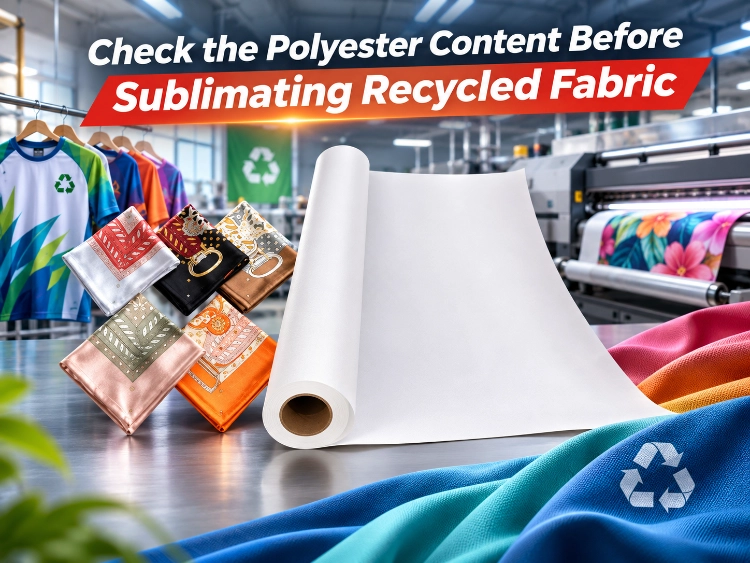
For sublimation on recycled polyester, a new fabric lot is a reason to compare the cloth, not automatically to replace an approved paper. Retain that paper for the comparison; a material or process change needs reapproval, while an unresolved polyester share or printing face puts the job on hold.
Changfa numérique manufactures sublimation paper through base-paper coating and slitting. Our paper samples let you use an identified consumable when comparing the incoming cloth with your accepted production reference. If the new lot is accepted, purchasing can repeat the grade; if another approval is needed, it can request a fresh sample. Your own evaluation determines whether the fabric and recipe remain acceptable.
The Incoming Lot Must Be Compared with the Approved Fabric
The accepted recipe defines what the earlier approval covers.
The order’s accepted transferred and washed reference is the starting point for the new lot. Keep its fabric lot, composition, printing face, finish and ground color linked to the paper grade, artwork and transfer conditions. This is the actual material to compare with the incoming cloth; matching a general recycled-polyester description does not extend the earlier approval to other fabrics.
The ink belongs to the reference too. For a recipe using our CMYK sublimation inks, identify the accepted ink with its printer and printhead configuration. Purchasing and production then have a defined set of consumables for the fabric comparison. If the ink is replaced during the new-cloth evaluation, the changed combination needs another evaluation.
A matching recycled percentage does not establish a matching printing face.
The composition information identifies which fibers are in the garment; the recycled claim identifies where their material came from. A garment made wholly from recycled material can still combine recycled cotton and recycled polyester. Where the supplier’s recycled percentage covers one fiber component rather than the entire textile, keep that stated basis together with the overall fiber percentages.
Ordinary cotton does not retain sublimation dye through the process used by polyester. This can make a cotton blend’s image softer than an otherwise comparable all-polyester print, especially after washing. That appearance alone does not show that recycling weakened the polyester. The incoming face and finish also need attention: a polyester-rich face over cotton backing differs from a blend of the fibers. With translucent ink, a changed ground color also changes the image’s background. Equal percentages and a recycled label cannot resolve these differences.
The Lot Evidence Determines Whether to Keep, Reapprove or Hold
Matching conditions support keeping the approved paper as the comparison constant.
When the relevant composition, printing face, finish, ground and process match the accepted reference, retain the existing paper grade while evaluating the incoming lot. An unrelated paper substitution would add another variable to that comparison. If your evaluation continues to meet the accepted appearance, the paper can remain in the repeat-order specification. The evidence still has to concern the actual cloth arriving for production.
|
Incoming-lot evidence |
Decision |
Paper action |
|
Relevant material and process conditions match, and the buyer’s comparison remains acceptable. |
Keep the approved recipe. |
Retain the approved grade for comparison and the repeat order. |
|
Composition, surface, ink or processing conditions have an identified change. |
Reapprove the changed combination. |
Use an identified paper sample in a recorded fresh comparison. |
|
Polyester share or the printing face remains unknown. |
Hold the material decision. |
Resolve that information before substituting paper or accepting the job. |
An identified change requires fresh approval of the combination.
We offer paper samples for use with your printer and fabric before a bulk purchase. In a reapproval, the sample can be the same grade as the accepted reference; a changed fabric does not automatically require a different paper. Select the sample from our gamme de papiers de sublimation against the grade already used, and record which consumable is held constant while the changed material is assessed.
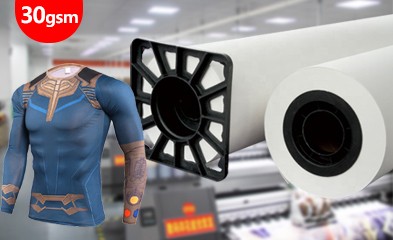
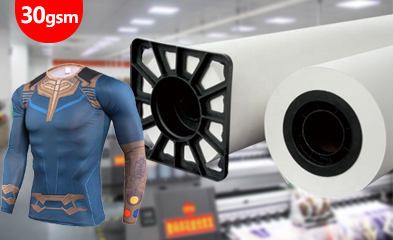
A change in artwork coverage or ink loading gives a separate reason to review what the paper must hold. Our 30gsm non-tacky grade handles steady ink loads on polyester; our 100gsm coating holds rich ink loads for full-coverage work. These are loading roles for paper candidates, rather than a solution for an unidentified fabric. If a different grade is proposed, evaluate that change separately and approve the resulting combination.
Unresolved material information requires a hold rather than a heavier-paper order.
If the incoming composition or receiving face cannot be established, obtain clarification from the fabric supplier before promising a finish. Neither a paper sample nor additional paper weight supplies the missing material information or establishes how an unknown coating will behave. This remains the case when a broad recycled claim is all the supplier has provided: the cloth must be identified before deciding whether the existing recipe applies.
The Paper Order Should Record the Decision Reached for That Lot
The buyer’s accepted sample provides the evidence for releasing the lot.
The buyer evaluates the exact incoming fabric for its response to heat and its appearance, and completes the agreed care procedure. Use the guidance for that cloth; a recycled-content description gives no temperature, dwell-time or pressure setting. Once the transferred sample has cooled, compare its surface and dimensions with an unheated piece. Heat tolerance, sheen changes and dye migration must be assessed on this textile, without treating lower heat tolerance as common to every recycled fabric. Heating dyed cloth may alter the ground or allow its color to contaminate the intended image.
Before the specified artwork is pressed, agree on the required density and definition. Judge the buyer’s finish after the agreed washing or care procedure, accepting a polyester and cotton blend only when its actual washed sample meets the brief. A fresh transfer has not yet demonstrated that finish. A comparison reference must match in relevant composition, construction, finish and process. An all-polyester reference and a cotton blend differ in composition, so that comparison cannot isolate recycled origin as the cause of an appearance difference.
Fewer dye-receptive fibers are not reliably compensated for by more heat. Distortion or unwanted color movement before an acceptable transfer is reached requires returning to the fabric supplier’s guidance or choosing another cloth. Before production, any change in the processing conditions, composition or surface needs approval again. Evaluate a fabric substitution using the recorded paper and ink.
The next paper request must identify a reorder or a fresh sample.
Keep the accepted transferred and cared-for reference with the incoming lot identity and the recipe used. Record the paper grade, ink, printer, printhead and transfer conditions alongside the composition, printing face, finish and agreed care method. Have the supplier identify substitutions clearly. Purchasing can then distinguish a repeat supply of the retained grade from a fresh-sample requirement, while the fabric approval remains tied to the buyer’s evidence.
Conclusion
The next paper order should follow the lot decision already reached. Send Changfa Digital the approved paper grade and production reference, the incoming lot and composition, any change in its printing face or finish, and the current printer, ink and transfer recipe. State whether you need a repeat order or a fresh paper sample, so our response addresses the retained consumable or the comparison still required.
Questions fréquentes
Q1: Can the approved paper stay in use when a recycled-fabric lot arrives?
A1: Yes, if relevant material and process conditions match and the comparison continues to be acceptable to the buyer. Use the approved grade unchanged for that comparison. A recycled label on the new lot is not itself a reason to change the paper.
Q2: What should happen if the polyester share or printing face is unclear?
A2: Hold the material decision and obtain the missing information from the fabric supplier. Neither a heavier paper nor a paper sample establishes an unknown composition or receiving face.
Q3: Does fresh sample approval always require a new paper grade?
A3: No. Our paper sample can retain the approved grade while a known material change is evaluated. The buyer must approve the resulting combination under the intended transfer and agreed care conditions before production.


