


Comment choisir le grammage du papier de sublimation pour l'impression sur tissu polyester
Vente chaude
Application
Phone:+86-15215969856 E-Mail: 396838165@qq.com

Il ne suffit pas de prendre en compte un seul type de papier lors du choix papier de sublimation Le poids du papier peut notamment avoir une incidence sur sa capacité d'absorption d'encre, son temps de séchage, sa stabilité pendant l'impression et la qualité du résultat de transfert, notamment lors de l'impression sur polyester.
Aperçu Poids de papier par sublimation pour impression sur tissu polyester
Le concept de poids à papier par sublimation
Le grammage du papier de sublimation correspond à son poids et à sa densité. Il est généralement exprimé en grammes par mètre carré (g/m²). On trouve couramment des papiers légers (70-90 g/m²), des papiers moyens (100-120 g/m²) et des papiers épais (130-150 g/m²). Ces caractéristiques influent sur le séchage, le transfert d'encre, la planéité du papier et son comportement sous l'effet de la chaleur.
Relation entre le grammage du papier et le transfert d'encre
Le grammage du papier influe directement sur le transfert d'encre. Un papier de sublimation plus épais retient généralement davantage d'encre sans trop gondoler. Ceci est important pour l'impression de grands graphismes, de couleurs profondes ou d'illustrations comportant de nombreuses zones sombres. Un tissu en polyester épais peut également nécessiter un papier plus robuste, car le processus de transfert peut impliquer une pression et une chaleur plus importantes.
Le papier léger (70-80 g/m²) permet une meilleure absorption de l'encre. Idéal pour les productions rapides, il nécessite cependant un réglage précis de la température, de la pression et du profil d'imprimante. Un mauvais paramétrage peut donner une couleur plus claire que prévu. Le papier de grammage moyen, notamment le papier de sublimation 90 g/m², est privilégié par de nombreuses usines pour sa facilité de contrôle. Il permet une quantité d'encre suffisante pour des couleurs intenses tout en séchant assez rapidement pour une production quotidienne.
Changfa Digital est un fabricant professionnel de papier de sublimation et propose des services d'impression numérique depuis plus de 15 ans. L'usine maîtrise l'ensemble du processus, du papier de base au couchage, en passant par le refendage et l'expédition internationale. Pour les acheteurs en gros, ce type d'organisation est avantageux car la largeur des rouleaux, le grammage du papier et la quantité commandée doivent souvent correspondre aux conditions réelles des machines. La personnalisation OEM/ODM permet également aux clients de commander des largeurs de rouleaux adaptées, de 61 cm à 190 cm, pour répondre à différents besoins de production, allant des vêtements de sport aux projets de textile d'ameublement.
Facteurs influençant le choix du grammage du papier de sublimation
Type et épaisseur du tissu en polyester
Les tissus en polyester épais nécessitent généralement un papier de sublimation plus stable. Lors du pressage, le tissu et le papier doivent rester parfaitement plats. Si le papier bouge, se recourbe ou se déforme, l'image risque de se décaler ou de devenir floue.
Pour les matières polyester légères, comme les drapeaux, les maillots fins ou les tissus publicitaires simples, un papier plus léger peut suffire. Il sèche plus vite et permet de réduire les coûts liés au papier. Cependant, il est essentiel de maîtriser la température. Une chaleur ou une pression excessive peut entraîner des effets de transparence, des contours flous ou une couleur irrégulière.
Paramètres de l'équipement d'impression et de la presse à chaud
Type d'imprimante Le papier a aussi son importance. Certaines imprimantes industrielles déposent l'encre très rapidement. Si le papier est trop fin, l'encre risque de ne pas être absorbée uniformément. Un papier d'environ 90 à 100 g/m² est plus adapté à ces machines, surtout pour les motifs aux couleurs riches ou comportant des aplats foncés.
Les paramètres de la presse à chaud doivent être adaptés au papier. Pour la plupart des impressions par sublimation sur polyester, on utilise des températures d'environ 180 à 200 °C et un temps de maintien de 30 à 60 secondes. Ces valeurs sont courantes, mais il est important de ne pas les appliquer systématiquement à tous les tissus. Un tissu fin, un papier épais ou un motif avec une forte densité d'encre peuvent nécessiter de légères modifications.
Exigences en matière de composition et de densité de couleur de l'encre
Type d'encre Le choix du papier influe également sur le résultat. Les encres de sublimation haute densité nécessitent généralement un papier capable d'absorber une plus grande quantité d'encre sans bavure ni imprégnation. Si la quantité d'encre est importante et le papier trop fin, la surface risque de rester humide trop longtemps et les lignes imprimées pourraient être floues.
Les encres de sublimation de Changfa Digital utilisent des solvants écologiques, sûrs et non toxiques. Elles offrent une large gamme de couleurs, des couleurs éclatantes et une meilleure couvrance du noir après transfert. Utilisées avec du papier de sublimation de 90 g/m², elles garantissent une impression plus stable sur tissu polyester. L'objectif n'est pas seulement d'intensifier la couleur, mais aussi de maintenir une homogénéité chromatique constante d'un rouleau à l'autre.
Comparaison de différents grammages de papier de sublimation pour la qualité d'impression sur polyester
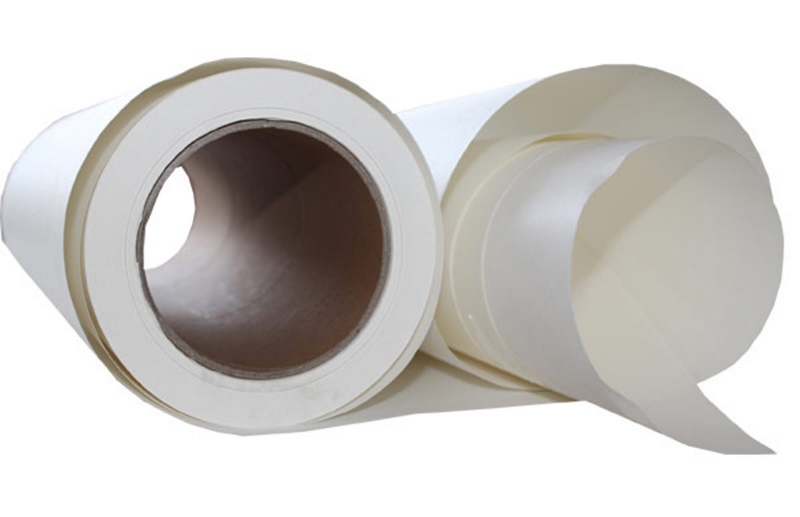
Papiers de sublimation légers 70–90 g/m²
Les papiers de sublimation légers sèchent rapidement et conviennent à l'impression en continu à grande vitesse. Ils sont souvent utilisés pour les tissus fins en polyester, les vêtements de sport, les banderoles publicitaires, les drapeaux et autres commandes où la rapidité est essentielle. Ces papiers permettent de réduire la pression sur le séchage dans les ateliers à forte activité.
En contrepartie, un papier très léger n'est peut-être pas le meilleur choix pour les impressions à forte charge d'encre. Si l'œuvre comporte de grandes zones sombres ou si l'humidité de l'atelier est élevée, le papier risque de gondoler ou de se déformer. Dans cette gamme de prix, 90 papier de sublimation gsm Elle est souvent plus stable que les options plus fines tout en conservant une bonne vitesse de production.
Papiers de sublimation de poids moyen (100–120 g/m²)
Le papier de grammage moyen offre une meilleure absorption de l'encre et une planéité supérieure. Il est idéal pour l'habillement, le textile d'ameublement et l'impression grand format, où l'uniformité des couleurs est essentielle sur une grande surface. Il contribue également à réduire le gondolage lorsque le motif nécessite une quantité d'encre importante.
Papiers de sublimation épais 130–150 g/m²
On utilise généralement du papier épais lorsqu'une plus grande stabilité est requise. Il supporte des charges d'encre plus importantes et des supports en polyester plus épais. Il contribue également à une meilleure netteté et à une plus grande profondeur des couleurs pour certains travaux complexes. Cependant, pour l'impression sur tissu polyester classique, ce n'est pas toujours le choix le plus pratique. Plus lourd, il peut ralentir la manipulation et augmenter le coût des matériaux.
Optimisation de la qualité d'impression grâce à une correspondance adéquate papier-tissu
Avant le lancement de la production à grande échelle, les acheteurs devraient tester le papier et le tissu ensemble. Cela paraît simple, mais cela permet de réaliser de réelles économies.
Évaluation de la capacité d'absorption du tissu avant impression
Les impressions tests permettent d'observer comment le tissu absorbe la teinture. Un acheteur peut ainsi comparer un papier de sublimation de 90 g/m² avec un papier plus léger et constater la différence de netteté des contours, d'intensité des couleurs et de toucher. Si l'impression paraît délavée, floue ou irrégulière, le problème peut provenir du papier, de l'encre, du revêtement du tissu, de la fixation à chaud, ou de tous ces éléments combinés.
Gestion des conditions environnementales pendant l'impression
L'humidité peut altérer les propriétés du papier. Si le papier de sublimation absorbe l'humidité pendant le stockage, il peut se gondoler, se froisser ou présenter un entraînement irrégulier. Cela affecte le repérage et peut engendrer des pertes lors de l'impression par transfert thermique.
Le papier de sublimation doit être stocké à plat dans un endroit sec. Les rouleaux doivent également être protégés de l'humidité directe. Dans les usines où l'activité est intense, le stockage est parfois négligé, or il a un impact direct sur la qualité d'impression finale. Même un papier de bonne qualité peut donner de mauvais résultats s'il est stocké dans de mauvaises conditions.
Réglage précis des paramètres de la presse à chaud pour chaque grammage de papier
Après avoir choisi le papier, il faut encore régler la presse à chaud. Le grammage du papier, l'épaisseur du tissu, la quantité d'encre et le type de machine influent tous sur le résultat final.
Réglage de la température
Un papier plus léger peut absorber la teinture plus rapidement et ne nécessite donc pas forcément la même température qu'un papier plus épais. Si la température est trop élevée, le tissu risque de se tacher, la couleur peut changer ou le papier peut se déformer légèrement.
Techniques d'étalonnage de la pression
La pression doit être uniforme sur toute la zone de transfert. Si la pression est plus forte d'un côté que de l'autre, la couleur risque d'être irrégulière. L'impression grand format sur polyester requiert une attention particulière, car une petite différence de pression peut être visible sur une grande surface textile.
Optimisation du temps de séjour
Un temps de pose plus long intensifie la couleur, mais un temps excessif peut entraîner un effet fantôme ou endommager le tissu. Le temps de pose optimal permet à l'encre de pénétrer clairement dans les fibres de polyester, sans laisser de doubles images ni de contours flous.
FAQ (questions fréquentes)
Q1 : Quel est le grammage de papier de sublimation le plus adapté à l'impression sur tissu polyester standard ?
A1 : Pour de nombreux tissus d’habillement en polyester courants, le papier de sublimation de 90 g/m² est un choix pratique. Il offre un bon compromis entre vitesse de séchage, capacité de rétention d’encre, stabilité du papier et qualité du transfert.
Q2 : Puis-je utiliser des papiers plus légers comme du 70 g/m² pour des textiles épais ?
A2 : Ce n’est généralement pas le choix le plus sûr. Un papier léger peut gondoler ou perdre en stabilité sous une forte charge d’encre ou une température d’impression élevée. Pour les textiles plus épais, un papier d’environ 90 à 100 g/m² est souvent plus facile à maîtriser.
Q3 : Changfa Digital propose-t-il des formats de rouleaux personnalisés ou des services OEM ?
A3 : Oui. Les acheteurs peuvent demander des produits personnalisés à partir d’échantillons, et Changfa numérique peut soutenir OEM / ODM Les besoins. La largeur du rouleau et d'autres détails peuvent être adaptés à l'imprimante et à la configuration de production de l'acheteur.
Q4 : Comment dois-je stocker les rouleaux de matériau d'impression par transfert thermique non utilisés ?
A4 : Conservez les rouleaux dans un endroit frais et sec, à l’abri de l’humidité. Un mauvais stockage peut entraîner un gondolage, des problèmes d’alimentation et des résultats de transfert instables lors de l’utilisation ultérieure de matériaux d’impression par transfert thermique.


