


Wie OEM/ODM die Effizienz der Lieferkette für Sublimationspapier bis 2026 vorantreibt
Heißer Verkauf
ANWENDUNG
Phone:+86-15215969856 E-Mail: 396838165@qq.com

Sublimationspapier Es sieht aus wie ein einfaches Verbrauchsmaterial, bis eine Produktionslinie Liefertermine nicht mehr einhält. Dann achten die Käufer auf die Details: Trocknungsgeschwindigkeit, Papierablösung, Rollenbreite, Kerngröße, Beschichtungsstabilität, Verpackung und ob die nächste Bestellung genauso funktioniert wie die letzte.
Warum Sublimationspapier immer noch die Effizienz der Drucklieferkette prägt
Sublimationspapier beeinflusst die Tintenaufnahme, die Trocknungsgeschwindigkeit, den Rollentransport und die Farbabgabe beim Thermotransfer. Trocknet das Papier langsam, kann es zu Verschmierungen oder Rückseitendruck kommen. Bei unzureichender Farbabgabe wirken die Farben auf Textilien blass. Ist die Rollenbreite falsch, entstehen dem Käufer Kosten für Verschnitt oder eingeschränkte Produktmöglichkeiten.
Deshalb vergleichen viele B2B-Einkäufer Papier mittlerweile im Kontext der gesamten Produktlinie. Druckgeschwindigkeit, Tintenmenge, Stoffbreite, Transfertemperatur und Verpackungsformat beeinflussen die Wiederholproduktion.
Was bedeuten OEM und ODM für Käufer von Sublimationspapier?
OEM unterstützt Käufer beim Aufbau einer Eigenmarken-Lieferkette
OEM Dies ist hilfreich, wenn der Käufer den Zielmarkt bereits kennt. Der Händler hat möglicherweise Stammkunden, die Papier mit 35 g/m², 40 g/m² oder 60 g/m² verwenden. Ein Markeninhaber benötigt unter Umständen eigene Rollenetiketten, Kartonverpackungen, Kerngrößen und eine eigene Verpackungssprache. Eine Druckerei benötigt möglicherweise monatlich die gleiche Breite und Länge, ohne die Bestelldatei jedes Mal ändern zu müssen.
In dieser Situation trägt OEM-Sublimationspapier zur Standardisierung der Lieferkette bei. Feste Spezifikationen reduzieren Fehler im Lager. Private-Label-Verpackungen fördern den lokalen Absatz. Transparente Rollenetiketten erleichtern es Kunden, dasselbe Produkt nachzubestellen, anstatt es erneut beschreiben zu müssen.
ODM hilft Käufern, die Produktauswahl und -prüfung zu verkürzen.
ODM eignet sich für Käufer, die zwar Bedarf haben, aber noch keine vollständige Produktlinie aufgebaut haben. Der Käufer weiß vielleicht, dass der lokale Markt Sublimationspapier benötigt, aber nicht, welches Grammatur (GSM) er zuerst einlagern sollte. Anstatt blind zu testen, geht ODM von der Anwendung aus: Druckermodell, Geschwindigkeit, Tintenmenge, Stoffart, Rollenbreite und Kundennutzung.
Changfa Digital Als praktisches Beispiel kann das Unternehmen herangezogen werden. Es produziert Sublimationspapier und verfügt über eigene Anlagen für Basispapier, Beschichtung, Schneiden und Verpacken. Die Produktionsanlagen umfassen vier Beschichtungslinien, mehrere Schneidewerkstätten, Walzen für 2- und 3-Zoll-Kerne sowie Exportverpackungen mit palettierten Rollen. Für ODM-Kunden ist diese Größe von Vorteil, da Produktauswahl, Schneiden und Verpackung gemeinsam besprochen werden können.
Wie OEM die Effizienz der Lieferkette für Sublimationspapier verbessert
Private-Label-Verpackungen erleichtern den Vertrieb an Händler.
Für Händler ist die Verpackung nicht nur ein Marketinginstrument. Ein übersichtlicher Karton, ein Rollenetikett, Angaben zum Flächengewicht (GSM), zur Breite und ein Barcode reduzieren die Verwirrung im Lager. Vertriebsmitarbeiter können anhand des Codes dasselbe Papier empfehlen. Kunden können nachbestellen, ohne alte Fotos oder unklare Beschreibungen senden zu müssen.
Der OEM unterstützt auch den Schutz lokaler Vertriebskanäle. Ein Händler, der unter seiner eigenen Marke verkauft, kann eine langfristige Nachfrage nach Papier aufbauen, anstatt nur über den einmaligen Preis zu konkurrieren.
Feste Spezifikationen reduzieren Verwirrung bei Nachbestellungen
Bei Folgeaufträgen zeigt sich die Effizienz der Lieferkette. Bestätigt der Käufer 60 g/m², 162 cm Breite, 1000 m Rollenlänge, 3-Zoll-Kern und Exportpalettenverpackung, arbeiten alle Abteilungen nach demselben Standard. Einkauf, Vertrieb, Lager und Kundendienst sprechen dieselbe Sprache.
Individuelle Breiten helfen dabei, den lokalen Druckmarkt zu bedienen.
Die Breite des Sublimationspapiers sollte der tatsächlichen Geräteausstattung entsprechen. Changfa Digital unterstützt Rollenbreiten von 61 cm bis 320 cm, sodass Käufer die Breite an die lokalen Gegebenheiten anpassen können. Drucker und Kalendergrößen genauer. Standardbreiten sind für Lagerware nützlich, während kundenspezifisches Zuschneiden dazu beiträgt, Kantenschnitte für Fabriken mit festen Produktionsgewohnheiten zu reduzieren.
Wie ODM Käufern bei der Auswahl der richtigen Sublimationspapierlinie hilft
ODM kann bei Drucker-, Tinten- und Stoffbedingungen beginnen.
Eine ernsthafte ODM-Diskussion sollte nicht mit der Frage „Welches Papier ist am günstigsten?“ beginnen. Sie sollte vielmehr mit den Produktionsbedingungen beginnen. Welcher Drucker wird verwendet? Wie hoch ist die übliche Druckgeschwindigkeit? Bedruckt der Kunde Sportbekleidung, Heimtextilien, Soft Signage oder Modestoffe? Ist der Tintenverbrauch gering oder hoch? Herrscht in der Werkstatt eine hohe Luftfeuchtigkeit? Sobald diese Punkte geklärt sind, kann der Lieferant eine passendere Papierauswahl empfehlen.
Niedriggewichtiges Papier unterstützt die schnelle und großflächige Rollenproduktion
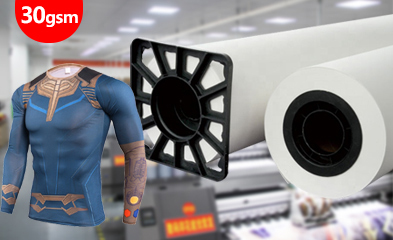
Leichtes Papier mit Grammaturen von 29 g/m², 30 g/m², 35 g/m² oder 40 g/m² wird häufig für schnellere Produktionsläufe und die Herstellung langer Rollen gewählt. Es kann helfen, den Papierverbrauch zu reduzieren und die Effizienz zu steigern, erfordert aber dennoch eine abgestimmte Farbmenge, Trocknung und Maschinenspannung. Für Fast-Fashion-Stoffe, leichte Heimtextilien oder die Hochgeschwindigkeitsproduktion kann sich ein Test dieser Papiersorte lohnen.
Papier mittlerer Grammatur, geeignet für allgemeine Textildruckverfahren
Papier im mittleren Preissegment ist für Kunden mit gemischten Produkten oft praktischer. Sublimationspapier mit 50 g/m² und 60 g/m² eignet sich für viele Aufträge im Bereich Bekleidung, Polyestergewebe, Heimtextilien und Soft Signage. Einkäufer, die verschiedene kleine und mittlere Betriebe beliefern, können dieses Sortiment regelmäßig auf Lager halten.
Papier mit höherem Flächengewicht erfüllt spezifische Anforderungen an die Transferstabilität.
Papier mit 70 g/m², 90 g/m² und 100 g/m² sollte nicht automatisch als besser bezeichnet werden. Sie sind sinnvoll, wenn ein Käufer für bestimmte Aufträge eine robustere Handhabung, einen höheren Farbauftrag oder einen stabileren Transfer benötigt. In der ODM-Kooperation kann der Lieferant mitentscheiden, ob ein höheres Flächengewicht notwendig ist oder ob es lediglich die Kosten erhöht, ohne das Endergebnis zu verbessern.
Wie sollen Käufer zwischen OEM und ODM entscheiden?
Wählen Sie den OEM-Hersteller, wenn die Spezifikationen bereits klar sind.
OEM ist vorteilhafter, wenn der Käufer bereits Rollenbreiten, Flächengewicht, Verpackungsart, Etikettendesign und Nachbestellungsvolumen festgelegt hat. Es eignet sich gut für Distributoren, Eigenmarken für Verbrauchsmaterialien und etablierte Druckereien.
Wählen Sie ODM, wenn die Produktlinienplanung noch unklar ist.
ODM ist vorteilhafter, wenn der Käufer den Markt noch testet. Ein Distributor könnte beispielsweise mit 35 g/m², 60 g/m² und 90 g/m² Papier beginnen und die Spezifikationen nach Tests durch lokale Kunden anpassen. Changfa Digital bietet mit seinem Sortiment von 29 g/m² bis 100 g/m² die Möglichkeit, eine differenzierte Papierlinie aufzubauen, anstatt sich auf eine einzige Spezifikation zu beschränken.
OEM und ODM gemeinsam für das Wachstum des Vertriebspartners nutzen
Viele Käufer nutzen beides. ODM hilft zunächst dabei, die passenden Spezifikationen zu finden. Sobald sich einige Rollen als Verkaufsschlager erweisen, wandelt OEM sie in Private-Label-Produkte mit fester Verpackung und regelmäßiger Lieferung um.
Was sollten Käufer vor Beginn einer OEM/ODM-Kooperation prüfen?
Anwendungs- und Maschinenbedingungen bestätigen
Teilen Sie dem Lieferanten mit, ob Ihre Hauptkunden Bekleidung, Sportbekleidung, Heimtextilien, Soft Signage oder Werbeartikel bedrucken. Geben Sie außerdem Druckerbreite, Geschwindigkeit, Tintenart, Stoffart und Breite der Transfermaschine an.
Papierparameter bestätigen
Prüfen Sie Flächengewicht, Breite, Rollenlänge, Kerngröße, Trocknungsgeschwindigkeit, Transferleistung, Feuchtigkeitstoleranz, Verpackung und Palettenart. Diese Details beeinflussen die tägliche Produktion stärker, als Käufer annehmen.
Mindestbestellmenge, Musterbestellung, Lieferzeit und Kundendienst-Feedback bestätigen
Vor der Bestätigung von Großbestellungen sollten Sie Mustertests, Mindestbestellmengen nach Spezifikation, OEM-Verpackungsanforderungen, Verfügbarkeit von Sonderbreiten, Lieferzeiten und den Ablauf des Kundendienstes erfragen. Ein zuverlässiger Lieferant sollte bei der Nachverfolgung von Problemen wie Trocknungsverzögerungen, schwachem Transfer, Rollenbeschädigung oder Anwendungsfehlern beim Kunden behilflich sein.
FAQ (häufig gestellte Fragen)
Frage 1: Wann sollte ein Käufer OEM-Sublimationspapier wählen?
A1: Wählen Sie OEM, wenn der Käufer bereits die Ziel-GSM-Anforderungen, die Rollenbreite, die Rollenlänge, den Kerndurchmesser, die Verpackungsart und die Anforderungen an die Eigenmarke kennt. Dies eignet sich für Händler und Marken mit Stammkunden.
Frage 2: Wann ist ODM für die Beschaffung von Sublimationspapier sinnvoller?
A2: ODM ist hilfreich, wenn der Käufer Unterstützung bei der Auswahl von Papier für verschiedene Drucker, Tinten, Textilien und Marktanwendungen benötigt. Dadurch können Testzeiten verkürzt und eine praxisorientiertere Papierproduktlinie entwickelt werden.
Frage 3: Was sollten Käufer hinsichtlich Mindestbestellmenge, Anpassungsmöglichkeiten und Kundendienst klären?
A3: Käufer sollten die Mindestbestellmenge (MOQ) nach Flächengewicht und Breite, die Verfügbarkeit von Mustern, den Bedarf an individuellen Etiketten oder Kartons, die Lieferzeit und die Verpackungsmethode bestätigen. Kundendienst bei Problemen mit dem Trocknen, dem Transfer, der Rollenbeschädigung oder der Anwendung.


