


ขายร้อน
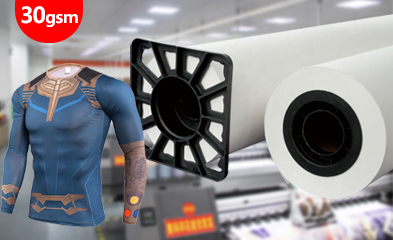

การประยุกต์ใช้งาน
Phone:+86-15215969856 E-Mail: 396838165@qq.com
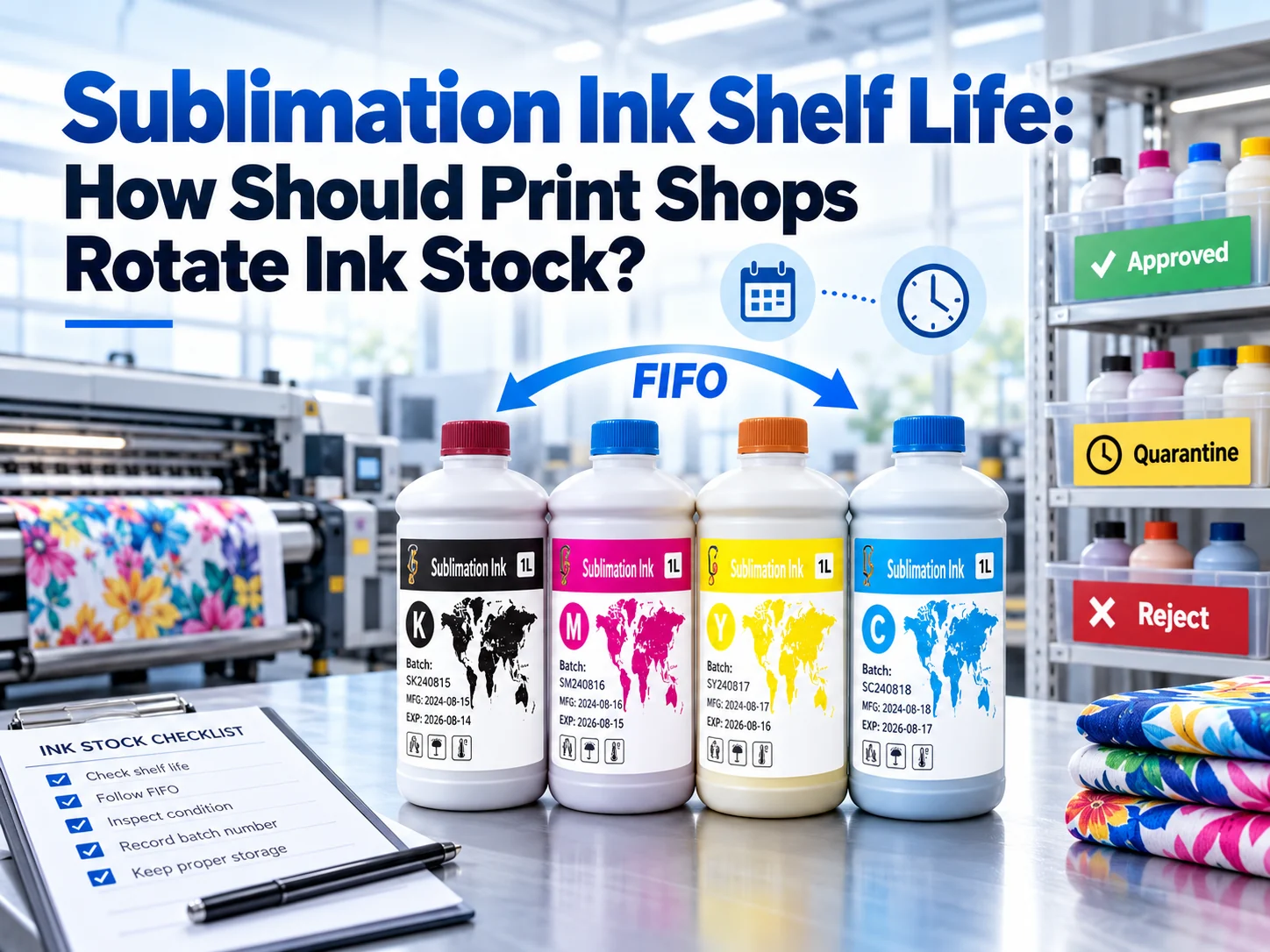
An expiration date does not describe an opened bottle, ink left in an idle printer, or a partially used container exposed to heat, air or contamination. Treat usable condition as a production state: keep batch records, test the exact printer, ink, paper and fabric combination, then approve, quarantine or reject the stock on evidence. For Changfa ดิจิตอล products, keep that decision tied to the exact series and packaging.
Why Is Ink Age a Production-Control Problem?
Define Shelf Life, Open Life and In-Printer Time Separately
Shelf life applies while ink is sealed and stored as intended. Open life begins when air, moisture or handling can enter the container. In-printer time adds tubing, cartridges, dampers, printheads and cleaning cycles.
Map Heat, Humidity, Light and Air Exposure to Ink Changes
Heat can accelerate solvent loss and chemical change; low temperature can increase viscosity and encourage settling. Humidity can introduce moisture or contamination, light can weaken dye strength, and air contact can support oxidation and evaporation. The rate depends on the product, package and exposure.
Recognise Thickening, Sediment, Colour Shift and Flow Changes
Ink may thicken, gel, separate, form sediment, develop an odour, clog the head, transfer weakly or drift in colour. Sediment may indicate settling or contamination; poor flow may come from viscosity, filtration or the ink path.
Decide When Age Becomes a Production Risk, Not an Automatic Rejection
Age should trigger review, not automatic pass or fail. Risk rises when storage is unknown, the container has been opened or contaminated, ink has remained in the printer, the material combination has changed, or earlier runs were inconsistent. Older ink with a clear record and a passing test can still enter controlled use. Without enough evidence, quarantine it rather than creating an exception.
How Should Print Shops Set Up Batch and Stock Rotation?
Label Incoming Stock With Batch, Receipt Date and Storage Location
Give each container or carton a readable identity: product series, batch or lot, receipt date, supplier reference and storage location. Keep inner and outer identifiers connected so a test can return to the exact delivery. Add the open date, printer or line, and location changes when they occur.
Rotate Existing Stock Before Adding New Containers
Rotate approved stock before new deliveries, but do not push quarantine material forward because it is older. Keep approved, test and rejected ink in visible physical states. When several series share a shelf, keep rotation records separate by series and package.
Separate Approved, Quarantine and Rejected Ink
Use three states. Approved ink may enter normal production; quarantine ink is waiting for a test or decision; rejected ink must not return without a documented review. Change the state only when evidence changes.
Control Partially Used Containers and Return-to-Service Decisions
Partially used containers need an open date, storage condition and owner. Close them after use and prevent shared tools from transferring contamination.
Keep Records Separate by Ink Series and Packaging
Different series, packages and application directions do not share one storage conclusion. Record the product name, series, package and supplier instruction, then use the same identifiers in the test and disposition entry. Link the container to the printer and material used in the test.
What Should Be Checked Before Older Ink Enters Production?
Inspect Packaging, Seals, Gelling, Sediment and Contamination
Inspect the seal, cap, liner, fill level and ink appearance before opening or agitating the container. Look for gelling, sediment, separation, particles, odour or contamination around the opening.
Confirm the Printer, Printhead and Ink Series Combination
Confirm the ink against the intended printer, printhead, paper, fabric and transfer process. Record the exact series and package before testing. A result from another machine or material path does not carry over.
Print a Nozzle Pattern and Controlled Colour Sample
A nozzle pattern checks flow and drop-out, but it is not the complete release test. Print a controlled colour sample with fixed settings and the intended substrate, then identify it by printer, printhead, ink series, paper and fabric. Compare it with a known-good sample from the same combination. Do not let one small patch represent a full roll or long order.
Transfer the Sample to the Actual Paper and Fabric
The printed image is an intermediate result. Transfer the sample under production conditions and inspect the actual fabric, because colour, density and surface response can change during transfer. Keep the transferred sample with the batch record.
Extend the Test to Check Flow, Color Drift and Cleaning Demand
Extend the test through a normal run, a short idle period and enough production time to reveal flow, colour drift and cleaning demand. Repeated cleaning to maintain quality can mask a flow problem, so record dropouts, banding, drift and transfer changes across the run.
How Should Test Results Decide Use, Blending or Rejection?
Define Pass, Conditional Pass and Reject Criteria Before Testing
Write the criteria before the test so the result is not fitted to the order. A pass should meet defined nozzle, flow, colour, transfer and repeatability checks under recorded conditions. A conditional pass should name the restriction, such as a printer, material or shorter trial.
Do Not Blend Old and New Ink Without a Controlled Check
Blending can hide an uncertain result and remove traceability. Consider it only when product instructions and supplier guidance support the mixture, then treat the blend as a new tested condition. Define the ratio, container, storage period and production test.
Compare Dropouts, Banding, Color Drift and Cleaning Frequency
Compare the result with the last approved sample and the current baseline. Look for repeatable dropouts, banding, colour drift, weak transfer and cleaning frequency at the beginning, middle and end of the run. A result that changes during the run is more informative than one good print.
Quarantine Any Batch That Fails Repeatability
A batch that passes once but fails on repetition should remain quarantined. Repeatability matters because customer orders run longer than samples. Record the failed condition, the test and the next action. If the cause sits in the printer or material rather than the ink, correct that condition and retest instead of automatically discarding the batch.
Record Disposition Before Returning Ink to General Stock
Record the batch, test, result, decision and approver before changing the stock state. Conditional approval needs its restriction; rejection needs the reason and final location. This closes the loop between the stock room and production.
How Should Storage and Printer Idle Time Affect Stock Rotation?
Keep Containers Closed and Prevent Cross-Contamination
Close containers after use and keep caps, liners and transfer tools clean. Prevent one series from contaminating another through shared funnels, bottles or tools. Keep approved and quarantine stock visibly separated.
Protect Ink From Heat, Freezing, Humidity and Direct Light
Keep ink within the conditions supported by the exact product information and away from direct light, strong heat and freezing. Record meaningful changes in the storage environment because they affect the meaning of later release tests.
Plan Ink Purchasing Around Actual Consumption and Idle Periods
Purchase against consumption, order pattern and expected printer idle time. A large order reduces handling frequency but can increase storage exposure and partially used stock. Review consumption by series and printer, not only total ink volume.
Test Ink That Has Remained in the Printer After Long Idle Time
Ink left in the printer needs its own check. Record the idle period, storage environment and cleaning performed. Inspect the supply path, print a nozzle pattern, run a controlled sample and transfer it to the intended material.
Use the Product-Specific Storage and Packaging Directions
Use the current direction for the exact series, package and application. Do not transfer one product’s storage rule to another without checking its scope. Keep the instruction with the batch record so the source remains visible.
What Should the Ink Rotation Policy Include?
Set Review Triggers From Consumption, Storage and Idle Time
Review the batch after a new delivery, an opening, a long storage period, a changed environment, a printer idle period, a printer or material change, or a repeated production symptom. The trigger should lead to a defined check, not automatic use or rejection.
Keep Batch, Test, Approval and Disposition Records Together
Keep the label, receipt and open dates, storage notes, test sample, result, approval and disposition together. The record must identify the printer and material used, who made the decision and what restriction applies. Use the same batch identifier in the stock room, printer log and sample.
Escalate Repeated Nozzle or Color Problems
Repeated nozzle or colour problems require a broader review. Check the printer, printhead, supply path, paper, fabric, transfer settings and recent maintenance before blaming the batch. If the same symptom appears with known-good ink, the ink may not be the variable that changed.
Ask the Supplier for the Exact Ink Series and Packaging Guidance
Ask for guidance that names the exact series and package. A general answer about “sublimation ink” is not enough when the decision concerns one product. Request storage, opening, printer exposure, mixing and application boundaries that the supplier can support. Update the batch record and review earlier approvals when the guidance changes.
Use the Specific Product Page for the Actual Ink Series and Packaging
Continue from shelf-life control to the actual หมึกระเหิด family, then confirm the exact product. The 1513 Series CMYK Sublimation Ink, หมึกพิมพ์ซับลิเมชั่น CMYK ซีรี่ส์ 1962 และ 1983 Series CMYK Sublimation Ink pages cover different product references.
Choose the Next Production Action From the Test Evidence
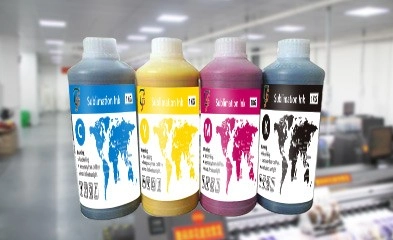
Choose one of four actions: approve, approve with a restriction, quarantine or reject. Record the reason and the next review point. If evidence is insufficient, quarantine is the honest state. For a batch-release review, provide the printer and printhead, exact ink series and batch, paper, fabric, storage and idle periods, current symptoms and run length so the next action can be assessed against the actual production condition.
ข้อสรุป
Older ink is released by evidence, not age alone. Use storage history and visible signs together with a controlled print and transfer test; a clear bottle or one good test print does not prove long-run stability. Record the run length, symptoms and disposition so the next production decision starts from a known condition.
คำถามที่พบบ่อย
Q1: Should an entire lot be quarantined when only one container fails?
A1: Start with the failed container, but review the lot record before releasing the rest. Quarantine the wider lot when the same storage, handling or batch condition applies, when the failure cannot be isolated, or when traceability is incomplete.
Q2: What evidence removes a conditional-release restriction?
A2: A repeatable test under the restricted condition, a clear comparison with the approved sample, and a recorded production result can support removing the restriction. If the same limit returns, keep the restriction and investigate the intervening condition.
Q3: What should be done when carton and container batch identifiers cannot be reconciled?
A3: Treat the mismatch as a traceability gap. Keep the material out of normal production until the supplier reference, delivery record or container identity can be connected to a known batch and release test.


