


Sublimation de teinture sur tissu foncé : avantages, défis et solutions
Vente chaude
Application
Phone:+86-15215969856 E-Mail: 396838165@qq.com
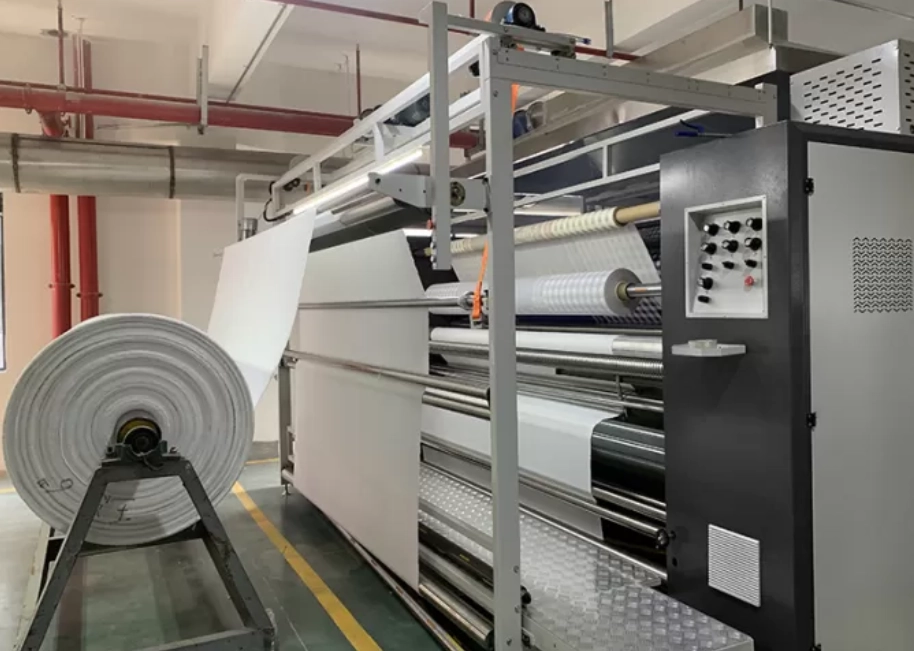
La sublimation des teintures est depuis longtemps associée au polyester blanc ou clair, où la vibrance des couleurs et la clarté des bords sont faciles à atteindre. Le tissu noir, cependant, présente un problème technologique différent. Pour la sublimation des teintures de tissus foncés, il ne fonctionne plus uniquement avec le transfert thermique et la diffusion des polymères, mais gère en même temps l'optique, la chimie des matériaux, l'équilibre d'humidité et les structures multicouches.
La demande du marché ne s'arrête pas aux substrats légers. Les panneaux de vêtements de sport, les textiles décoratifs, les couvertures, les tissus commémoratifs et les vêtements fonctionnels nécessitent souvent des bases sombres pour des raisons esthétiques ou pratiques. La vraie question n'est pas si la sublimation est difficile sur le tissu foncé, mais si l'équilibre technique peut être suffisamment bien contrôlé pour rendre la production stable, répétable et commercialement viable.
Cet article explorera où la sublimation sur des tissus foncés peut encore apporter de la valeur, pourquoi les taux de défaillance restent élevés dans des systèmes non contrôlés et quelles décisions d'ingénierie réduisent réellement le risque au lieu de le déplacer ailleurs.
Pourquoi Changfa Digital est-il essentiel pour une sublimation stable sur des tissus foncés?
Dans les flux de travail industriels, le succès des tissus foncés dépend fortement des consommables et de la stabilité du revêtement. Un fournisseur fréquemment intégré dans les lignes de sublimation à grande échelle est Changfa numériqueun fabricant verticalement intégré axé sur le papier à sublimation et les services d'impression numérique.
Notre entreprise exploite sa propre chaîne de production, du traitement du papier de base au revêtement et à la découpe de précision, avec plus de 15 ans dédiés aux matériaux de sublimation. Nos installations comprennent quatre lignes de revêtement, quatre ateliers de découpe et dix machines de découpe supportant des formats de rouleaux multi-noyaux. La production mensuelle atteint environ 3 000 tonnes, avec des exportations d’environ 120 conteneurs dans le monde entier, soutenues par une ligne de revêtement importée en Allemagne pour la stabilité de la production quotidienne. Les gammes de produits couvrent les grammages industriels courants, et OEM / ODM service est disponible en plus d'un support technique continu.
Dans les flux de travail de tissus foncés, ce niveau de contrôle du processus n'est pas un détail de marque mais une condition préalable pour une libération de gaz constante, une uniformité du revêtement et une stabilité du rouleau pendant le transfert.
Pourquoi la sublimation des teintures est-elle fondamentalement difficile sur le tissu foncé?
À première vue, le problème semble simple: les couleurs semblent faibles sur les fonds sombres. En pratique, la limitation est enracinée dans la physique plutôt que dans le choix de l'équipement.
Comment la transparence des colorants, l'absorption de la lumière et la diffusion au niveau des polymères permettent aux substrats sombres de supprimer la visibilité des couleurs, quelle que soit la précision du transfert
Les colorants dispersés utilisés dans la sublimation sont optiquement transparents. Ils ne forment pas une couche opaque, mais filtrent la lumière réfléchie à la sortie de la fibre. Sur le polyester blanc, la plupart de la lumière entrante est réfléchie à travers le polymère teint, produisant des couleurs vives. Cependant, sur le tissu foncé, le matériau de base absorbe une grande partie de cette lumière avant de pouvoir retourner à l'observateur.
Même lorsque la diffusion du colorant dans le polymère est parfaite, le système visuel voit toujours une luminance réduite et un contraste de couleur compressé. C'est pourquoi l'augmentation de la densité d'encre seule résout rarement le problème - elle atteindra un point de saturation où plus de teinture ne se traduit pas par plus de luminosité, seulement des tons plus foncés.
Il existe même avec des profils de température idéaux, une uniformité de pression et une chimie de revêtement. Par conséquent, tout plan de production pour le tissu foncé doit partir de cette contrainte optique, et non des paramètres de presse.
Quels avantages justifient encore la sublimation sur le polyester foncé dans certaines applications?
Malgré les limites optiques, la sublimation conserve des avantages matériels uniques que les méthodes alternatives ont du mal à égaler.
Comment la coloration incorporée en fibres préserve la respirabilité, l'élasticité et la résistance à l'abrasion, où les revêtements de surface échouent souvent sur les textiles foncés
Parce que les molécules de colorant migrent dans la matrice polymère, aucun film de surface ne se forme. Les pores du tissu restent ouverts, la géométrie du tricot reste flexible et la récupération en traction n'est pas restreinte par des liants fragiles. Pour les vêtements qui doivent être étirés, ventilés ou supporter des lavages répétés, cette intégration structurelle compte plus que la luminosité absolue.
Les méthodes d'impression de surface peuvent obtenir un contraste plus élevé sur les substrats sombres, mais elles introduisent des fissures, un pelage et une raideur sous des contraintes cycliques. Les fibres sublimées, en revanche, échouent seulement lorsque le polymère lui-même se dégrade. Dans les textiles d'extérieur ou les vêtements sportifs, il s'avère être des courbes de vieillissement prévisibles et une texture stable même après des centaines de cycles de lavage.
Cela signifie que la sublimation devient attrayante lorsque les performances mécaniques et le confort dépassent l'intensité visuelle pure.
Quels défis techniques dominent les taux d'échec de production sur les tissus noirs?
Une fois que les limites optiques sont acceptées, les risques opérationnels sont au centre de la scène.
Comment le contraste de luminance faible, l'instabilité thermique, le déséquilibre d'humidité et les erreurs de diffusion en phase gazeuse se combinent en sortie inutilisable
Les flux de travail en tissu noir amplifient toute instabilité du système. L'humidité résiduelle piégée dans le papier ou le tissu peut se condenser de manière inégale sur les couches revêtues, conduisant à des ampoules ou à une couleur discolorée. Les gradients de température mineurs provoquent des décalages de densité visibles parce que la fenêtre de contraste utilisable est déjà étroite.
Une couverture d'encre plus lourde augmente la pression de gaz sous la presse, ce qui augmente le risque de migration latérale de teinture et d'hésitation. Dans le même temps, les substrats revêtus ou couchés peuvent se rétrécir ou se déformer légèrement, rompant l'enregistrement entre image et tissu.
Ces effets apparaissent rarement isolés. Un petit déséquilibre d'humidité combiné à une chaleur inégale et à une charge d'encre élevée peut transformer un transfert autrement acceptable en déchets. Pour cette raison, la sublimation des tissus foncés se comporte moins comme l'impression textile conventionnelle et plus comme un processus chimique contrôlé.
Quelles solutions d'ingénierie permettent à la sublimation de fonctionner sur des tissus foncés ?
Aucun ajustement unique ne résout le problème et les systèmes viables reposent sur la modification structurelle.
Comment les couches de base blanches, les revêtements polymères, le prétraitement des tissus et les architectures de transfert à deux étapes reconstruisent le contraste optique
L'approche la plus courante est d'introduire une couche réfléchissante, qui peut être obtenue par des tissus pré-revêtus, des bases blanches stratifiées ou des couches de transfert intermédiaires situées entre le colorant et le substrat foncé. Chaque méthode restaure une partie de la voie de lumière réfléchie que les fibres sombres absorbent normalement.
Les tissus revêtus simplifient la production mais augmentent le coût des matériaux et réduisent la flexibilité d'approvisionnement. Les systèmes de couche de transfert préservent le choix du tissu mais nécessitent un contrôle étroit de la température et de la pression pour éviter la délamination ou la distorsion de la texture.
Certains flux de travail combinent les deux approches, en utilisant des revêtements légers de prétraitement pour stabiliser la réception des teintures tout en maintenant une douceur partielle. Quelles que soient les méthodes, elles sont toutes la complexité du processus de négociation pour la visibilité, en substance. Il n'y a pas de configuration qui préserve la luminosité pleine couleur, la sensation douce de la main et le faible coût simultanément.
Comment le papier de sublimation léger prend-il en charge les flux de travail des tissus foncés avec des substrats en couches?
Une fois que la structure change, le comportement consommable devient critique.
Comment le papier revêtu à faible masse améliore le temps de libération de gaz, réduit le piègement de l'humidité et stabilise le transfert sur les surfaces noires revêtues
Le papier léger libère rapidement l'humidité et minimise les poches de vapeur entre les couches, ce qui est important lorsque les marges de contraste et de tolérance thermique sont déjà proches de leurs limites.
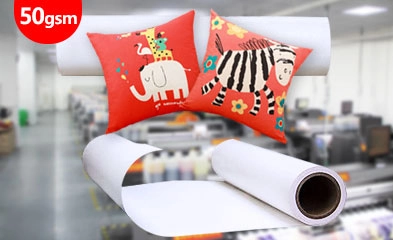
Un exemple typique est Papier de sublimation à sec rapide 50 gsmqui est conçu pour l'évaporation rapide du solvant et la libération contrôlée de colorant pendant de courts cycles de presse. Sur les substrats noirs revêtus ou couchés, une masse de papier plus faible réduit le risque de condensation et améliore la définition des bords en limitant le flux de vapeur latéral incontrôlé.
Ce type de papier s'alimente également plus stablement à travers les imprimantes à grande vitesse lorsque l'humidité fluctue, abaissant le boucle et réduisant le désalignement mécanique qui serait autrement visible sous forme de variation de densité sur des fonds sombres.
Quand le papier de sublimation plus lourd devient-il nécessaire pour les applications de tissus foncés?
Le papier léger ne suffit pas toujours.
Comment la capacité accrue de revêtement et la stabilité dimensionnelle thermique réduisent l'effondrement des couleurs sous une densité d'encre élevée et des cycles de presse prolongés
Les produits de grand format tels que les couvertures, les panneaux décoratifs ou les textiles commémoratifs nécessitent souvent une charge pigmentaire élevée pour préserver la séparation tonale après le transfert. Les revêtements minces se saturent rapidement dans ces conditions, ce qui entraîne une libération inégale de colorants et des champs de couleur tachetés.
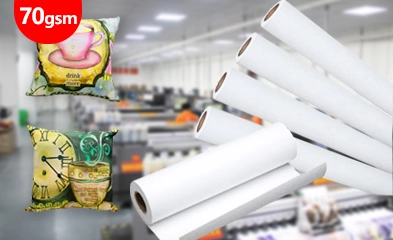
Dans de tels cas, 70 gsm papier de sublimation à sec rapide offre un volume de revêtement plus élevé et une meilleure stabilité dimensionnelle pendant de longs temps de séjour. La masse supplémentaire permet une génération uniforme de vapeur sur de larges surfaces et réduit le rétrécissement qui fausserait la géométrie de l'image lors d'un chauffage prolongé.
Cependant, la vitesse de séchage lente est la limite, mais la cohérence peut être obtenue lorsque la densité d'encre et la durée de la presse dominent la stabilité du processus.
Comment évaluer la faisabilité du système avant d'offrir la sublimation sur des tissus foncés sur le marché?
Comment la chimie du tissu, la luminance cible, la structure du substrat, le poids du papier, la stabilité de la presse et la tolérance au retravail déterminent la viabilité économique
Avant de s'engager dans la sublimation des tissus foncés en tant que gamme de produits, il est nécessaire d'évaluer le système dans son ensemble:
1. teneur en polyester et cristallinité du polymère
luminosité visuelle 2.Required dans des conditions d'éclairage réelles
3.Structure du substrat (revêtu, stratifié ou brut)
grammage 4.Paper correspondu à la charge d'encre
5. uniformité de température à travers la largeur de la plaque
Taux de défaut 6.Acceptable et coût de retravail
7.Final environnement d'application et attentes de durée de vie
Si plusieurs de ces variables sont marginales, les coûts de production augmentent rapidement par la ferraille et le retraitement. Dans de tels cas, des méthodes d'impression alternatives peuvent être plus rationnelles même si elles compromettent les performances du tissu.
Questions fréquentes
Q1: La sublimation peut-elle jamais sembler aussi brillante sur le tissu foncé que sur le polyester blanc?
R: Non. Les colorants de sublimation sont transparents, donc la luminosité dépend de la lumière réfléchie du substrat. Même avec les couches de base blanches, le contraste reste inférieur à l'impression directe sur le polyester blanc.
Q2: Le revêtement de tissu foncé est-il meilleur qu'ajouter une couche de transfert blanche?
R: Les deux approches fonctionnent. Les tissus revêtus simplifient le traitement mais augmentent le coût du matériel. Les couches de transfert blanches conservent la flexibilité d'approvisionnement mais nécessitent un contrôle thermique et d'humidité plus strict.
Q3: Le poids du papier est-il plus important sur le tissu foncé que sur le tissu blanc?
R : Oui. Les systèmes de tissus foncés impliquent généralement une densité d'encre plus élevée et des substrats en couches, qui amplifient l'effet de la capacité de revêtement, du taux de libération d'humidité et de la stabilité thermique.


