


Sublimation Pillow Covers: Polyester Face, Panel Size and Paper Coverage
بيع ساخن
التطبيق
Phone:+86-15215969856 E-Mail: 396838165@qq.com
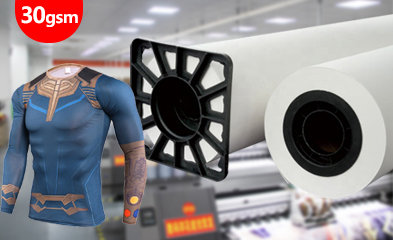
A pillow-cover order is settled before the press closes. The face has to be a light polyester that will take disperse dye, the finished panel has to fit the roll width or be split on purpose, and the ink in the artwork has to match the paper that will carry it. A blank sold for a craft press does not answer those three checks, and a repeat order cannot be specified from the first sample alone.
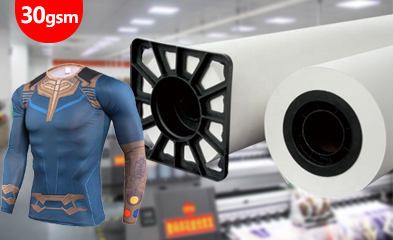
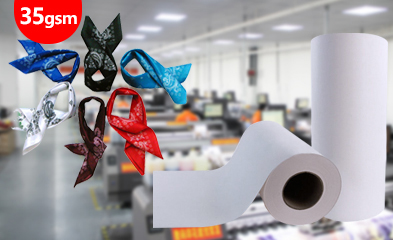
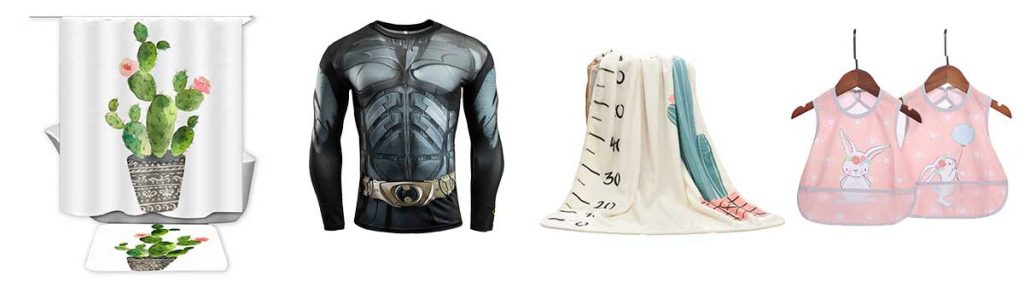
تشانغفا الرقمية names pillow covers on the 30gsm غير لاصق التسامي ورقة نقل الحرارة, together with banners, as a larger textile area for disperse ink on polyester. That coating is for clear edges on small and mid-size graphics. Heavier coverage moves to a thicker grade in the مجموعة ورق التسامي, slit from 61 cm to 320 cm, including 152 cm and 163 cm where that width removes an edge or a seam. Ink is taken from the Sublimation Ink series and matched to the printheads already on the line.
Check the Cover Face Before Planning the Transfer
Confirm a Light Polyester Print Surface
Disperse dye bonds into polyester fibre when it is heated. The colour ends up inside the fibre rather than sitting on top of it, which is why a sublimated cover survives washing. On cotton the same dye has nothing to bond with, and the print washes down to a shadow of itself. A coated hard blank is a different product again, made for a different transfer route. So the first check is not the cover as a whole but the face that will actually be printed: its fibre, confirmed from the fabric specification of that panel, not from the product name on the carton.
Light matters for a separate reason. Sublimation ink is transparent, so the face underneath shows through every colour laid on it. A white or near-white face returns the artwork as it was built. A cream or grey face shifts it, and no profile correction fully recovers a bright yellow printed over a dark ground. Two-tone covers follow the same rule in reverse: the polyester face is the print surface, and the coloured back is not part of the transfer at all. Confirm the face first, on the actual cover construction that will be ordered, because every later decision — width, paper weight, ink — assumes that surface is settled.
Keep the Artwork Inside That Surface
The printable area of a pillow cover is smaller than the cover. Seams take their allowance from every edge, a zip or an overlap takes more from one side, and the panel curves away from the press platen near the borders, where pressure and temperature are least even. Artwork built to the full nominal size of the cover will run its edges into exactly that zone. Text and logos suffer first, because a letterform clipped by a seam allowance cannot be repaired after sewing.
The working method is to build the artwork to the flat panel inside the seams, with the design’s important elements held further in again, away from the stitch lines. Background colour can run to the panel edge so no white line shows after sewing, but faces, text and brand marks belong inside the safe area. Where a design is meant to continue around the cover, that continuation is a separate panel decision, made when the panel width is chosen, not something the artwork file can improvise on its own.
Match the Finished Panel to One Roll Width
Add Hem and Wrap Before Choosing the Width
Roll width is chosen against the cut panel, not against the finished cover. The panel is wider than the cover it becomes: the finished width, plus the hem or seam allowance on both sides, plus the wrap — the extra fabric that folds around the insert or closes the back. A cover finished at 45 cm with a 1.5 cm allowance each side and a modest wrap is already a panel of roughly 55 cm before it goes anywhere near a printer. Two such panels nested side by side across the web, with trim margin between them, sit comfortably inside a 152 cm roll. The same order calculated from the 45 cm figure alone would have been quoted against a roll that could never carry it.
This is why the width question is asked after the cover construction is fixed. Change the closure from a zip to an envelope back and the wrap changes, and with it the panel, and with it the roll width that covers the order in one piece. The full grade-by-grade table behind these widths is set out in the guide to sublimation paper sizes; the point for a pillow order is that the number being matched is the panel, every time.
Split the Panel Only When One Width Cannot Cover It
Oversize covers exist — floor cushions, long bolster panels, covers cut for furniture rather than for a bed. When the finished panel, hem and wrap included, is wider than any slit width that fits the printer, the panel is split, and the split is a design decision rather than an accident of the roll that happened to be loaded. The seam is placed where the artwork carries the least detail: through a background area, along a pattern repeat, anywhere except across a face or a line of text.
Both pieces are printed from the same roll and the same batch, so colour and shrinkage behaviour match across the join, and they are transferred under the same conditions in the same session. A split decided at the specification stage costs a line in the order record. A split discovered at the cutting table costs the print run, because the seam lands wherever the remaining width leaves it, which is rarely where the design wanted it.
Match Paper Weight to the Ink in the Artwork
Use 30gsm for Clear, Lighter Pillow Graphics
Most pillow artwork is a logo, a line of text, a mid-tone image sitting on a white ground — graphics with clear edges and open space around them. That is the work the 30gsm Non-Tacky coating is rated for. Its specification sheet gives it two stars for maximum ink volume and four stars for transfer effect and for drying speed: it is built to release a controlled amount of ink cleanly and dry fast, at the standard transfer condition of 225°C for 20 seconds. Edges stay where the file put them, which is what a letterform or a fine pattern needs.
Two handling points belong with this grade. The paper absorbs moisture readily, so rolls stay in their sealed bag until they are loaded; a light roll left open in a damp store will not feed flat. And the grade runs on 2 inch and 3 inch cores, so the core is confirmed against the printer at the same time as the width. Within its ink limit, this is the economical specification for repeat pillow work, because the factory is not paying for ink capacity the artwork never uses.
Move Heavy Coverage to a Thicker Grade
A full-bleed photograph or a dark background reverses the calculation. The artwork now covers the whole panel at high ink load, and a coating rated at two stars for ink volume reaches its limit before the design reaches its depth: the surface stays wet, drying slows, and the dark areas transfer unevenly. The answer is a thicker grade from the same range, which carries more ink per square metre before pressing. The لفة جامبو 50 جرامًا للمتر المربع is the usual step up, rated three stars for ink volume with a transfer rate of 95% to 98% under normal running conditions.
The judgement is made from the artwork file, not from the product category. Two covers of identical size and fabric can need different paper, because one carries a centred logo and the other carries a photograph edge to edge. Coverage is estimated from the file — the proportion of the panel under heavy ink — and that estimate is what moves the order between the 30gsm roll and the thicker grade.
Lock the Specification Before the Order Repeats
Record Width, Weight and Printhead Together
A pillow order that repeats is re-run from its record, not from anyone’s memory of the sample. The record is one line long and it holds the whole specification: the face fabric, the finished cover size, the panel width after hem and wrap, the slit width of the roll, the paper grammage, the ink series, the printhead the ink was matched to, and the transfer condition used at the press. When the repeat order arrives, production works from that line. Nothing has to be re-derived, and nothing depends on the sample still being in the building.
Failed samples belong in the same record, with the reason attached. A sample that failed because the face was a polyester blend with too little polyester in it, or because the panel was calculated without the wrap, is information the repeat order needs. If the failure is not written down, it is usually repeated, because the conditions that produced it are still in place.
Match the Ink to the Heads Already on the Line
The ink side of the specification starts from the printheads the factory already runs. The Sublimation Ink series is supplied in CMYK, in 1-litre bottles across the 1513, 1962 and 1963 series, with a high-density variant for multi-head production machines, and its listed applications include pillow covers alongside shower curtains and other home textiles. The series for a given order is selected against the head model and the ink system already installed on that line, so the paper is specified against an ink the buyer’s printers are actually using.
This ordering matters because the three parts of the specification hold each other up. A paper weight chosen without the ink in mind can be overloaded by a high-density ink run at full strength; an ink matched to the heads but paired with the wrong panel width produces good prints in the wrong size. Width, weight and printhead are therefore confirmed together, on the same order, before the first production roll is slit.
استنتاج
Approve the cover and the paper as separate parts of the same order. A light polyester face, a panel that fits one slit width or is split on purpose, and a grammage that matches the ink in the file are the three conditions that make the transfer repeatable. The 30gsm Non-Tacky Sublimation Heat Transfer Paper covers pillow covers and banners when the graphic stays in its lighter range. Heavier coverage uses a thicker grade from the sublimation paper range, slit from 61 cm to 320 cm. Send Changfa Digital the printer and printhead, the usable roll width, the cover size and fabric, the artwork coverage, and a note of any failed sample, and the width, the grammage and the ink can be specified against that order.
الأسئلة الشائعة
Q1: Can any white pillow cover be sublimated?
A1: Only the face that is light polyester and printed with disperse dye. A cotton cover, a dark face, or a coated hard blank is a different job. Confirm the fabric of the actual print surface before the width and the paper weight are chosen.
Q2: Does a wider roll always remove the seam?
A2: A seam is unnecessary when one slit width covers the finished panel, including hem and wrap. Widths from 61 cm to 320 cm, including 152 cm and 163 cm, are cut for that panel. If the panel is still wider, the seam is placed in a low-detail area and both pieces come from the same roll and batch.
Q3: Should every pillow cover use 30gsm paper?
A3: Use the 30gsm roll when the graphic is a small or mid-size image that needs a clear edge. A heavy, full-coverage print needs a thicker grade that holds more ink before pressing. Paper weight does not turn a cotton face into polyester.


