


ขายร้อน
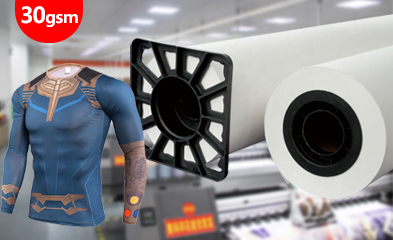
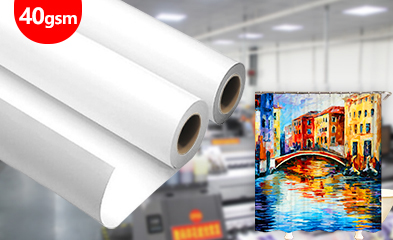
การประยุกต์ใช้งาน

Phone:+86-15215969856 E-Mail: 396838165@qq.com
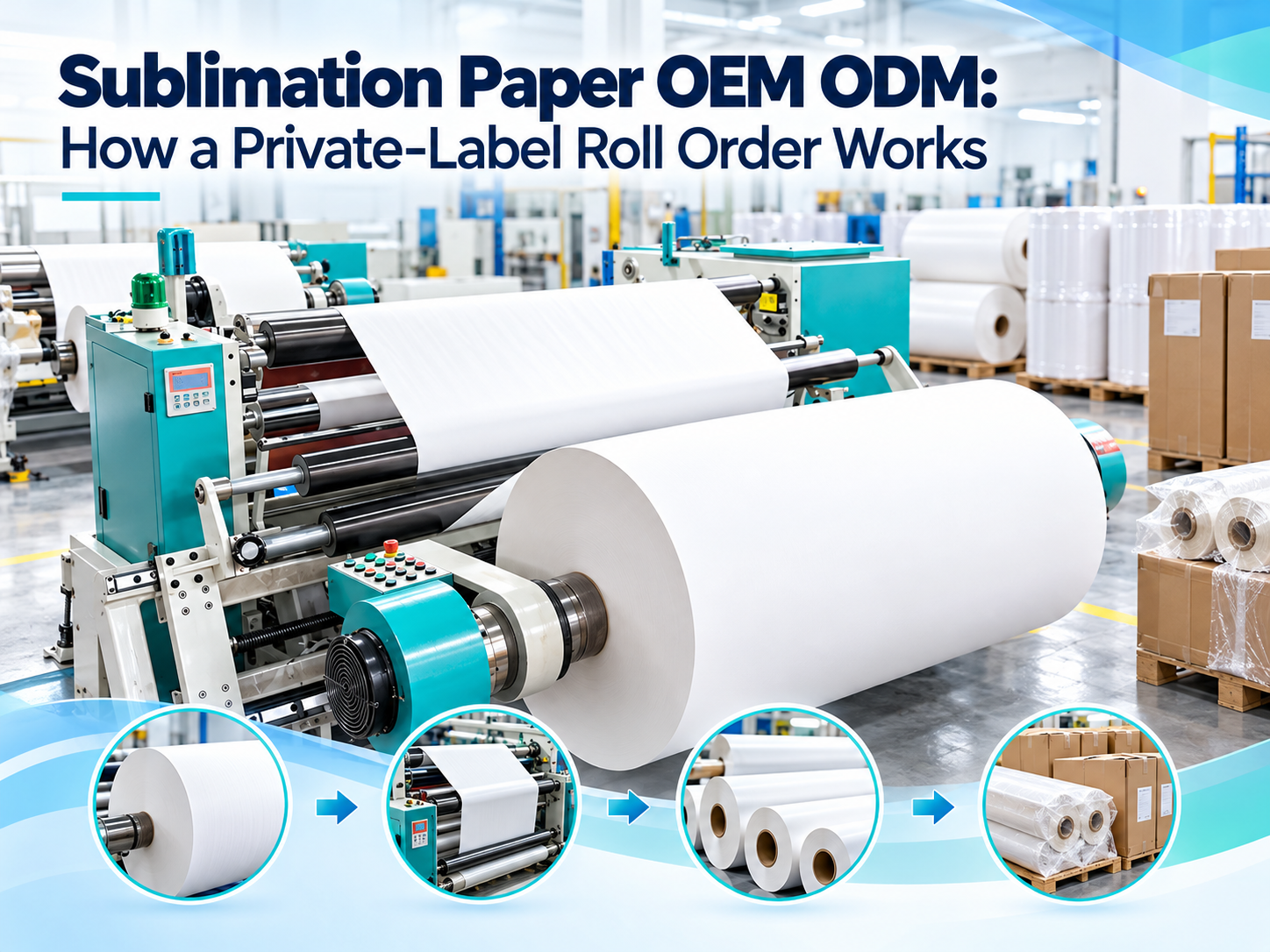
Six lines on a private-label order sheet decide how the whole batch ships. The six are width, grammage, core, length, packing and brand mark.
A blank line moves that decision to the mill. The mill fills it with whatever suits its schedule, and you meet that choice again in bulk.
Coating happens in house, on our own lines. Changfa ดิจิตอล runs 29gsm to 100gsm across a 61cm to 320cm width span, and ten slitting machines cut both core sizes on one floor.
Each line is yours to set, and the sample round is where it gets proved.
Read the Sheet Before You Ask for a Price
Width Comes From the Press and the Pallet
Start at the press. A 160cm machine cannot use a 190cm roll. The extra 30cm becomes trim on every turn.
Containers set the second limit. Say how you want the rolls palletised, because a wide roll and a narrow roll do not share one loading plan.
Write the trim allowance beside the width.
Name the finished product too. A garment panel or a flag sets a working width, and the panel count across the web fixes how much edge you trim.
Grammage and Length Move Together
Length per roll follows weight, and the sublimation paper grades run 29gsm to 100gsm. A light roll runs long. Buy 29gsm to 38gsm and the roll reaches 3,000 m. 40gsm stops in the same place, and 52gsm stops at 2,500 m.
Heavier paper buys you less. A 61gsm roll lands between 200 m and 500 m, and 81gsm or 95gsm between 100 m and 200 m.
Write the metres on the sheet. The slitting crew and the packers both work from that figure.
State the length you want, in metres, next to the grade. Those two numbers stay together from coating through to packing.
So 40gsm and 3,000 m are two decisions. Together they set the outer diameter.
That diameter has to clear the printer holder and the pallet height in the container.
Custom width sublimation paper changes the web and leaves the metres alone, so a narrower slit still carries the full 3,000 m. What that length does need is a diameter check against the holder and the pallet height.
Heavy grades sell in short rolls for good reason. Density eats length across the grade list.
An 81gsm roll carries under 200 m. A 29gsm roll at the same width runs fifteen times further.
Core Diameter Belongs to the Holder
Check the holder before the grade. Desktop inkjet units and narrow machines take 2-inch cores.
Wide production lines take 3-inch cores. Those rolls get lifted and moved in ways narrow ones never do.
One grade can leave the mill on either core. Get the holder size from the printer maker and write it on the sheet.
Ask how a part-used roll is lifted at the far end. Hand lifting and a crane favour different core sizes.
Grade rarely settles it. Changfa Digital supplies 30gsm, 35gsm and 40gsm on either core.
An adapter bridges the two sizes for a mixed fleet. It adds one step to every roll change.
Turn the Sheet Into a Sample
What One Sample Has to Prove
A sample answers what the sheet cannot. Print the artwork your customer sells, on the fabric they run.
Run that sample on the press that will print the order. Bench tests miss press speed and pressure.
Use the setting your press will use in production. The 50gsm jumbo roll page gives 225°C for 20 seconds.
Transfer rate runs 95% to 98%. 40gsm prints hold up when a dark or elastic fabric is stretched.
Sample size matters as well. A metre cut from the bench proves the ink. It proves nothing about edge trim or roll build at 2,500 m.
Core Caps, Packing and the Brand Mark
Branding belongs to the packing specification, and the core cap is the piece your customer sees first.
Bring the cap and any carton or pallet marking into the sample round. Packing gets booked with coating and slitting.
Ask for the pack drawing before the pallets are built.
The site that coats this paper runs four coating lines and four slitting workshops. A German-built coating line sits beside them.
A change in cap print or pallet pattern enters the run plan before coating starts. It costs less there than on the pallet.
Distributors buying sublimation paper roll wholesale usually want printed caps. They also want a fixed pallet pattern and their own carton label.
Say so while the sample is open. Each of those items moves a finishing step, and finishing steps are hard to move later.
One Round, or Two
Most orders settle width, grammage and core in one round. When the brand mark or the packing is new, budget two.
Those two fields are what your customer’s buyer checks first. They want a piece in hand.
Write the roll diameter on the sample label. The next round then has a baseline.
Send the sample to your customer with the sheet attached. Approval then covers the same values your order will use.
File the approved sample beside its sheet. Questions about shade, length or cap print all end at that pair.
Compare Bulk Paper With the Sheet You Signed
Checks on the First Delivery
Measure one roll before the pallets go into storage. Width, outer diameter and bore need no unwinding.
Any of the three can arrive wrong. Compare each one with the sheet you signed.
Weight gives a second reading in a minute. Grammage times width times length gives the kilos to expect.
A roll far from that figure deserves a recheck. Sign the delivery note once the numbers agree.
Log every check against the batch number. The next delivery then has something to compare with.
Print the artwork once from bulk paper when your customer asks for it. Use the same setting, fabric and file as the approved sample.
Where Orders Turn Into Rework
Rework starts with a figure nobody wrote down. A 2-inch roll will not sit on a 3-inch mandrel.
Rewinding a finished roll books a second pass. The order never planned for it.
Claims follow the same path. Shade tolerance, length tolerance and maximum diameter each need a value on the sheet.
A buyer at the loading dock argues from the document in hand.
A jumbo roll punishes a diameter error harder, because the length magnifies it.
A stated pallet height protects the shipment. That number outranks a lower unit price.
What to Send With the Enquiry
Nothing on that sheet can be settled by the mill alone. State the width and grammage that carry your brand.
Add the core diameter and the metres per roll. Then your packing and label requirement, and the sample you want.
The target market matters too, along with the size of one batch. Give the grade in gsm and the length in metres.
Add your delivery port and the packing drawing, if you have them.
With those in hand, an OEM sublimation paper order moves from sheet to sample in one exchange. The reply comes back as a grade, a core and a packing plan.
ข้อสรุป
The order repeats when the sheet holds every figure. Width, grammage, core, length, packing and brand mark each need a value.
Each value then needs one test on a real sample. Get all six right and the second batch runs on the first batch’s settings.
Skip one and the container ships with the mill’s guess inside it. Weighing a roll is the cheapest check you own.
คำถามที่พบบ่อย
Q1: Which fields can wait until the bulk order?
A1: None, for private-label work. Core diameter and brand mark sit in the packing schedule, and neither one survives being settled late.
Q2: How many samples should a first private-label order take?
A2: Compare the sample against the press that will run the bulk order. When your customer’s holder or press differs from the machine used for approval, run the second round on theirs before the batch is released.
Q3: What belongs in one batch quantity?
A3: Name the width, grammage, core, length per roll and packing for one production lot. State how many lots you plan, and keep the sample valid across all of them.


