


HOT SALE
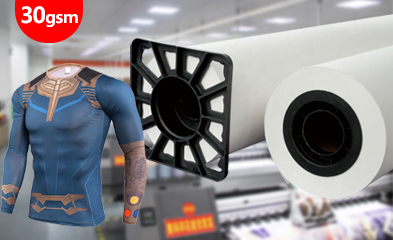
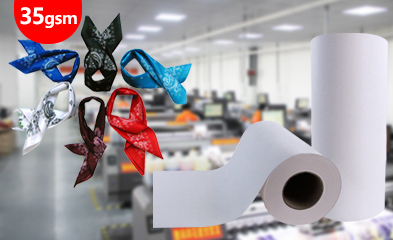
APPLICATION
Phone:+86-15215969856 E-Mail: 396838165@qq.com

Digital textile printing in 2026 is moving beyond the idea that a faster printer automatically creates a better production line. The bigger change is operational. Brands want shorter runs, quicker design changes, repeatable output, and less finished inventory sitting before demand is clear. That changes how textile factories need to think about printers, inks, transfer materials, fabrics, and heat-transfer capacity.
The most important digital textile printing trends are therefore not isolated technologies. They are changes in how production is organized. A factory can add speed and still lose time through drying, roll handling, transfer bottlenecks, or repeated corrections. The digital textile printing 2026 landscape increasingly favors production systems that can change jobs quickly without losing control over quality.
Why Is On-Demand Production Reshaping Digital Textile Printing?
On-demand manufacturing sounds simple: print closer to actual demand and keep production flexible. In practice, it places much more pressure on setup time, material consistency, and repeatability.
Shorter Production Runs and Faster Order Changes
A short run leaves less room for repeated setup and trial printing. Artwork may change several times in a day, while customers may switch fabric constructions, widths, or color requirements between orders.
Digital textile printing handles design changes more easily than processes that rely on physical screens, but the whole line still has to respond. For buyers, the useful question is not just how fast the printer runs. It is how much paper, ink, operator time, and transfer capacity are consumed while moving from one approved order to the next.
A machine such as the High Speed Sublimation Printer 5198-8 can support the printing stage, but production flexibility also depends on what happens before and after the printer.
Lower Inventory Exposure and More Flexible Production
Smaller production lots allow brands to test designs and replenish the styles that actually move instead of committing to large printed inventories in advance. That changes the meaning of textile production efficiency. Response time becomes almost as important as nominal machine output.
It also raises the value of having consumables available in practical specifications. Changfa Digital’s sublimation paper range covers 29, 33, 38, 40, 52, 61, 81, and 95gsm grades, with multiple roll widths and lengths for different production conditions. A factory does not need to force one paper weight into every job.
From Sampling Advantage to Scalable Manufacturing
Digital printing has long been useful for samples and short orders. The deeper 2026 change is the move toward using that flexibility in regular production.
A sample that looks right after a few meters does not prove that a long roll will behave the same way. Longer runs expose feed drift, drying limits, ink variation, and downstream capacity problems. Textile printing technology is therefore being judged increasingly by repeatability. Buyers need an approved printer, ink, paper, transfer condition, and fabric combination that can be reproduced after the sample stage.
Why Are Speed and Stability Becoming Equally Important?
High output remains valuable, but raw printer speed is becoming a weaker way to judge an entire line. What matters is how much acceptable fabric leaves the production process.
Production Speed Beyond Headline Printer Output
A printer may run quickly while the real line moves slowly. Paper may need more drying time. Operators may stop to correct tracking. The heat-transfer stage may process rolls more slowly than the printer produces them.
For digital textile printing 2026 investment decisions, buyers should compare usable production per shift rather than one headline speed figure. Printer width, job mix, paper behavior, transfer capacity, and operator workload all affect the final number.
Long-Run Stability and Repeatable Print Quality
Small variations become expensive when runs get longer. Changes in ink flow, paper moisture, feed tension, or transfer conditions can create shade differences or rework hundreds of meters after an otherwise good start.
Changfa Digital offers standard sublimation ink as well as high-density configurations for different printing requirements. Its product information includes standard ink for Epson I3200 configurations and high-density options for higher-head I3200 setups and Atexco Kyocera applications. This gives factories more room to match ink choice to the actual printing system rather than treating sublimation ink as one universal product.
Matching Higher Printing Output With Downstream Capacity
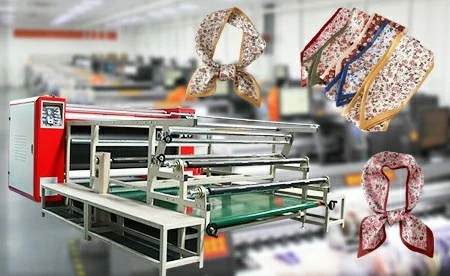
Faster printing can simply move the bottleneck downstream. Printed rolls start waiting, operators handle them several times, or the transfer section becomes the pace setter for the whole line.
The JM-800 Roll Heat Transfer Machine is relevant at this stage because continuous transfer control matters more as upstream output rises. Its configuration includes automatic blanket deviation correction and a double pneumatic pressure system.
How Is Automation Changing the Textile Printing Workflow?
Automation is useful when it removes a repeated production problem. Adding more automatic functions without knowing where the line loses time does not necessarily improve output.
Coordinating Printing, Feeding, and Heat Transfer
Printing, roll feeding, alignment, and heat transfer are connected. A small tracking change may first appear at the transfer stage even though the cause began earlier.
That makes automation a workflow issue rather than just a machine feature. A well-matched line reduces repeated stops, roll repositioning, and manual alignment work while leaving operators free to watch actual print and transfer quality.
Reducing Manual Intervention in Continuous Production
Experienced operators still matter. The problem is when continuous production depends on them making the same correction over and over.
If every long roll needs frequent tracking adjustments or repeated test transfers, increasing printer speed will not automatically improve textile production efficiency. Stable paper feeding, controlled ink delivery, and automatic deviation correction all reduce work that does not add value to the finished textile.
Finding Bottlenecks Across the Full Production Line
Factories often discover a bottleneck only after buying a faster machine. Printing improves, but drying becomes the limit. Transfer is upgraded, but fabric preparation slows the schedule.
A better use of textile printing technology is to map the line first. Record normal printing, drying, roll handling, transfer, inspection, and rewinding performance. The slowest or least stable stage should guide the next investment.
Why Are Ink and Transfer Materials Becoming More Important?
High-speed production makes consumable behavior more visible. Ink and paper that appear adequate during sampling may respond differently when production runs longer and faster.
Ink Stability and Printhead Compatibility
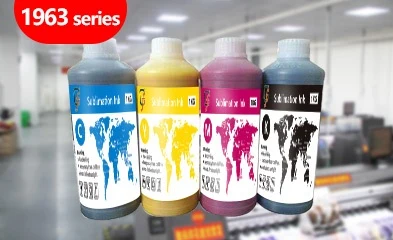
Ink is part of machine uptime, not just color. Compatibility affects how reliably the printing system operates over a production run.
The 1963 Series Sublimation Ink is one option in Changfa Digital’s sublimation ink range. More broadly, the company supplies standard and high-density sublimation ink configurations. Selection should start with the printer and printhead setup, then move to production volume, transfer result, and repeat-order stability.
Paper GSM, Drying, and Roll Handling at Higher Output
GSM should not be treated as a simple quality ranking. A lighter grade may work well where speed and fast handling matter, while another production condition may need more paper body or different ink capacity.
The 40gsm Sublimation Transfer Paper sits within Changfa Digital’s wider sublimation paper range. Buyers should consider paper weight together with ink load, drying, roll handling, width, and intended fabric rather than selecting a grade from GSM alone.
Matching Ink, Paper, and Fabric Before Bulk Production
The final textile still decides whether the earlier choices work together. Fabric construction, weight, polyester content, and stretch can change the transferred result.
Changfa Digital’s sportswear fabric range includes interlock and bird-eye constructions, along with 100% polyester and polyester-spandex options in different weights and widths. For example, the range includes 100% polyester bird-eye and interlock fabrics as well as stretch structures containing 4–12% spandex.
Bulk approval should therefore use the intended fabric. The printer, ink, transfer paper, artwork, and transfer conditions should stay as close as possible to the final production combination.
How Is Sustainability Changing Production Decisions?
One of the more useful digital textile printing trends is that sustainability is moving closer to production control. It is less useful to make a broad environmental claim than to identify where material, energy, or production time is actually being lost.
Reducing Reprints, Setup Waste, and Excess Materials
Short-run digital textile printing can reduce the need to produce large quantities in advance. But that advantage disappears if every new batch needs repeated tests or produces avoidable rejects.
Factories can track setup waste, reprint frequency, rejected meters, and material left after job changes. These figures make sustainability easier to connect with cost and capacity.
Improving Resource Efficiency Through Demand-Driven Production
Demand-driven production allows a factory to replenish a successful design without reproducing an entire collection. That can reduce finished inventory while keeping the operation responsive.
The production discipline still matters. Controlled ink use, suitable transfer paper, repeatable heat-transfer settings, and efficient changeovers are what turn flexibility into better resource use.
Measuring Sustainability Through Production Results
Production data gives buyers something practical to compare. Useful measures include meters printed versus meters accepted, ink used per approved job, setup waste, reprint frequency, and downtime linked to roll or material handling.
Those numbers also help diagnose problems. If rejects rise only after transfer, the printer may not be the weak point. If the issue appears after changing paper or fabric, the material combination deserves attention first.
What Should Buyers Prioritize for Digital Textile Printing in 2026?
A good investment decision starts with the production problem rather than the newest piece of equipment.
Match Capacity Across Printing and Heat Transfer
Compare printing and transfer capacity under the actual job mix. The goal is not to make every machine equally fast. It is to avoid one stage creating queues, extra handling, or idle time elsewhere.
When combining equipment such as the 5198-8 printer and JM-800 transfer machine, buyers should compare working width, typical roll length, shift volume, operator requirements, and the types of textile orders that will actually run through the line.
Test the Real Ink-Paper-Fabric Combination
A specification sheet cannot replace a production trial. Use the intended ink, paper grade, fabric, artwork, and transfer settings.
Run enough material to expose feeding, drying, and consistency issues. This is particularly important when changing paper GSM or moving from stable polyester constructions into stretch sportswear fabrics.
Evaluate Repeatability Before Increasing Output
A good production run should be reproducible on another day and another order. Record the printer mode, ink, paper grade, fabric lot, and transfer settings used for the approved sample.
Repeatability is one of the digital textile printing trends that matters most to B2B buyers. The competitive advantage is not producing one attractive sample. It is reproducing the approved result without rebuilding the process each time.
Choose Production Solutions Around the Bottleneck
Changfa Digital covers several stages of the sublimation workflow. Its sublimation paper operation extends from base paper through coating and slitting, while its wider product range includes sublimation inks, printers, heat transfer machines, and sportswear fabrics.
That breadth is useful when the real problem is not obvious. A buyer may not need a faster printer if transfer is already the bottleneck, or a new machine if the problem begins with material matching.
Factories planning an upgrade can contact Changfa Digital with the existing printer, ink system, paper grade, fabric type, transfer setup, target output, and the defect or delay that appears most often. Starting from the bottleneck makes the supplier discussion much more useful than starting from a generic product list.
Conclusion
The key digital textile printing trends in 2026 point in the same direction: more flexible orders, faster response, tighter process control, and better coordination between equipment and materials. On-demand manufacturing is moving beyond sampling, while automation matters most when it removes a real production bottleneck.
For buyers, the practical response is to evaluate the complete line. Printer capacity, ink stability, transfer paper behavior, fabric compatibility, and heat-transfer performance need to work together. Digital textile printing becomes easier to scale when every stage is tested as part of one repeatable process. That is the difference between adding equipment and building a production system that can support future orders.
FAQs
Q1: What Is the Biggest Digital Textile Printing Trend in 2026?
A1: The biggest change is the move from using digital printing mainly for samples and short runs toward using it as a repeatable production system. On-demand orders and faster design changes are pushing factories to make digital workflows more scalable without losing control over quality.
Q2: Why Does Production Stability Matter More as Printing Speed Increases?
A2: Higher output exposes weaknesses faster. Ink flow, paper drying, roll tracking, fabric handling, and heat-transfer capacity can all become bottlenecks. Stable production therefore depends on matching the whole line instead of increasing printer speed alone.
Q3: What Should Buyers Check Before Upgrading a Digital Textile Printing Line?
A3: Start with current output, target volume, working width, job mix, printer and printhead setup, ink, paper GSM, fabric construction, transfer capacity, and the main cause of downtime or rejects. Those details show whether the next improvement should involve equipment, consumables, process control, or several areas together.


