


HOT SALE
APPLICATION
Phone:+86-15215969856 E-Mail: 396838165@qq.com
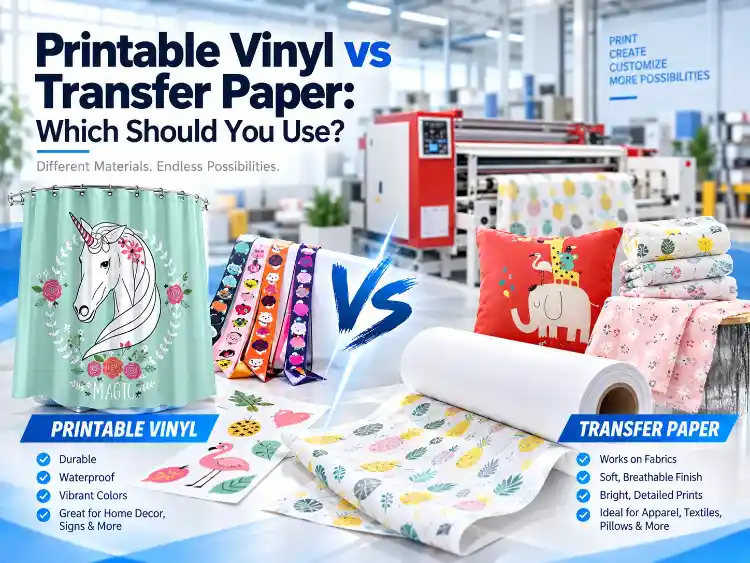
Start with the finished item, not the sheet. A laptop sticker, a cotton T-shirt graphic, and a dye-printed polyester jersey need different materials even when the same artwork arrives in the same folder. Printable vinyl vs transfer paper is easiest to sort when the final surface and application method are clear.
The first material usually becomes an adhesive graphic. Transfer paper carries an image into a heat-transfer or sublimation process. Vinyl transfer paper may mean application tape. The abbreviated product, Printable Heat Transfer Vinyl (HTV), is another heat-applied film. The terms overlap, so the buyer should confirm the exact product before printing.
Start with the Final Product
Sticker or Label
Choose printable vinyl when the image should remain a film on a compatible surface. Common jobs include:
- product labels
- laptop and equipment decals
- packaging accents
- signs and promotional pieces
Surface contact does the holding. Cleaning, edge design, and laminate choice matter more than sublimation settings.
Garment Graphic
For a garment, decide whether the image should sit in a transfer layer or become dye inside the fiber. With heat transfer paper, a printed layer can be applied to compatible fabrics. Sublimation paper works with disperse dye and polyester. Sublimation paper is not an adhesive product, so it cannot replace a sticker.
Cut Graphic That Needs Positioning
The phrase vinyl transfer paper often describes the tape used to move a cut adhesive graphic from its liner to the final surface. For that job:
- print and cut the vinyl
- weed the unwanted areas
- apply transfer tape
- squeegee the graphic
- peel and position it on a clean surface
The tape helps with handling. It does not turn an adhesive graphic into a permanent textile print.
What Printable Vinyl Does Well
The adhesive vinyl sheet is designed around its adhesive layer. It can produce a clean label or decal when the printer, ink, coating, cut profile, and surface all match.
Check the following before approving the job:
- inkjet or laser compatibility
- glossy or matte finish
- indoor or outdoor exposure
- laminate or protective top layer
- surface texture and curvature
The image remains on top of the item. For some products, that is exactly what the buyer wants. For apparel that must feel soft or survive repeated stretching, it may be the wrong route.
What Transfer Paper Does Well
Heat Transfer Paper
Heat transfer paper carries a printed image for heat application. It can be made for different garment colors and fabric types. The image is bonded through a transfer layer, so peel temperature, pressure, and fabric movement affect the result.
Sublimation Paper
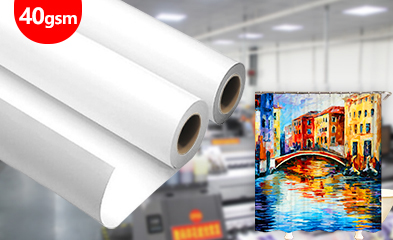
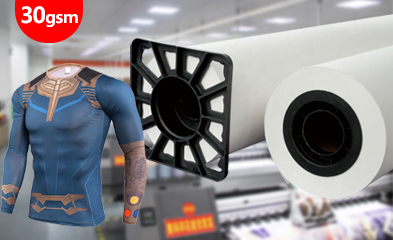
This paper carries disperse dye. Heat causes the dye to leave the paper and enter polyester. The print becomes part of the fiber instead of sitting as a separate film. Use 40gsm paper for lighter production needs or 100gsm paper when a heavier grade better suits the ink load and handling path.
How Do You Use Vinyl Transfer Paper?
For an adhesive decal, the order matters:
- Print and dry the vinyl.
- Cut the outline or shape.
- Weed the excess film.
- Cover the graphic with transfer tape.
- Burnish the tape so it grips the film.
- Clean the target surface.
- Position the graphic and squeegee it down.
- Peel the tape slowly at the recommended angle.
If the question is how to use vinyl transfer paper on a garment, confirm the product first. Application tape, heat transfer paper, and sublimation paper follow different steps.
At production scale, how to use vinyl transfer paper also includes checking the batch, tape width, release strength, and storage conditions. A tape that releases too quickly can pull fine lines out of position. A tape that grips too strongly can leave residue or stretch the film during removal. Keep one approved roll beside the sample and record its supplier reference.
How Do You Use Transfer Paper for Vinyl in Production?
Ask what the word vinyl means in the order. There are three common possibilities:
- adhesive vinyl that needs application tape
- Printable Heat Transfer Vinyl (HTV) that needs heat and pressure
- a printed paper transfer that carries a design onto fabric
When someone asks how do you use transfer paper for vinyl, do not answer from the product name alone. Check the printable side, ink, backing, adhesive or coating, press requirements, and final substrate. A short sample should include the full material stack.
The safest way to answer how do you use transfer paper for vinyl is to separate the physical steps from the material chemistry. The physical steps cover printing, cutting, positioning, pressing, peeling, and cooling. The chemistry decides whether the product is adhesive film, a heat-transfer layer, or disperse dye. Mixing those questions leads to a clear sample with the wrong durability.
What About Printable Heat Transfer Vinyl (HTV)?
Printable Heat Transfer Vinyl (HTV) is a printed film applied with heat. It is closer to a garment-transfer workflow than a peel-and-stick label.
Test the following:
- fabric composition
- stretch and recovery
- press temperature and pressure
- peel method
- wash durability
- edge and fine-detail quality
The film must remain flexible on the garment and survive its intended care routine. The printed sample must also look correct after pressing, washing, and stretching.
If the design crosses seams, zips, or high-stretch panels, cut a small test piece from the actual garment. Press the printed HTV across that area and inspect the edges after cooling. Record the press setting and fabric composition. The same film can behave differently on a tight knit and a loose woven fabric.
Which Should You Use?
Use printable vinyl for stickers, labels, decals, and applied graphics on compatible surfaces.
Use heat transfer paper when a printed transfer layer should be pressed onto a compatible garment.
Use sublimation paper when disperse dye must enter polyester. The result depends on the complete ink-paper-fabric combination, not paper alone.
The choice between printable vinyl vs transfer paper is therefore a material decision, not a brand preference. Write down the final product, substrate, printer, ink, equipment, and durability requirement before placing the order.
When the order repeats, compare the new material with the approved sample before running the full batch. Check color, coating, printable side, cut behavior, release, and final wash result. A supplier change should be treated as a new material approval, even when the product name looks identical.
Conclusion
The choice between printable vinyl or transfer paper should be made from the finished product backward. An adhesive graphic stays on the surface; a heat transfer bonds through a separate layer; sublimation moves dye into polyester. Match the printable side, ink, equipment, fabric, and care requirement before production.
For a material review, send the application, substrate, printer, ink, image size, quantity, transfer method, and wash or wear condition. That information lets Changfa Digital discuss the relevant transfer or sublimation paper without treating every printable sheet as interchangeable.
FAQs
Q1: Is printable vinyl the same as transfer paper?
A1: No. That sheet normally creates a graphic on the surface. Heat transfer paper applies a printed layer with heat and pressure, while sublimation paper uses disperse dye and polyester.
Q2: What is vinyl transfer paper used for?
A2: It often refers to application tape that moves a cut adhesive graphic onto its final surface. Some suppliers use it for printable media, so confirm the product before ordering.
Q3: Can I use sublimation paper instead of printable vinyl?
A3: Only when the final product is compatible polyester and the workflow uses sublimation ink and heat transfer. It is not a direct replacement for an adhesive vinyl graphic.


