


HOT SALE
APPLICATION
Phone:+86-15215969856 E-Mail: 396838165@qq.com
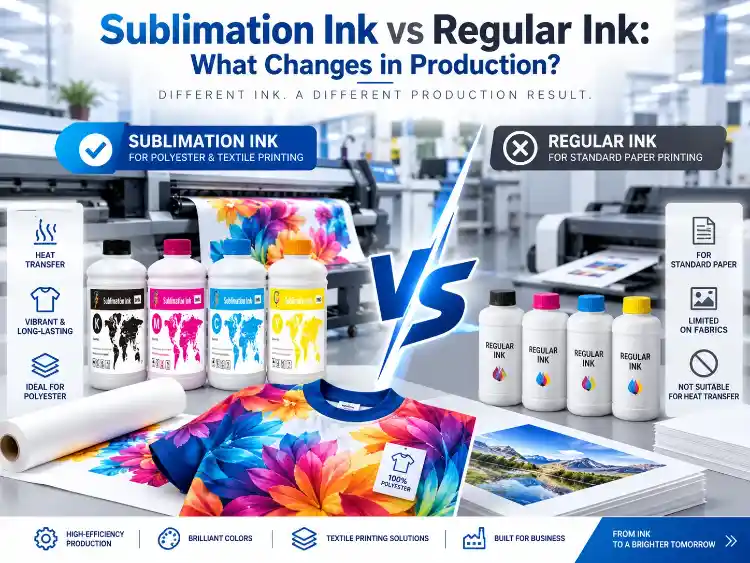
Here is a test any print shop can picture. Fill a sublimation printer with regular ink, and the nozzle check may look fine. The file prints. Then the first polyester shirt comes off the press looking weak.
That result is why sublimation ink vs regular ink matters in production. The printer can move either fluid, but only one fluid is designed to leave the paper as dye and enter polyester. The wrong choice may look acceptable for one sheet and fail the finished textile. Keep the approved options visible through the sublimation ink series.
Why Are the Two Inks Built for Different Print Jobs?
Colorant and Carrier Behavior Differ
Disperse dye gives sublimation ink its textile function. Heat turns the dye into gas, and polyester accepts it. Regular printer ink does not work that way. It is built to remain on the surface where it lands, whether that surface is paper, vinyl, or another printed material.
The Printed Image Is Only an Intermediate Stage
An operator may pull a sharp image from a sublimation printer and assume the job is almost complete. It is not. That sheet is a carrier. When the color stays on the sheet during pressing, the fabric receives very little dye. A dark paper image can hide that failure.
Fabric Compatibility Sets the Boundary
Polyester and high-polyester blends accept disperse dye when heat, pressure, and dwell time are controlled. Cotton and many natural fibers do not. Paper performance tells you the printer is working. It does not prove the fabric can take the image.
Can You Go from Sublimation Ink to Regular Ink?
Do Not Treat the Change as a Bottle Swap
Before anyone fills a new bottle, the team may ask, “Can you go from sublimation ink to regular ink?”, and the safe answer starts inside the machine. Tubes, dampers, filters, cartridge chambers, and the printhead can hold dye long after the bottle is empty. The first new print may still contain enough residual sublimation ink to hide an incompatibility.
Residual Ink Can Hide the Real Result
A clean nozzle check does not prove a clean ink path. Write down the old ink, printhead, nozzle pattern, and cleaning method before the change. Then repeat the test after the new fluid has moved through the whole system. Do not approve it after seeing only the first sheet.
A Controlled Test Is Better Than a Direct Replacement
The change belongs on a documented cleanout plan, especially when someone asks, “Can you go from sublimation ink to regular ink?”, during planning. Confirm the approved procedure before filling the new ink. Should the machine return to dye work, keep separate records, consumables, and test samples for each direction.
What Changes When Normal Ink Is Used in a Sublimation Workflow?
The Image May Sit on the Surface
Normal ink forms a film on the printed surface. In a sublimation workflow, the dye must leave the paper and enter polyester. When ink does not sublimate, the heat press transfers little color even when the printed paper looks correct.
Color and Durability Can Change Together
A regular-ink sample may look darker before transfer. After pressing, it can fade, crack, or sit on the fabric. Wash and stretch tests expose the difference faster than a visual check. Approve the result on the final polyester material, not the paper.
Maintenance Symptoms Can Point to the Wrong Ink
The team may ask, “Can you use normal ink for sublimation?”, before the first test. A short printer run does not prove a valid textile process. Frequent cleaning, changing nozzle patterns, weak transfer, and color drift are stronger signs that the fluid does not belong in this print path.
How Should Sublimation Ink for Epson Be Selected?
Start with the Printhead Family
For Epson printers, sublimation ink must be checked against the actual printer, printhead, channel layout, and ink-delivery hardware. Epson DX4, DX5, and DX7 heads appear in several production machines. A shared head family is a starting point, not the whole compatibility answer.
Match the Ink Series to the Machine Family
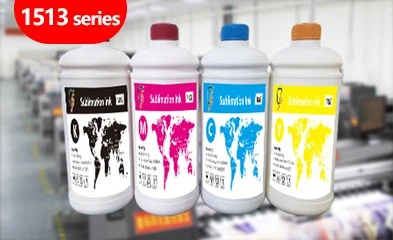
Changfa Digital lists 1513 Series for CF-2000 and CF-3000 printer families, 1962 Series for CF-6000 and CF-8000 families, and 1983 Series for Model-xplus-8 and CF-15000. Check the linked page for the exact machine before treating the ink as approved.
Check the Epson ET 15000 Configuration Separately
A review of sublimation ink for Epson ET 15000 should start with its own ink path and printhead. A desktop EcoTank printer and a wide textile machine may share a brand name, but they do not share one universal ink setting. Confirm the model, feed system, nozzle pattern, and fabric before approval. If a shop uses sublimation ink for Epson ET 15000 alongside a commercial printer, keep a separate baseline for each machine.
Can You Use Normal Ink for Sublimation?
The Simple Answer Is No for a Reliable Textile Workflow
Can you use normal ink for sublimation? Normal ink can be printed, but it is not designed to turn into gas and bond with polyester. A visible image before transfer is not proof of a sublimation result. The final fabric must show the intended color, hand, wash behavior, and repeatability.
Dedicated Ink Keeps the Supply Path Predictable
A dedicated ink gives the print profile, drying behavior, maintenance routine, and transfer settings one chemistry to follow. Fewer variables make troubleshooting clearer after a nozzle or color problem appears. The machine also has a known production role when the next ink change is reviewed.
Review the Whole Material Combination
Paper coating, ink load, polyester construction, heat, pressure, dwell time, and cooling all shape the final result. Ink cannot compensate for the wrong paper or an unstable press. Test the exact combination before a bulk order and keep the approved sample with its settings.
What Production Test Should Be Completed Before a Change?
Print a Nozzle and Flow Baseline
Print the same test file before and after any ink change. Include solid blocks, gradients, fine lines, and repeated passes. Keep the nozzle check, printer settings, and room conditions with the sample.
Compare the Result After Heat Transfer
Judge the polyester fabric, not only the paper. Check color, sharpness, dark areas, gradients, hand, and edge definition. Repeat the test on the exact fabric used in the order.
Run Long Enough to See Drift
Continuous printing can reveal flow or drying changes that a short sample hides. Compare the beginning, middle, and end of the run. Record cleaning frequency, dropouts, banding, and reprint causes.
Conclusion
Sublimation ink vs regular ink is a difference in production route. The ink must match the printhead, travel through the supply path, release from paper, and bond with polyester under controlled heat. If the final product depends on dye transfer into fabric, use dedicated sublimation ink and verify the complete printer-paper-fabric combination.
For a focused ink review, send the printer model, printhead, current ink, target fabric, paper, ink load, run length, and the defect that prompted the change. That information lets Changfa Digital compare the relevant series without treating every Epson printer or ink path as equivalent.
FAQs
Q1: Can you go from sublimation ink to regular ink without cleaning the printer?
A1: Do not assume that a direct change is safe. Residual dye can remain in tubes, dampers, filters, and printheads, so the printer and ink supplier should confirm the cleaning and conversion procedure before the first production test.
Q2: Can you use normal ink for sublimation on polyester?
A2: Normal ink is not designed to turn into gas and bond with polyester. It may print an image, but it does not provide the same sublimation path or final textile result as dedicated sublimation ink.
Q3: Does every Epson printer use the same sublimation ink?
A3: No. Epson models can differ in printhead, ink-delivery system, and firmware. Verify the exact model and printhead instead of using a general brand recommendation.


