


HOT SALE
APPLICATION
Phone:+86-15215969856 E-Mail: 396838165@qq.com

Ghosting in sublimation printing looks like a small defect at first, but in bulk textile orders, it can quickly turn into rejected goods, wasted sublimation paper, and a delayed shipment. Before changing heat press settings or blaming the fabric, buyers and production teams need to know what ghosting is, where it comes from, and which part of the process should be checked first.
Overviewing Ghosting in Sublimation Printing
Defining Ghosting in the Context of Sublimation
Ghosting is one of the common problems in sublimation printing, especially when the order volume is large and every piece has to look the same. It means a light shadow, second image, or blurred edge appears beside the main design. The print may still be visible, but it no longer looks clean. For sportswear, banners, mugs, metal panels, and other transfer products, this kind of defect is easy for end customers to notice.
The Science Behind Sublimation and Image Transfer
Sublimation printing works by turning ink into gas under heat and pressure. The gas enters the polyester fiber or coated surface, then cools and stays inside the material. During this short process, the sublimation paper and the substrate must stay in the same position.
If the paper moves while the ink is still active, even a little, the image can transfer twice. One image is the main print. The other becomes the ghost. Heat differences across the platen can also cause uneven transfer. Some parts of the ink may vaporize faster than others, and the final image may look soft, fuzzy, or slightly shadowed.
Common Causes of Ghosting in Sublimation Printing
Most ghosting problems come from small handling mistakes, unstable paper, uneven pressure, moisture, or machine problems.
Misalignment During Heat Press Transfer
Paper movement is one of the most direct causes. It can happen when the operator closes the heat press, opens it too fast, or removes the paper while the transfer is still hot. When the press opens, a small air lift or vacuum effect can pull the paper away from the fabric. If the ink has not fully cooled, it may leave another light image.
Heat-resistant tape helps, but only when used properly. If there is too little tape, the paper can slide. If the tape is loose, it does not hold the paper in place. If the operator stretches the paper or pulls it while taping, the paper may move back slightly during heating. These small details matter more in bulk orders than in sample printing.
Inconsistent Heat or Pressure Distribution
Heat and pressure need to be even. If the heat press has cold spots, one area may transfer more slowly than another. If the pressure is not even, part of the paper may not stay flat against the fabric. Both situations can create soft shadows or weak edges.
Old press pads are a common problem. After long use, they may lose shape or become uneven. A damaged heating element can also cause temperature differences across the platen. For B2B production, these machine issues should be checked before assuming the sublimation paper or ink is the only reason.
Moisture and Environmental Factors
Moisture can also cause ghosting. Polyester fabric, coated blanks, or sublimation paper may absorb moisture during storage. When the heat press closes, that moisture turns into steam. The steam can push the transfer paper away from the surface for a moment, and this small lift may cause blur or ghosting. High humidity in the workshop makes the problem worse. Paper may curl, edges may rise, and fabric may not stay flat.
Diagnosing Ghosting Issues in Production Workflows
Identifying Patterns and Root Causes in Prints
The direction of the ghost image is useful. If the shadow always appears upward, the paper may be lifting when the press opens. If it shifts to one side, the paper may be sliding during closing or peeling. If the edge looks soft all around, heat or pressure may be uneven.
Test prints are worth doing before bulk production. A small test can compare pressure, time, temperature, paper fixation, and material condition.
Evaluating Equipment Performance and Calibration
Heat press machines need regular checking. An infrared thermometer can help check whether the platen temperature is even. Press pads should be checked for flatness, dents, and compression loss. Timer accuracy also matters. If the machine runs longer or shorter than expected, the ink behavior may change.
For factories handling repeat orders, calibration should not be treated as extra work. It is part of keeping the same print result from one order to the next. Ghosting often comes from small machine changes that nobody notices until the printed goods start failing inspection.
Procurement Advice for B2B Buyers: Reducing Sublimation Ghosting Risks
Check Sublimation Paper Stability Before Comparing Price
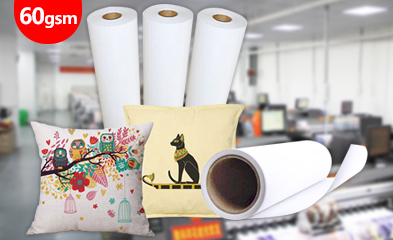
Cheap paper can look fine in a quick sample but fail during long-run production. Buyers should check whether the paper stays flat under heat, handles the ink load, and feeds smoothly through the printer.
Changfa Digital is a sublimation paper manufacturer and digital printing service. It is a factory for sublimation papers, from base paper to coating and slitting. For buyers who care about repeat orders, this factory setup can help keep paper quality steadier.
Match Paper Weight with Fabric Type, Ink Load, and Printing Speed
Paper weight should match the real job. Light paper can work for fast printing and lower ink load. Heavier paper is safer for rich colors and higher ink coverage. If the design has many dark areas, the buyer should test a heavier option to reduce curling and movement during transfer.
Changfa Digital’s main sublimation paper range includes 29gsm to 100gsm, with available widths from 61cm to 190cm. It can cover most of the production demands.
Request Sample Testing Under Real Heat Press Conditions
Samples should be tested with the buyer’s own printer, ink, fabric, pressure, temperature, and dwell time. A supplier sample that looks good in another workshop does not always perform the same in a different production line.
Changfa Digital supports sample customization. Buyers can customize it with samples, and the products needed can also be customized. This is useful for factories that need a certain roll width, paper weight, or production setup.
Confirm Roll Width, Core Size, and Machine Compatibility
Wrong roll width or wrong core size can cause feeding tension problems. If the roll does not match the printer or heat transfer setup, edge curling, paper skewing, and paper movement may happen more often. Buyers should confirm roll width, core size, packing method, and machine fit before placing bulk orders.
Compare Drying Speed, Ink Release, and Paper Flatness
Drying speed and ink release should be tested together. If the paper surface stays too wet, the print may smear or move. If the ink release is not clean, the final color may look weak. If the paper does not stay flat, ghosting risk increases.
Some sublimation inks adopt environmentally friendly solvents, which are safe and nontoxic. They also offer a wide color gamut, vivid color, and improved black coverage after transferring. When this type of ink is matched with flat sublimation paper, the production result is easier to control.
Build Anti-Ghosting Controls into Bulk Order Standards
Ghosting control should be written into bulk order standards. Buyers can include requirements for paper flatness, roll width, ink absorption, heat resistance, sample approval, and transfer testing. This makes quality checking clearer before shipment.
FAQ
Q1: How can I choose the right paper weight to avoid ghosting in high-speed production?
A1: Match the paper weight with ink load, fabric type, and printing speed. For high-density graphics, 90gsm or 100gsm options from Changfa Digital are often safer because the paper can stay flatter and handle more ink during heat transfer.
Q2: What is the minimum order quantity MOQ for customized widths to fit our specific heat press?
A2: Changfa Digital supports different widths from 61cm up to 190cm. For customized widths or bulk orders, the MOQ depends on the selected paper weight, width, and packing requirements. It is better to confirm machine size and monthly usage first, then discuss a suitable order plan with the supplier.
Q3: How do your sublimation papers handle high humidity in tropical production environments?
A3: Changfa Digital’s sublimation papers are made with coating technology from Germany to support flatness and moisture resistance. Still, buyers should store paper in a dry, controlled area to keep the best transfer performance.


