


HOT SALE
APPLICATION
Phone:+86-15215969856 E-Mail: 396838165@qq.com
 Black polyester sublimation remains worth discussing in 2026, yet it is not a simple print-and-press process. The main issue is not the fabric itself but how sublimation ink behaves on dark synthetic surfaces. Before selecting paper, heat settings, or transfer methods, buyers need to understand where the technical limits begin.
The Technical Constraints of Sublimation on Dark Synthetic Fibers
Understanding the limits of decorating dark garments matters for any professional digital printing service.
The Physics of Sublimation Ink and Color Absorption
The sublimation ink is translucent, and therefore relies on the reflection from the substrate for the color to be visible. The conventional screen printing ink creates a layer on top of the fabric, which is opaque and thus blocks out any reflection behind it. In the case of sublimation dyes being printed on a light-colored or white shirt, there is a reflection behind it, and therefore the dye reflects back through and shows its color. However, when the sublimation dye is printed on a black polyester, there is little or no reflection since most of the light energy is absorbed by the dark material, and the dye remains invisible even if it has bonded on a molecular level.
Heat Press Dynamics and Fabric Scorching
Transferring designs requires substantial heat, which can change the surface of synthetic fabrics. The high temperatures used for sublimation may cause shining or bruising on black polyester. This happens when heat and pressure flatten the fibers, changing how they reflect light and leaving a permanent glossy mark.
Synthetic fibers react strongly to heat, so permanent press lines often appear around the design area, and this effect shows more clearly on dark fabrics. Controlling dwell time and pressure helps protect garment structure, yet the risk of scorching or fiber damage remains a key concern in large-scale production.
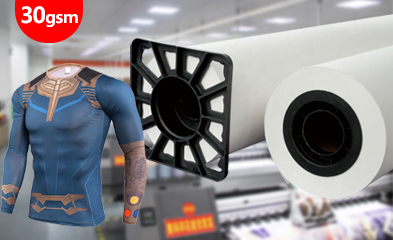
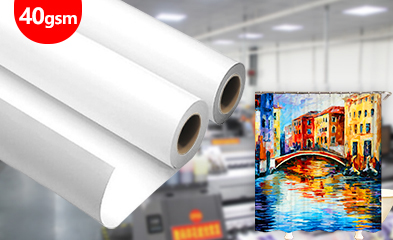
This is also where paper selection becomes part of production control. A stable sublimation paper cannot change the color limit of black polyester, but it can support cleaner ink release, faster drying, and more predictable transfer during repeated runs. Changfa Digital offers sublimation paper rolls in multiple gsm options, so fabric printers can choose lighter paper for faster lines or heavier paper when higher ink load and stronger transfer performance are needed.
Emerging Solutions for Dark Fabric Decoration
Industry workarounds now address the limits of black polyester by introducing a white base layer or reflective medium. These approaches let users apply sublimation paper in ways that avoid the usual transparency problems.
The Role of Specialized Sublimation Glitter and Flocked HTV
Glitter particles supply a reflective surface that keeps sublimation ink visible. First, a layer of white or silver sublimation-ready glitter vinyl is pressed onto the black polyester. This step creates a light background for the dye. Flocked heat transfer vinyl serves the same purpose by acting as a white or light carrier that accepts ink easily and provides a fabric-like texture. Both methods place a physical layer between the ink and the black fiber, giving the dye a reflective surface so the graphic remains visible and durable.
Advancements in Sublimatable Coating Sprays
Liquid polyester coatings can be sprayed onto dark fabrics to form a receptive surface. These sprays add a thin layer of clear or white polyester resin to the garment. Durability depends on the coating’s chemistry and curing method, and most sprays need a specific pre-treatment and drying cycle. Although the coatings allow direct printing on dark substrates, washfastness stays a concern because the bond between the spray and the underlying fabric can weaken over time, leading to fading or cracking after repeated washes.
Hybrid Technologies and Alternative Processes
For professional output, hybrid technologies often deliver more consistent results than modified sublimation alone. Combining sublimation with DTF has become a fast-growing area. DTF prints the design onto PET film using CMYK colors followed by a thick white ink layer. Hybrid systems combine the fine detail of sublimation with the solid coverage of conventional printing. Adhesive powders help bond the print to the synthetic surface. High-quality DTF film ensures the transfer stays sharp and the white base blocks the black fabric underneath.
White toner laser printing competes with these hybrid options. Laser transfer systems use white toner to create a base layer for color, then transfer the image in a two-step process. This approach removes the transparency problem of standard sublimation inks by providing a solid physical barrier. Still, there is a clear difference in hand-feel and breathability between toner-based transfers and sublimation. Sublimation feels weightless, while toner and DTF transfers add a noticeable hand that may affect comfort in high-performance sportswear.
Practical Considerations for Professional Production
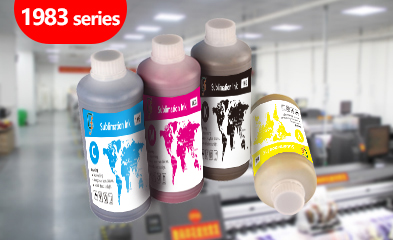
Large-scale orders require attention to small color shifts that occur on dark substrates. Wide color gamut and vivid color, along with strong black coverage after transfer, mark high-quality sublimation ink, yet a proper carrier is still needed on dark garments.
Color Accuracy and Visual Limitations
Checking how hue shifts when sublimation ink meets dark underlying tones forms an important part of quality control. Even with a white carrier, heat can cause gas-out, allowing black dye from the garment to migrate into the design. Ghosting is another issue on high-density black knits. It occurs when the transfer paper moves slightly during sublimation. In addition, achieving bright neon or pastel shades on dark substrates remains limited because the dark background tends to reduce perceived brightness.
For B2B buyers, the safer approach is not to expect sublimation paper to overcome the black fabric limit, but to use stable paper to control the parts that can be controlled. Changfa Digital supplies sublimation transfer paper in different weights for polyester fabric printing, helping factories improve ink release, drying stability, and transfer consistency in repeated production.
Assessing Durability and Longevity
Durability serves as the main measure of professional-grade apparel. Textile materials after transfer reach Sunproof Level 6 and Washproof Level 4-5. Checking crack resistance of carrier-based sublimation methods helps ensure customer satisfaction. High-quality production must evaluate how repeated laundering affects the bond between the polyester and the transfer medium. Professional standards for peel strength and color retention require that a design stays intact for the life of the garment.
Material Science and Future Prospects
Future progress in decorating dark synthetics depends on advances in ink chemistry and fiber engineering. Current research aims to create opaque sublimation inks that could cover dark backgrounds. This task is difficult because raising pigment density while keeping viscosity low enough for inkjet heads often causes clogs. Another area of interest involves reactive dyes that respond to specific light wavelengths, allowing them to stay visible even on black bases.
Improvements in polyester fiber production are also helping printability. Researchers are developing synthetic fibers that contain internal voids or reflective cores to support printing from within. Studies continue on how moisture-wicking performance changes when heavy ink loads or carrier layers are added, since performance remains critical for athletic apparel. Work on dye-migration-resistant fabrics in sportswear also reduces the chance that black pigment from the shirt will bleed into the design during the heat press cycle.
FAQ
Q1: Why can’t I see the design when I do sublimation printing directly on black polyester?
A1: Sublimation ink is transparent and works like a lens; it needs a light-colored background to reflect light through the pigment. On black polyester, the dark fibers absorb all the light and hide the ink.
Q2: How can I prevent heat press marks or “shining” on dark synthetic fabrics during the transfer process?
A2: To reduce bruising on black polyester, set the heat press pressure to the lowest effective level and use a protective Teflon sheet or pillow. Using high-quality sublimation paper that releases ink quickly can also shorten the required dwell time.
Q3: Can better sublimation paper make black polyester prints bright enough for bulk production?
A3: No. Sublimation paper can improve ink release, drying speed, image sharpness, and transfer stability, but it cannot create a white base on black polyester. For B2B orders, Changfa Digital is more suitable for helping buyers test suitable paper weight, transfer consistency, and production stability on light polyester fabrics or properly prepared substrates.


