


Heat Transfer Paper vs Heat Transfer Vinyl: Which One Is Better for Shirt Printing?
Vente chaude
Application
Phone:+86-15215969856 E-Mail: 396838165@qq.com
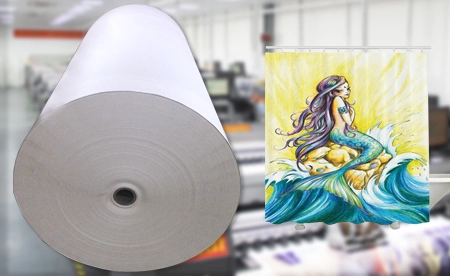
Shirt printing has developed into a highly specialized field of production where the selection of transfer materials substantially influences appearance quality, durability, production speed, and cost control. In heat-activated decoration approaches, papier de transfert de chaleur and heat transfer vinyl stand out as two common solutions. Even though each technique depends on heat and pressure to place designs onto clothing, the underlying mechanisms, physical characteristics of the materials, and production suitability show considerable variation.
In professional decoration environments, the decision is rarely about which method is “better” in general. The proper technology emerges from factors, including fabric composition, pattern complexity, order amounts, and workflow efficiency. The article analyzes the functional differences distinguishing heat transfer paper from heat transfer vinyl primarily based on performance instead of surface evaluations.
What Are the Fundamental Differences Between Heat Transfer Paper and Heat Transfer Vinyl?
Grasping the operational principles of each approach becomes essential before assessing final results.
How Does Heat Transfer Paper Work?
Heat transfer paper serves mainly in the role of an ink-transporting medium. Patterns receive direct printing onto specially treated sheets through suitable colorants, followed by application onto fabric utilizing controlled heat and pressure. Throughout the pressing stage, the printed ink detaches from its carrier and attaches securely to either the exterior or interior structure of the textile fibers according to compatibility factors.
Such a procedure enables complete chromatic reproduction, smooth tonal shifts, and highly detailed photographic content during one continuous pressing action. Since the carrier sheet remains separate from the finished garment, properly executed applications create prints that integrate naturally into the material texture.
How Does Heat Transfer Vinyl Work?
Heat transfer vinyl depends upon factory-colored thermoplastic films featuring thermally sensitive adhesive applied to one surface. Desired shapes undergo precise cutting from supplied rolls, followed by careful elimination of surplus portions, after which the prepared design receives heat activation onto the apparel item. The resulting polymer coating bonds permanently but flexibly across the fabric exterior.
This particular technique demonstrates particular effectiveness with uncomplicated contours, alphanumeric elements, and emblem-style graphics. Multiple hues generally demand individual film layers, thereby extending preparation duration whenever elaborate artwork appears.
Which Method Produces Better Visual Results?
End-user perception frequently begins with evaluation of surface appearance, especially in commercial branding and retail merchandise categories.
Which Method Handles Detailed Designs Better?
Heat transfer paper demonstrates a marked advantage when processing sophisticated visual content. Fine contouring, gradual shading progressions, shadow details, and realistic photographic reproduction occur without the necessity for sequential layering. Consequently, promotional apparel, contemporary fashion illustrations, and personalized artistic expressions benefit substantially from this capability.
Design constraints remain connected primarily to output device capabilities rather than inherent material restrictions because reproduction originates through printing processes.
When Does Vinyl Provide a Cleaner Finish?
Heat transfer vinyl generates exceptionally defined boundaries and consistently solid color areas. Identification marks, numerical designations, and textual components display remarkable sharpness and uniformity, explaining widespread adoption throughout athletic apparel manufacturing and institutional uniform programs. Nevertheless, the capability for rendering subtle tonal variations or intricate multi-hue combinations remains comparatively restricted.
How Do Durability and Comfort Compare After Washing?
Continued performance characteristics and wearing experience significantly affect customer retention patterns and overall brand evaluation.
Which Option Lasts Longer Under Frequent Washing?
Heat transfer vinyl commonly exhibits robust resistance against repeated laundering cycles owing to its relatively substantial construction and reliable adhesive attachment. Properly executed applications demonstrate strong opposition to fracturing phenomena and noticeable color degradation. Performance levels achieved through heat transfer paper depend considerably upon coating formulation standards, ink composition characteristics, and exactness during thermal application. Appropriate material combinations and precise parameter management enable paper-based applications to maintain satisfactory longevity, although severe mechanical stress might produce earlier signs of deterioration compared with vinyl alternatives.
Which Option Feels Better on Fabric?
Transfers originating from heat transfer paper typically present reduced perceptible weight while preserving greater air permeability, particularly across technical performance textiles. The additional film layer characteristic of heat transfer vinyl creates detectable surface elevation capable of modestly restricting airflow through extensive coverage regions. Expectations regarding tactile comfort, therefore, differ substantially according to intended garment function and wearing context.
How Do Production Speed and Workflow Influence Choice?
Operational productivity frequently determines economic viability, particularly in environments featuring tight delivery schedules or highly variable order specifications.
Which Method Works Better for Short Production Runs?
Heat transfer paper facilitates swift adaptation to individualized requirements. Artwork proceeds immediately from digital output to thermal application without intermediate cutting procedures or excess material removal stages. Such streamlined progression is particularly advantageous for limited quantity production, singular custom requests, and situations involving frequent pattern modifications. This inherent adaptability aligns effectively with immediate fulfillment systems and prototype creation activities.
Which Method Supports Repetitive Designs Efficiently?
Heat transfer vinyl demonstrates considerable strength during extended production sequences featuring identical graphic elements applied repeatedly across numerous garments. Following initial preparation of cutting specifications, subsequent applications proceed with relative simplicity while color uniformity persists reliably throughout entire production runs.
How Does Material Selection Affect Print Efficiency?
Material quality directly influences chromatic transfer stability, drying speed, and general process stability.
Which Sublimation Paper Supports Efficient Shirt Printing?
In sublimation material manufacturers, Changfa numérique maintains vertically integrated operations, including base paper creation, coating, slitting, and global distribution. With more than fifteen years of specialized experience, multiple coating lines, and a monthly production capacity reaching thousands of tons, our organizational structure emphasizes stable ink release, predictable material performance characteristics, and enhanced manufacturing efficiency. Complete internal quality control supports professional printing environments where repeatability and throughput are critical.
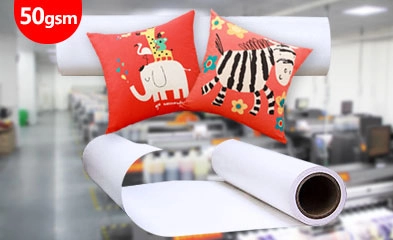
One typical specification is Papier de sublimation 50 gsm, which effectively balances ink absorption capacity and efficient release properties, thereby making it suitable for apparel decoration, which raises a high demand for production and transfer quality.
When Is Fast-Drying Paper Necessary?
Materials with fast-dry performance become critically important in large-scale production environments. Higher printing speed requires rapid ink solidification to prevent undesirable transfer before pressing operations. Thicker paper structures with optimized coatings assist in maintaining size flatness and processing reliability for heavy ink loads.
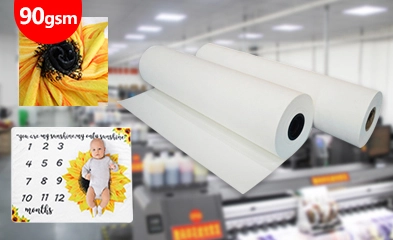
Le Papier de sublimation à sec rapide 90 gsm is designed for such demanding circumstances, delivering enhanced drying speed while maintaining structural stability throughout wide-format operations and continuous production.
How Can Printing Defects Be Avoided in Both Methods?
Most imperfections originate from incompatible material pairings or inconsistent application parameters instead of fundamental technique limitations.
What Causes Transfer Paper Printing Issues?
Frequently encountered difficulties encompass inappropriate thermal calibration levels, non-uniform pressure distribution, or residual moisture content present in either substrate or carrier medium. Elevated ambient humidity disrupts proper ink migration patterns, while inadequate temperature application frequently produces partial bonding phenomena. Systematic environmental monitoring and routine equipment adjustment substantially decreases occurrence frequency.
What Causes Vinyl Transfer Problems?
Difficulties associated with heat transfer vinyl commonly trace back to incorrect blade penetration environments, incomplete surplus material elimination, or insufficient thermal activation duration. Proper coordination between temperature exposure and dwelling time is essential for complete adhesive bonding; otherwise, deviations often manifest as edge lifting or peeling after washing.
Which Method Fits Different Shirt Printing Business Models?
No universal approach accommodates every operational strategy effectively.
When Should Paper Transfer Be Preferred?
Heat transfer paper applications demonstrate particular suitability whenever vibrant multi-hue graphics, realistic photographic content, or expedited custom production schedules represent primary requirements. Minimal preparatory intervals and substantial artistic latitude render this technique especially advantageous in promotional campaigns, seasonal fashion releases, and individualized merchandise categories.
When Should Vinyl Transfer Be Preferred?
Heat transfer vinyl continues to provide reliable performance characteristics in applications emphasizing resilient identification elements, alphanumeric applications, and institutional uniform requirements where structural consistency and exceptional laundering resistance assume primary importance. Athletic organizations, occupational apparel lines, and brand-focused merchandise categories frequently derive significant advantages from these inherent properties.
Conclusion
Heat transfer paper and heat transfer vinyl fulfill different functions throughout garment decoration activities. Paper-oriented transfer provides design freedom and efficient customization, while vinyl alternatives provide durability and visual uniformity for simple graphics.
The final effect is fundamentally determined by proper material specifications, meticulous parameter control, and precise alignment between the selected methodology and the actual production goals. By selecting the method that matches production goals rather than forcing a universal solution, printing operations achieve better consistency, efficiency, and customer satisfaction.
FAQ (questions fréquentes)s
Q: Which method is better for full-color images?
A: Heat transfer paper demonstrates greater suitability for photographic reproductions, smooth tonal progressions, and intricate chromatic compositions.
Q: Does vinyl always last longer than paper transfers?
A: Heat transfer vinyl frequently exhibits superior resistance against surface abrasion, although carefully executed applications utilizing premium paper-based materials can deliver comparably satisfactory performance.
Q: Can both methods be used on polyester shirts?
A: Affirmative responses apply. Sublimation-oriented paper transfers achieve particularly effective results specifically upon polyester substrates, while heat transfer vinyl maintains broad compatibility across diverse textile compositions.


