


Vente chaude
Application

Phone:+86-15215969856 E-Mail: 396838165@qq.com
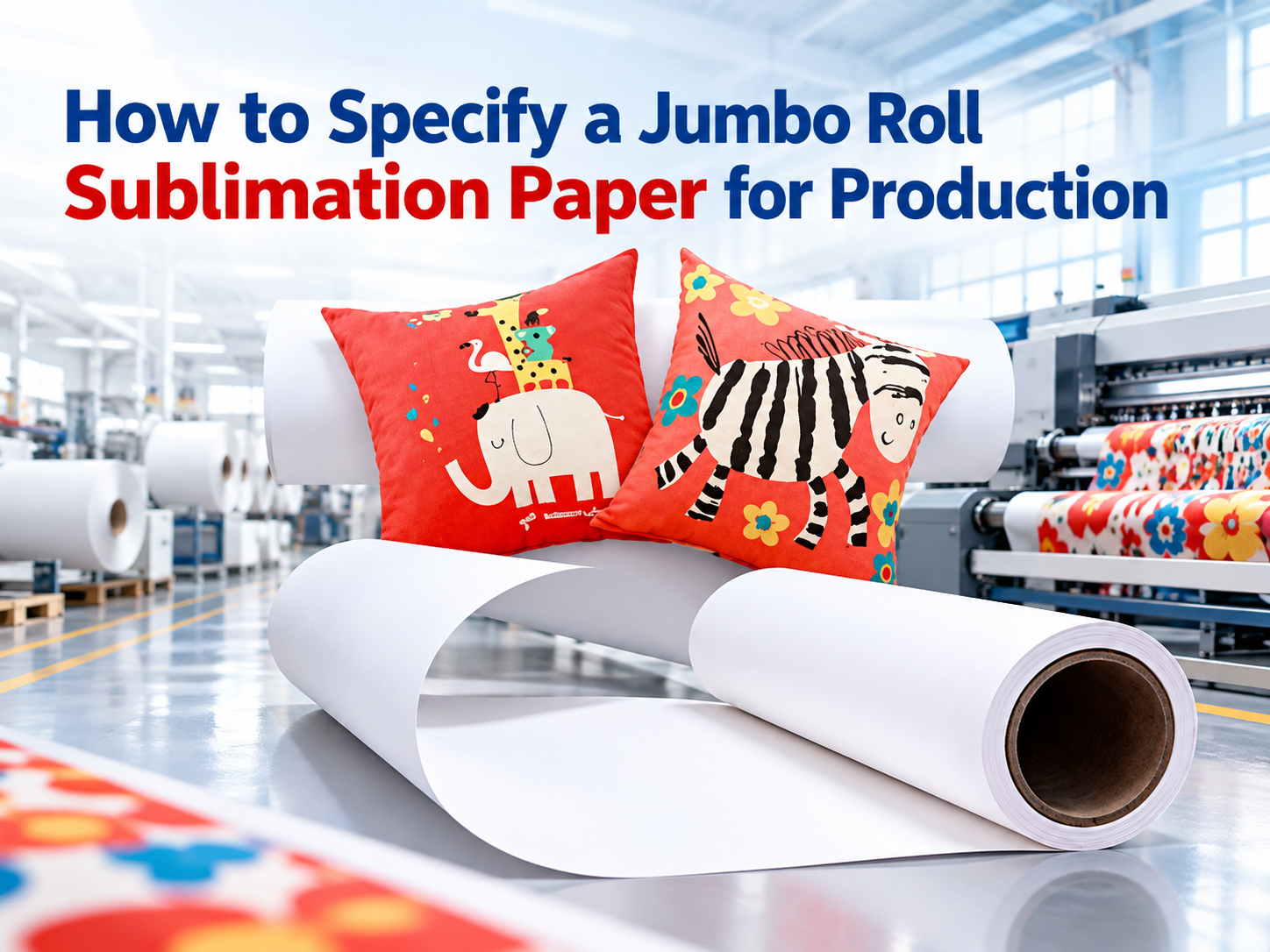
A roll of sublimation paper is not simply a larger package of the same paper. It changes how the material is mounted, unwound, tensioned, spliced, stored, and consumed. A specification that fits a desktop printer can become a production risk when the same paper is placed on a wide machine or a continuous transfer line.
For buyers, the useful question is not only how many metres are on the roll. A jumbo roll sublimation paper specification has to connect roll dimensions, core, winding, coating, printer, transfer equipment, fabric, and warehouse handling. That is where supplier conversations become more productive.
Specify the Roll Around the Machine, Not the Catalogue
Core, Diameter, and Shaft Fit
For a roll of sublimation paper, the core must fit the printer or unwinder without slipping, collapsing, or forcing the operator to adapt the machine. Core diameter also affects how the roll sits on the shaft and how tension is transferred through the paper. A diameter accepted by one unwinder can fail on a different shaft or brake.
Roll diameter matters beyond storage. A large roll can reduce the number of changes, but it also adds weight and inertia. The unwinder, brake, and paper path need to handle that load without pulling the edge or changing web tension as the roll gets smaller.
Width, Edge Quality, and Fabric Utilisation
Width should follow the actual printable area and the fabric being processed. A roll that is wider than the useful image area creates avoidable waste, while a narrow roll may force operators to combine panels and increase alignment risk. Edge quality matters too. A clean edge helps the paper track through the printer and reduces the chance of dust or a folded edge entering the transfer line.
Buyers should compare the roll width with the printer, the heat transfer machine, and the order mix. A production line that handles several fabric widths may require two or three roll specifications rather than one compromise size.
Test the Roll Before It Reaches Full Production
Start With Winding and Unwind Tension
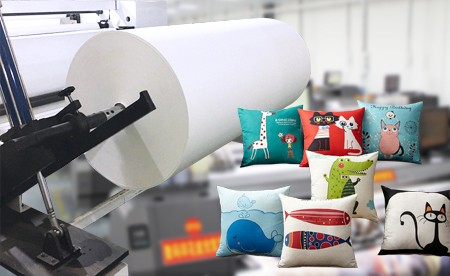
Winding quality becomes visible when the roll starts to unwind. A roll that looks tight in the warehouse can release unevenly, telescope, or pull the paper edge during acceleration. Check the first metres, the middle of the roll, and the final section. Behaviour shifts as the diameter decreases.
Unwind tension should be stable enough to keep the web controlled without stretching or distorting the paper. If operators adjust tension repeatedly to compensate for one roll, the problem may sit in winding, core fit, or roll storage rather than the printer setting.
Check Splices, Edge Damage, and Dust
Splices deserve a clear specification. A short splice may be acceptable for some workflows, but a splice that passes through a high-speed printer or transfer line without warning can cause a jam, a pressure mark, or a missed section of the image. The buyer should know where splices are permitted, how they are marked, and how they affect the run.
Edge damage and dust are easy to overlook in a catalogue but obvious in a production line. Inspect the outer layers, the sides of the roll, and the paper after unwinding. A clean roll reduces cleaning cycles and protects both the printhead and the transferred image.
Confirm Release and Colour Across the Roll
Paper can change from the outside to the inside of a roll when storage or winding is inconsistent. Print the same test image at several points in the roll and compare colour density, release, and residue. Do not judge the roll from one sample near the outer edge only.
A change in coating lot or storage history can alter roll behaviour. A supplier qualification should therefore include a roll-level record: width, GSM, core, winding, splice handling, storage, printer, transfer settings, and observed result.
Protect the Roll From Warehouse to Press
Humidity, Compression, and Stacking
Paper takes on moisture from the surrounding air and can lose its flatness under compression. Storage position, pallet support, humidity, and temperature can all influence how the roll performs when it is opened. A roll that sits on an uneven base may develop a soft side or edge deformation before it reaches the printer.
Production teams should keep rolls in a stable area and avoid stacking that puts pressure on the roll face. When a roll has been stored for a long time or moved between environments, allow it to stabilise before running a critical order.
Make the Supplier Handoff Measurable
A sublimation paper supplier reviewing a sublimation paper roll range needs more than an order quantity. Provide the printer, unwinder, transfer machine, roll width, core, GSM, fabric, usual run length, warehouse conditions, and the defect that matters most. The reply can then address the real specification instead of only the catalogue size.
For repeat orders, keep a sample or record from the approved roll. When a new batch arrives, compare the roll edge, winding, release, and colour against that reference. The goal is not to reject every small difference. It is to identify the differences that can interrupt a production run before the complete order is committed.
Where Changfa Digital Fits
A Jumbo Roll Range Built Around Production
For this kind of roll programme, Changfa numérique offers the 100gsm fast-dry sublimation paper roll and jumbo roll options for polyester fabric work. The relevant advantage is not only the roll size. It is the ability to discuss width, core, coating, storage, and transfer behaviour as one production package.
That package should link back to the paper range when a workshop needs more than one grade or format. A single roll can support a trial, but repeat production depends on a supplier able to keep the specification stable.
A Supplier Conversation That Starts With Data
Ask the sublimation paper supplier for a review based on the machine list, roll dimensions, expected monthly consumption, fabric type, and current failure mode. When the buyer is a distributor, include the target printer widths and the SKU logic behind the order. A specification built from those facts is easier to repeat than one based on a generic `sublimation paper manufacturer` claim. A sublimation paper manufacturer should be able to show how the roll specification connects to the printer and transfer line.
The best roll is not the largest one available. It is the roll that fits the machine, survives the warehouse, unwinds consistently, and transfers the image without adding unnecessary changes to the production line.
Conclusion
A jumbo roll specification is a production decision that begins with the machine and ends with the repeat order. Core, diameter, width, edge quality, winding, splice handling, storage, and release all affect how the roll performs after it leaves the warehouse. Buyers should qualify the roll through the actual printer and transfer line, then keep a reference for future batches. The conversation becomes productive when it includes the machine, roll dimensions, fabric, run length, and failure mode instead of only the paper grade. Changfa Digital’s roll range gives the discussion a concrete starting point, but the approved specification still belongs to the production line. Check the roll as a system, and the difference between a large roll and a reliable roll becomes clear.
Questions fréquentes
Q1: What is the most important jumbo roll specification?
A1: There is no single specification. Core fit, roll diameter, width, winding, edge quality, GSM, storage, and release all need to match the printer and transfer line.
Q2: Can I change from one roll supplier to another without a test?
A2: No. Compare the new roll with an approved reference across winding, splicing, edge condition, release, and colour before committing a critical order.
Q3: How should a distributor choose roll SKUs?
A3: Start with the printers and fabric widths used by the target customers, then combine the smallest practical number of widths, cores, GSM grades, and roll lengths that can cover repeat demand without excessive stock.


