


HOT SALE
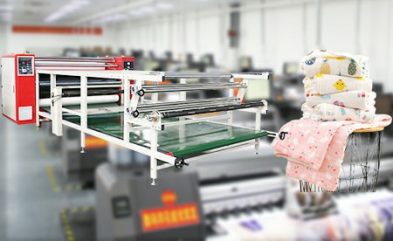
-3.jpg "800*1900mm Digital Heat Transfer Printing Machine Roll Heat Transfer Machine")
APPLICATION
Phone:+86-15215969856 E-Mail: 396838165@qq.com
Selecting the most suitable dye sublimation approach for printing on polyester materials relies on grasping the polymer makeup of polyester, along with its thickness and surface features. Pairing the correct sublimation paper thickness—such as fast-dry 60 gsm for thinner textiles or sturdy 90 gsm for denser ones—helps avoid ghosting, warping, and color fading. Management of the environment, equipment calibration, and fast-dry layers additionally ensure clear and durable outcomes. Reliable providers that maintain unified manufacturing and steady standards contribute significantly to reaching effective and accurate sublimation printing for polyester-related uses.
What Factors Should You Consider Before Choosing a Dye Sublimation Solution for Polyester Fabric?
Why Polyester Fabric Demands Specialized Sublimation Techniques
Dye sublimation printing on polyester stands out because of the material’s chemical composition. Polyester consists of synthetic polymers with closely arranged molecules that require substantial heat to separate and permit dye penetration. As a result, sublimation inks must convert directly from solid to gas state without passing through liquid during the transfer process. This direct change allows the ink to merge deeply into polyester threads rather than remain on the surface to produce bright and enduring prints.
Moreover, mismatched sublimation materials and polyester textiles can cause shade alterations, ghosting, or total color removal after washing. Thinner polyester items, for instance, the 36F Interlock (GZP-005) at 120gsm, show greater sensitivity to wrong heat levels or paper choices in sublimation. Therefore, picking appropriate sublimation paper and ink mixtures proves vital to prevent flaws and boost durability.
How Fabric Weight and Texture Influence Paper Selection
The physical traits of polyester material, including its grams per square meter (GSM), types of weaving, and flexibility, greatly influence the choice of suitable sublimation paper. Thinner fabrics, like the 100D Interlock (GZP-001), weighing 155gsm, might suffer ghosting or creasing when the paper exerts too much pull or misses proper release traits.
Heavier polyester mixtures, such as GZS-002 (75D Bubble) at 210gsm, require a firmer transfer paper that keeps position steady during heat pressing. An unsuitable paper could slide or twist under force, which affects print precision. For sharp pictures, the paper coating must align with the fabric’s absorption speed. Any discrepancy can produce irregular color transfer or fuzzy borders.
How Do You Select the Right Sublimation Paper Weight?
When Should You Choose 60 gsm Fast-Dry Paper?
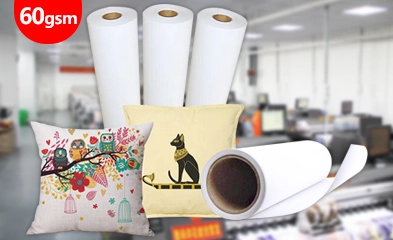
60 gsm fast-dry sublimation paper is suitable for fast-paced textile-making environments where quick production and lower costs are the most important. This type works well for thinner polyester clothing or flexible signage tasks where exact detail ranks lower but rapid pace remains key.
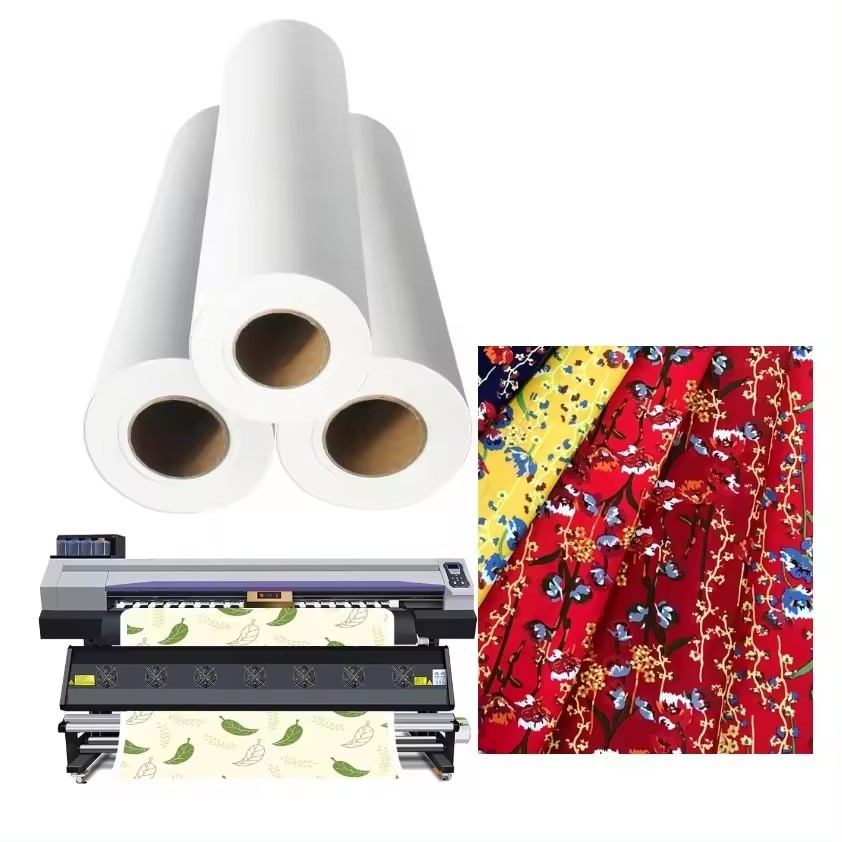
Our main products include 29gsm, 35gsm, 40gsm, 50gsm, 60gsm, 70gsm, 90gsm, 100gsm. Among these, 60gsm provides some of the quickest drying features with little cockling. This quality makes it ideal for high-throughput printers using Epson I3200 or Kyocera heads. The fast absorption of fast-dry coating shortens the waiting time between printing and pressing steps.
One advanced coating line imported from Germany supports daily output for sublimation paper. This setup ensures even coating standards across all thicknesses, including 60 gsm, which strengthens its reliability in large-scale operations.
What Makes 90 gsm Fast-Dry Paper Suitable for Complex Jobs?
For intricate tasks on thicker polyester bases, such as furniture coverings or advertising goods, 90 gsm fast-dry sublimation paper delivers greater stability. Such steadiness matters greatly when handling heavy ink amounts or performing multiple color layers, since small misalignment can create errors.
This thickness handles larger ink volumes, which boosts the richness and strength of prints. The benefit is quite valuable, especially in dark shades or strong contrast patterns. Besides, the added weight offers improved handling during loading on rapid printers, which solves problems like wrong feeds or skewing.
Around 120 containers are shipped by us globally each month. This broad distribution highlights steady product standards valued by customers needing precise sublimation performance.
How Does Print Environment Affect Sublimation Results?
Why Controlling Humidity and Temperature Is Critical
The ambient conditions in the printing area directly influence the results of dye sublimation polyester. High moisture levels slow ink drying on paper, which raises the chances of marks or color spread during movement. On the contrary, dry environments can generate static buildup inside printers, which causes feeding inaccuracies and poor alignment.
Additionally, steady room temperature supports even dye gasification in transfer. Changes in heat can lead to partial dye change or patchy dye conversion, or uneven penetration into polyester fibers. For best results, environmental settings should stay within advised limits tied to the specific sublimation ink and printer type.
What Role Does Printer Calibration Play in Color Accuracy?
Equipment calibration makes sure digital designs match printed outcomes on polyester bases faithfully. ICC profiles connect printer results to particular traits of paper and material. These profiles consider factors like ink chemistry, printer head resolution, and surface reflectivity.
Frequent checks on nozzles are necessary—particularly with fast-drying papers such as 60 gsm—because blocked nozzles can produce stripes hard to fix after transfer. Modern color control software also maintains uniformity across batches by tracking changes and adding fixes instantly.
Are There Differences Between Fast-Dry and Standard Sublimation Papers?
How Fast-Dry Coatings Improve Workflow Efficiency
Fast-dry sublimation papers feature special absorbent coatings that speed up drying while keeping picture sharpness. This improvement greatly streamlines production steps by permitting a direct shift from printing to pressing. Besides, it also further reduces dangers linked to ink transfer during stacking or handling, a key in large output settings where pace cannot lower standards.
Absorbent coatings reduce drying periods without harming image detail. Changfa Digital’s fast-dry selection uses its own coating methods to balance rapidity with reliable performance across thickness options.
When Would Standard Coated Papers Be Less Effective?
Regular coated sublimation papers take longer to dry compared to fast-dry versions, which increases the risks of ghosting, mainly on tightly woven polyester items such as GZP-015 (100D Bird eye). Longer drying can also create delays in automated lines where ongoing throughput is essential.
Besides, they might not work well with rapid industrial printers that apply heavy ink quickly. Slower uptake can cause pooling or marks before heat transfer occurs.
Why Should You Choose a Reliable Supplier for Your Sublimation Needs?
What Sets Changfa Digital Apart in the Textile Printing Industry?
Changfa Digital performs as a skilled maker of sublimation paper and has provided digital printing support for over 15 years. The facility handles sublimation papers fully, from raw paper creation to coating, cutting, and worldwide shipping. Full control over each production phase allows tight quality checks.
Four coating lines exist at Changfa Digital, along with four cutting areas and ten machines for 2 and 3-core packing rolls. This strong setup enables the supply of varied widths from 61cm to 190cm and multiple GSM choices tailored for different polyester tasks.
Furthermore, 24-hour service remains available, so contact can occur promptly for any concerns, which ensures skilled printers receive quick technical help suited to their setup. Customization with samples stays possible, and needed products can receive tailored adjustments.
FAQs
Q: Can I use 60 gsm sublimation paper on thick polyester canvas?
A: It’s not recommended—60 gsm is optimized for lightweight fabrics; thicker materials may cause warping or misalignment during transfer.
Q: What’s the main benefit of fast-dry paper over standard coated options?
A: Fast-dry papers significantly reduce drying time, enabling faster production cycles while maintaining image clarity.
Q: How do I prevent color shifts when switching between different polyester fabrics?
A: Adjust ICC profiles based on fabric type, ensure consistent environmental conditions, and test small batches before full runs.


