


Heat for Sublimation on Polyester: What to Do and What to Avoid for Sublimation Results?
HOT SALE
APPLICATION
Phone:+86-15215969856 E-Mail: 396838165@qq.com
In polyester sublimation, heat is not a background setting, but the core mechanism that decides whether color becomes part of the fiber or remains a surface illusion. Most production issues that appear as color inconsistency, dull tones, or poor wash fastness can be traced back to how heat is applied, distributed, and controlled.
If you work with sublimation daily, you already know the recommended temperature ranges and press times. What matters more is how those variables behave together on polyester under real production conditions. This article focuses on what you should actively do and what you should avoid when managing heat for sublimation on polyester, so results remain consistent beyond short test runs.
Who Is Changfa Digital, and Why Does Its Ink Engineering Matter in Heat-Based Sublimation Control?
Changfa Digital works as a long-term supplier of sublimation materials and digital printing solutions, with more than 15 years of experience serving textile printing workflows. Our role in sublimation is not limited to providing consumables, but works across inks, papers, and production-scale coordination, which gives it a practical perspective on how materials respond to heat on polyester.
From a production viewpoint, ink behavior under heat is as important as press settings. Changfa Digital develops sublimation inks with a focus on controlled dye release, stable vaporization, and consistent color migration when exposed to standard polyester sublimation temperatures, which reduces common heat-related risks such as uneven gas diffusion, color shift at edges, or excessive migration during longer dwell times.
Because our supply chain spans manufacturing, coating, and export at scale, we design inks with repeatability in mind. For you, that means heat behavior remains predictable across batches rather than changing subtly between shipments.
Why Does Heat Play a More Critical Role in Polyester Than in Other Fabrics?
Polyester reacts to sublimation heat in a way that is both reliable and unforgiving.
How polyester fiber structure determines dye gas penetration, fixation depth, and color stability
Sublimation works because polyester polymers open under heat and allow dye gas to diffuse into the fiber structure. Once cooled, the polymers close, locking the dye inside. This process depends on reaching the correct thermal window—if the heat is too low, the polymers do not open fully, while if too high, dye migration becomes uncontrolled.
Unlike natural fibers, polyester does not absorb dye through liquid penetration. Everything happens in a narrow thermal phase. Therefore, even small deviations in heat distribution can cause visible changes in color density, sharpness, or durability.
What Temperature Range Actually Works Best for Sublimation on Polyester?
Temperature guidelines exist, but they should never be treated as absolute numbers.
Why stable temperature distribution matters more than chasing higher heat values
Most polyester sublimation processes operate within a similar temperature band. Problems arise when operators push the temperature higher to compensate for weak color or short press time. Excess heat often creates surface gloss changes, halo effects, or loss of fine detail without improving fixation.
More important than peak temperature is uniform heat across the entire press surface. Cold zones lead to partial fixation, while hot spots trigger dye spread. Therefore, better results can be achieved by stabilizing the platen temperature and verifying the distribution than by increasing the set value.
How Long Should You Apply Heat Without Damaging Polyester Fabric?
Time and temperature cannot be separated as they together define total heat energy.
How dwell time affects dye migration depth, sharpness, and fabric integrity
A longer dwell time allows the dye gas more opportunity to migrate, but that does not always improve the results. After optimal fixation is reached, additional time increases the risk of dye movement beyond intended boundaries.
Excess dwell time also stresses polyester fibers, especially lighter-weight fabrics, which can cause stiffness, subtle yellowing, or reduced fabric recovery. In practice, consistent results come from balancing time to match ink release speed rather than extending it to “be safe.”
How Does Ink Behavior Change Under Heat During Sublimation?
Ink formulation determines how the dye responds once heat is applied.
Why ink formulation determines vaporization speed and color release consistency
Not all sublimation inks release dye at the same rate. Particle dispersion, solvent balance, and dye chemistry all influence how smoothly color transitions from solid to gas.
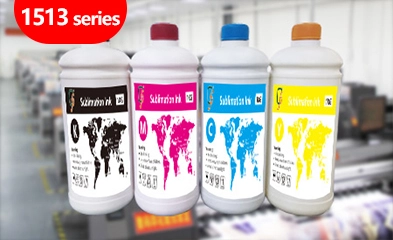
For example, the 1513 series sublimation ink is engineered to provide stable vaporization and controlled color release under standard polyester sublimation temperatures. This helps maintain edge definition and reduces uneven migration when heat exposure varies slightly across the press surface. In practice, inks with predictable thermal response make heat control easier because they reduce sensitivity to minor process fluctuations.
What Happens When Heat Is Too High During Polyester Sublimation?
Overheating is often mistaken for “strong processing,” but its effects are usually negative.
How excessive heat causes color bleeding, fabric gloss change, and loss of detail
When heat exceeds the optimal range, dye gas becomes overly mobile, leading to color bleeding, blurred edges, and loss of fine line definition. Dark colors may appear washed out rather than deeper.
Fabric appearance also changes. Excess heat can alter surface texture, introduce unwanted shine, or cause polyester fibers to flatten. These effects may not be immediately obvious, but become clear after washing or wearing.
What Problems Appear When Heat Is Insufficient?
Underheating creates a different set of risks that are less visible at first.
Why does low heat lead to incomplete dye fixation and poor wash fastness
When heat is insufficient, dye gas does not fully penetrate the polyester fiber. Prints may look acceptable right after pressing, but durability is compromised, colors fade faster, and wash resistance drops.
This issue is common when operators reduce the temperature to protect fabric but fail to compensate with appropriate dwell time or ink selection. Incomplete fixation is often misdiagnosed as an ink problem when it is actually a heat management issue.
How Do Different Ink Series Respond to Heat on Polyester?
Ink series are not interchangeable when heat behavior is a priority.
Why matching ink thermal response to press conditions improves repeatability
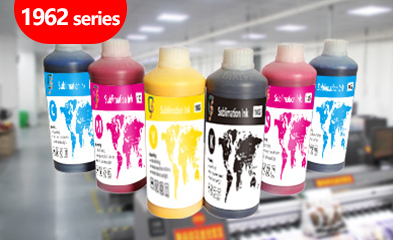
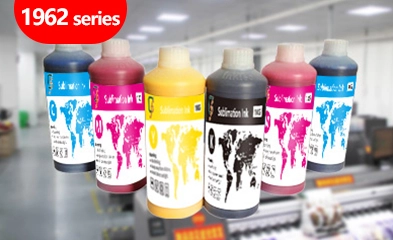
Different CMYK ink systems are formulated for different balances between release speed and color density. The 1962 series CMYK sublimation ink is designed to deliver balanced color output and stable release under commonly used polyester sublimation conditions, making it suitable for production environments that prioritize repeatability over aggressive processing.
Choosing an ink series that matches your press behavior reduces the need to constantly adjust temperature or time to correct color issues.
What Heat-Related Mistakes Should You Actively Avoid in Daily Production?
Many production defects are heat-related but misattributed.
Why does inconsistent pressure, poor moisture control, and rushed cooling cause hidden defects
Uneven pressure leads to uneven heat transfer, even when temperature settings are correct. Excess moisture in fabric or paper absorbs heat energy and disrupts dye transfer. Rushed cooling allows dye gas to migrate before fibers fully close.
These factors often create defects that appear random but are actually systematic. Addressing them improves consistency without changing inks or artwork.
How Can You Build a More Reliable Heat Control Routine for Polyester Sublimation?
Why documenting heat profiles and material behavior reduces long-term variation
Recording temperature distribution, dwell time, fabric type, and ink series creates a reference that helps you identify drift before defects appear. Over time, this reduces reliance on trial-and-error adjustments and stabilizes output across operators and shifts.
Final Thoughts: How Do You Control Heat Instead of Letting It Control Your Results?
Successful sublimation on polyester depends on controlled heat application aligned with ink behavior and fabric response. By focusing on heat distribution, appropriate dwell time, and ink thermal characteristics, you reduce variability and protect both color quality and fabric integrity. Heat should be a controlled tool, not an unpredictable force in your production process.
FAQs
Q: Is higher heat always better for deeper color on polyester?
A: No. Excessive heat increases dye migration and fabric stress without improving fixation, often reducing detail and durability.
Q: Why does the same heat setting behave differently on different polyester fabrics?
A: Fabric density, yarn structure, and surface finish affect heat transfer and dye diffusion, even within the same fiber category.
Q: Should you adjust heat or time first when results become inconsistent?
A: Stabilize temperature distribution first. Time adjustments should be used for fine-tuning, not compensation for uneven heat.


