


HOT SALE
APPLICATION
Phone:+86-15215969856 E-Mail: 396838165@qq.com

You can sublimate onto receptive polyester canvas or a canvas surface specifically coated for sublimation. Untreated cotton needs a compatible receiving layer; a heavier transfer paper or hotter press will not provide one. Once that surface is suitable, the practical choice is which paper will carry your artwork’s ink load and fit your transfer line.
At Changfa Digital, we manufacture sublimation paper, with coating and slitting handled in-house. For canvas printing, our lighter and rich-ink paper options give you grades to compare around the actual design, while roll-width selection addresses the production line. The sample should establish that choice on the canvas construction you intend to deliver.
The Receiving Surface Determines Whether Our Transfer Paper Fits
Receptive polyester allows the canvas to receive a direct transfer.
Heat moves dye from printed transfer paper into a receptive polyester surface. Suitable polyester canvas can therefore receive the image without an added film. Confirm the fiber composition and finish with the canvas supplier, since the word canvas identifies fabric construction rather than a particular printing surface.
Our paper’s coating holds ink before transfer; it does not become a coating on the canvas. These functions need to remain separate when selecting materials. If the canvas face cannot receive sublimation dye, changing our paper grade will not make it receptive. For flat work where a visible weave matters, start with polyester canvas supplied for sublimation, then assess its finish with the proposed paper and process.
A cotton base requires approval of its added receiving layer.
When an order requires cotton, the image must be received by a coating or transfer layer intended for sublimation. The attachment of that layer to the fabric becomes part of the finished construction. Its supplier’s application and handling instructions belong in the material decision alongside the required gloss and visible texture.
Some color appearing on bare cotton after transfer does not establish a usable direct print. Equally, ordinary heat-transfer vinyl is not a sufficient specification for a sublimation layer. Where cotton is optional, compare prepared cotton with suitable polyester canvas before buying the coating materials. Choose the added layer because the substrate or finish requires it, rather than because cotton is familiar.
Ink Coverage and Roll Handling Determine the Paper Trial
Our paper coating should suit the ink coverage in the artwork.
The printed ink must be held on the paper before it is released during transfer. We therefore distinguish a lighter, steady-load job from a design with rich ink coverage when nominating a sample. The thickness of the canvas does not tell us how much ink the artwork places on the paper.
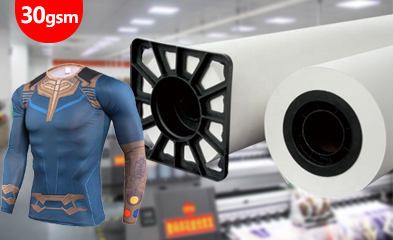
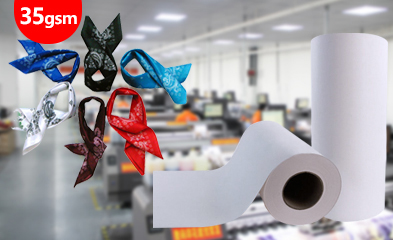
Our 30gsm grade is a lightweight option for fast textile production, with a coating intended to handle a steady ink load. Our 100gsm paper has a coating designed to hold rich ink loads for full-coverage textile printing. For a richly covered design on an already suitable canvas surface, include 100gsm in the first sample comparison. For a less demanding ink load and a line suited to lightweight paper, the 30gsm grade remains a relevant candidate.
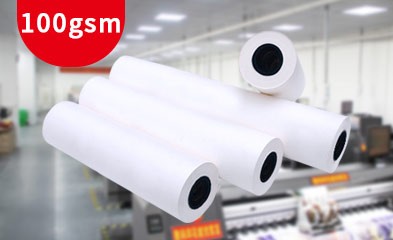
A heavier grade is not an automatic upgrade. Compare the sublimation paper range around the printed sheet’s handling and the resulting image. The rich-ink positioning of 100gsm gives a reason to try it; it does not qualify every canvas coating or guarantee the same transfer on different receiving layers. Keep the proposed artwork coverage in the sample request so the comparison addresses the actual order.
Our slitting can match the roll discussion to the usable line width.
We handle paper slitting in-house, so the width requirement can be discussed against the printer and transfer arrangement. Our paper category spans widths from 61 to 320cm; the width available for the chosen grade and order still needs confirmation. This gives a recurring roll order a specific fit decision instead of treating the canvas label as a paper specification.
Use the line’s usable print and transfer width when requesting a roll. Include the required core and order quantity so we can discuss the selected grade with those requirements together. An existing width may already fit the job. A requested slit width is useful where the line needs it, without assuming that every order benefits from customization or that every grade is available in every width.
Approval Must Include the Finished Canvas Construction
A flat sample does not establish contact on stretched canvas.
We offer paper samples for you to evaluate in your own process. Canvas has raised and recessed areas, so paper contact across the image must be assessed with the intended press arrangement. A compatible fiber or receiving layer does not settle that contact question.
A frame can support the middle differently from the perimeter. Transferring flat canvas before stretching and pressing an assembled blank are therefore different arrangements. Use a supported method approved for the assembled canvas if that is the intended construction; do not treat a successful flat transfer as approval of the framed arrangement. Follow the canvas or receiving-layer supplier’s pressing and handling instructions rather than applying a universal canvas setting.
Your finished sample should define the paper specification to repeat.
Use the actual printer, ink and canvas when evaluating the paper. If ink is also being selected, our CMYK sublimation inks need to be matched to the printer and printhead configuration. A suitable ink choice still cannot make an incompatible canvas surface receive dye.
After transfer and cooling, assess fine detail across the weave, broad color areas and the appearance of any added layer. Complete the mounting or stretching required by the order, including inspection of wrapped edges and any visible film boundary. A central image alone does not establish the finished appearance.
Approve the complete paper, ink and canvas combination that gives the required result. Retain the paper grade and width with the canvas surface specification when ordering repeat supplies. That keeps an accepted polyester print or prepared-cotton construction from becoming a generic request for paper for canvas, with the important material conditions lost.
Conclusion
Request a paper sample or roll specification for the canvas job you intend to run. Send us the canvas fiber and coating specification, printer and current ink, artwork coverage, usable transfer width and flat or stretched construction. Those details let the paper discussion address the ink-holding and roll-fit choices before you commit recurring supplies, with the finished sample determining what you approve.
FAQs
Q1: Can you sublimate on canvas made entirely from cotton?
A1: Untreated cotton needs a compatible sublimation receiving layer. The image is formed in that layer, so its attachment and finished appearance matter. Transfer paper carries the dye; it does not supply that canvas coating or replace it with extra heat.
Q2: Should every canvas job use 100gsm paper?
A2: Choose the paper sample around ink coverage and the production setup. Our 100gsm grade is a rich-ink candidate; the lighter 30gsm grade suits consideration for steady-load work. Neither paper weight establishes that the canvas surface is receptive.
Q3: Should I request a custom roll width immediately?
A3: Start with the usable printer and transfer width. An existing width may fit. We slit paper in-house, so a requested width can be discussed with the chosen grade, core and quantity; confirm those order details before committing the roll specification.


