Phone:+86-15215969856 E-Mail: 396838165@qq.com
Digital textile printing is no longer limited to long seasonal runs. Sportswear brands, online gift sellers, and promotional product distributors all want smaller batches, faster sampling, and stronger color consistency. That pressure makes ink choice more important than many buyers expect. チャンファ デジタル works in this production chain, where a bottle may look similar on a shelf, but the chemistry inside decides whether a logo survives washing, whether a mug looks sharp, and whether a print shop can repeat the same color next week.
The key question is simple: can sublimation ink and regular ink do the same job? No. They are built for different surfaces, different transfer methods, and different business outcomes. For B2B buyers, knowing the difference helps reduce rejected orders, wasted blanks, and hidden production costs.
What Makes the Two Inks Work Differently?
The biggest difference is not the printer alone. It is how the color reaches the final product. One formula is made to move from paper into polyester or a coated surface through heat. The other is made for paper printing. Once that point is clear, the choice becomes much easier for buyers, factories, and distributors.
How the Color Bonds to the Product
Dye sublimation ink uses disperse dyes that respond to heat. During pressing, the dye turns into gas and enters polyester fibers or a polymer-coated surface. After cooling, the color sits inside the material rather than forming a thick layer on top. That is why the finished print can feel smooth on jerseys, flags, and soft signage.
Standard office ink works in a more familiar way. Most office and photo formulas are made to sit on paper or soak into paper fibers. They may look crisp on a report, label, or proof sheet, but they are not designed to gasify under a heat press. When used outside their purpose, the result often looks weak after transfer.
Why Material Choice Matters
Sublimation works best on white or light polyester and coated hard goods, such as mugs, metal panels, mouse pads, and some promotional blanks. The surface must accept the transferred dye. Cotton, dark fabric, and untreated materials usually need another decoration method because the dye has nowhere reliable to bond.
By contrast, inkjet printer ink is practical for paper documents, posters, test layouts, and general image proofing. It can serve a design room well before final production. The risk starts when the same print is treated like a heat-transfer job. It may print onto a sheet, but it will not create the same wash resistance or color depth.
How Does the Transfer Process Affect Final Print Quality?
Many buyers compare ink by unit price, but production quality depends on the full chain. The sublimation printing process includes printer settings, coated transfer paper, ink behavior, drying time, heat, pressure, and substrate quality. If one part is wrong, the print may appear acceptable before pressing and still fail on the final product.

Why Heat Changes the Result
In this process, artwork is printed in reverse on transfer paper. Then heat and pressure move the dye from the paper into the product. Good heat transfer ink must release cleanly instead of staying trapped in the paper. That is why ordinary copy paper usually gives dull results; it absorbs too much liquid and leaves less color available for transfer.
Color also changes after pressing. A pre-press sheet may look muted, then become much brighter after heat activates the dye. This can confuse new buyers who judge only the printed paper. For factory approval, color should be checked on the final fabric or coated item, not only on the sheet coming out of the printer.
What Happens When the Wrong Ink Is Used
If regular ink is used for a transfer job, the design may look faded, uneven, or easy to damage. The issue is not always visible at first. A sample may seem acceptable under office light, then fail after washing, rubbing, or customer testing. For bulk orders, that can mean remakes, claims, and lost delivery time.
When Should Buyers Choose Sublimation Ink Instead of Regular Ink?
Buyers should choose sublimation ink when the order depends on polyester fabric, coated hard goods, repeatable color, and a real heat-transfer workflow. The cost of using the wrong ink is rarely just the ink price. It often appears later as unstable color, blocked production approval, damaged blanks, or complaints from distributors.
A buyer comparing 昇華インク should confirm printer compatibility, color set, bottle volume, drying behavior, transfer performance, and the type of transfer paper used in production. These points turn a simple quote request into a workable production decision instead of a risky sample guess.
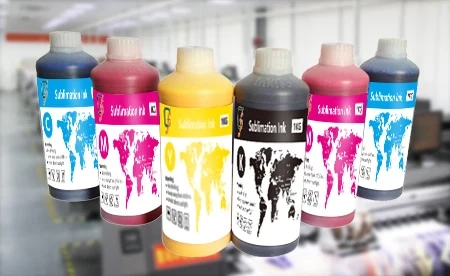
For print shops that need a defined CMYK option, High quality 1962 Serie CMYK sublimation ink is positioned for digital textile printing. Its product details list 1L bottles, CMYK color, Epson DX4, DX5, and DX7 printhead compatibility, and heat sublimation ink use. Those details should be checked against the buyer’s machine, transfer paper, and substrate before the order is confirmed.
How Should B2B Buyers Compare Ink Before Bulk Orders?
A practical comparison should start with the final product, not the ink bottle. Buyers need to ask what the order is printed on, how the design is transferred, what the customer expects after washing or rubbing, and whether the factory can repeat the same result across a full batch.

Sample Approval Should Match Real Production
A sample printed with the wrong paper, weak heat settings, or a different substrate does not protect a bulk order. Buyers should approve the ink, transfer paper, heat press settings, and final blank together. This is especially important when a distributor is selling to teams, hotels, gift brands, or promotional clients that expect repeatable color.
Different Series Should Be Matched to Real Needs
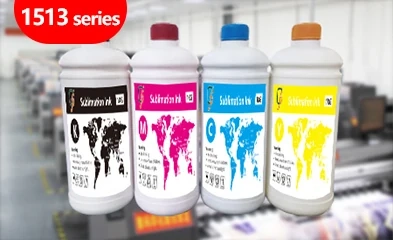
A second ink option, 1513系列高品質高1513色の1513色のインク, is presented for digital textile printing with bright color and good transfer effect. Instead of treating every series as interchangeable, buyers should compare running stability, expected color strength, and order volume before selecting the final formula.
What Should Buyers Do Before Placing the Ink Order?
Before placing an order, buyers should check the printer model, transfer paper grade, drying time, heat press temperature, fabric content, coated surface quality, and the customer’s washing or rubbing standard. This is where a buyer can prevent avoidable claims before the first carton leaves the supplier.
If your team is still comparing sublimation ink and regular ink for a transfer job, do not approve the order only from a paper proof. Test the real substrate, confirm the heat-transfer settings, and compare the color after pressing. That is the safer way to protect the production schedule and the customer relationship.
For buyers who need a stable sublimation printing process, the next step is to discuss the printer, transfer paper, substrate, and order target before confirming the ink series. お問い合わせ to review the application and choose a suitable heat transfer ink option for your production plan.
What Do Buyers Usually Ask About Sublimation Ink?
Q1: Can regular ink replace sublimation ink for polyester fabric?
A1: No. Regular ink is made for paper printing and does not gasify properly under heat. For polyester fabric or coated blanks, sublimation ink is needed for a true transfer result.
Q2: Does sublimation ink work on cotton or dark fabric?
A2: It is not the standard choice. Sublimation ink works best on white or light polyester and coated hard goods. Cotton, dark fabric, and untreated surfaces usually need another decoration method.
Q3: What should buyers test before approving bulk sublimation ink orders?
A3: Buyers should test printer compatibility, transfer paper, heat settings, substrate quality, color after pressing, wash resistance, and running stability before approving a bulk order.