ホーム - ニュースセンター-

Sublimation Tissue Paper vs. Sublimation Paper: What Should Buyers Know

Sublimation Tissue Paper vs. Sublimation Paper: What Should Buyers Know
2026-08-04 6

内容表

    Phone:+86-15215969856 E-Mail: 396838165@qq.com

    Sublimation Tissue Paper vs. Sublimation Paper What Should Buyers Know

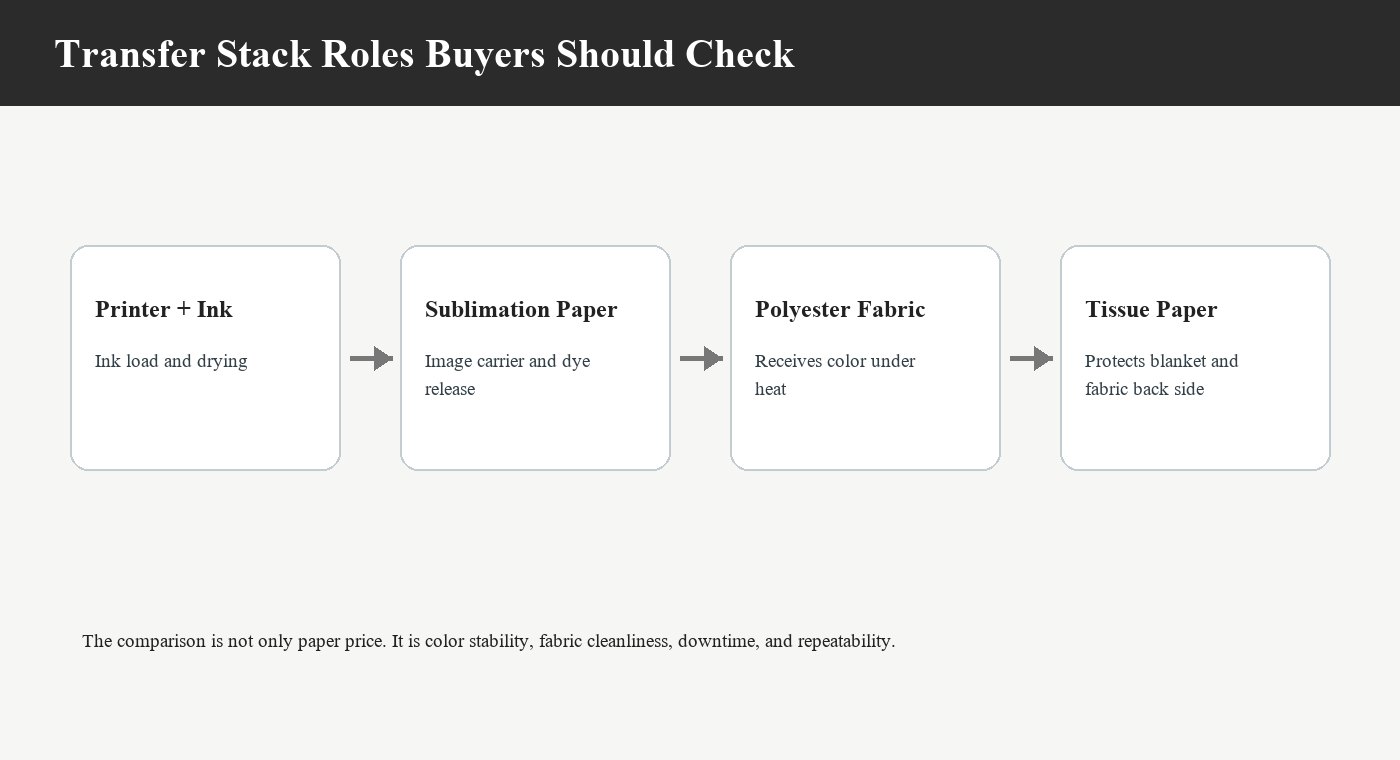
    Two paper rolls can look similar beside a heat transfer machine. In daily production, though, they are not doing the same job. One roll carries the printed image. The other protects the transfer line from stains, residue, and cleaning stops.

    Why Buyers Confuse the Two Papers

    The confusion is understandable. Both products are sold in rolls, both appear in sublimation transfer work, and both need to match the machine width. Buyers may also hear similar supplier terms: transfer paper, protective paper, tissue paper, sublimation paper, or paper for heat transfer.

    The cleaner way to separate them is to ask what risk each paper controls. Sublimation paper rolls are judged by coating, ink absorption, drying speed, transfer rate, color detail, and paper feeding. ティッシュ紙 is judged by protection, width coverage, surface cleanliness, residue control, winding stability, and whether the blanket stays cleaner after a long run.

    What Sublimation Paper Does in the Print Result

    Sublimation paper is coated transfer paper. The printer lays sublimation ink onto the coating, then the paper releases dye into polyester fabric or a coated material under heat and pressure. If the coating is not stable, the final print usually shows it through dull color, blurred edges, uneven transfer, slow drying, or curl.

    This paper has a direct connection with the visible image. Sportswear panels, fashion apparel, home textile fabric, flags, banners, and soft signage all need repeatable color across rolls. A stable tenth roll is what buyers pay for.

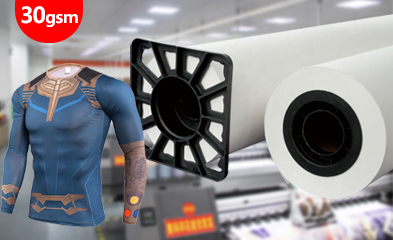
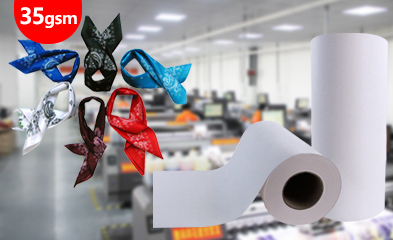
    Changfa Digital lists common sublimation paper options such as 30gsm, 35gsm, 40gsm, 50gsm, 60gsm, 70gsm, 90gsm, and 100gsm. Widths can be matched from 61cm to 320cm, while roll length changes with paper weight and line setup.

    Buyer Checks for Sublimation Paper

    Printer speed comes first. A faster line needs paper that can dry and feed without smearing or blocking. Ink load is next. Dark artwork, large solid areas, and dense patterns need enough ink holding without flooding the coating.

    Flatness and winding are practical checks. Curling, wrinkles, loose rolls, or unstable feeding can turn into head strikes, edge waste, color drift, or missed delivery time. Width should match the fabric layout as closely as possible.

    What Sublimation Tissue Paper Does in the Transfer Line

    Sublimation tissue paper, also called protective paper, sits in the heat transfer stage. It is not the main image carrier. Its job is to protect the machine surface, blanket, transfer stack, and fabric back side from dye residue, fiber dust, and surface marks.

    This sounds like a support role, but support roles become expensive when ignored. A dirty blanket can pass color into the next order. Pale polyester can pick up a faint mark on the reverse side and fail during packing.

    The tissues of Changfa Digital are made of white and grey paper with a thickness ranging from 40 to 100 gsm. Common widths include 160 cm, 162 cm, 180 cm, and 182 cm, with 1000 m per roll as the listed standard length. These sizes make sense for wide-format transfer lines where coverage and stable running matter more than print detail.

    Buyer Checks for Tissue Paper

    Width coverage is the first check. The paper should cover the fabric and active transfer zone. If it is too narrow, fabric edges can still touch a polluted blanket, and the same edge mark may repeat across the full order.

    Long-run behavior matters as much as the roll label. Tissue paper should stay flat under heat and pressure. It should not wrinkle easily, shift during transfer, shed visible dust, or create pressure marks.

    Sublimation Paper and Tissue Paper Transfer Roles

    The two rolls work in the same transfer stack, but they answer different questions. Sublimation paper asks, can the design transfer cleanly? Tissue paper asks, can the production environment stay clean while that transfer happens?

    Main Differences Buyers Should Compare

    A side-by-side view helps because the products are often compared only by roll price. Each paper affects a different part of the production cost.

    Item

    Sublimation Tissue Paper

    Buyer Meaning

    Main role

    Carries a printed image and releases dye

    Protects the blanket, machine surface, and fabric backside

    One controls image transfer; the other controls cleanliness

    Printing use

    Printed with sublimation ink

    Not used as the main image transfer paper

    Do not judge both papers by the same test

    Common weight data

    30-100 gsm

    40-100 gsm

    Sublimation paper has a wider GSM selection

    Common width data

    61 cm-320 cm available

    160 cm, 162 cm, 180 cm, and 182 cm available

    Width matching reduces edge waste and back marks

    Wrong choice risk

    Dull color, smearing, curling, weak transfer

    Back staining, blanket pollution, ghosting, and cleaning stops

    Hidden production costs appear during long runs


    How to Choose Both Papers for Bulk Production

    Bulk production needs both papers to fit the real line. Start with printer width, fabric width, transfer machine width, roll length, paper core, ink load, transfer temperature, pressure, and running speed.

    For sublimation paper, the buyer should run the actual file, actual ink, actual RIP setting, and actual fabric. Check drying, feeding, edge clarity, transfer rate, color repeatability, and residue after transfer. The test should not end after a clean short strip.

    For tissue paper, the buyer should check the blanket, fabric backside, paper flatness, winding tension, and roll edge behavior after a longer transfer run.

    Supplier matching also counts. チャンファ デジタル works with sublimation paper, sublimation ink, heat transfer machines, and tissue paper, so buyers can discuss the whole transfer workflow instead of buying each roll as a separate item.

    When Each Paper Matters Most

    Sublimation paper matters most when color, detail, transfer rate, and printer stability are the main risks. This is usually the case with detailed sportswear graphics, brand color work, fashion panels, home textile patterns, and orders where the approved sample must match the bulk roll.

    Protective tissue paper matters most when the transfer line is long, fast, wide, or working with pale polyester. It becomes more important when back staining, dirty blankets, cleaning downtime, or repeated ghost marks would delay shipment.

    Factories do not need to make this decision complicated. They need to test each paper for its real job. A print-carrying paper should prove color and release. A protective paper should prove cleanliness and stable movement.

    When buyers need special width, sample testing, paper core, roll length, label, or packing, OEM/ODM paper support can help reduce the gap between the sample roll and repeat production. Export packing also deserves attention because moisture or weak paper-core protection can create problems before the roll reaches the machine.

    FAQについて

    Q1: Is sublimation tissue paper the same as sublimation paper?

    A1: No. Sublimation paper carries the printed image and releases dye into polyester or coated materials. Sublimation tissue paper mainly protects the heat transfer stage and helps reduce contamination, backstaining, and unwanted marks.

    Q2: What specifications should buyers compare first?

    A2: For sublimation paper, compare gsm, width, roll length, drying speed, ink absorption, transfer rate, and flatness. For tissue paper, compare gsm, width, roll length, winding stability, surface cleanliness, and protective effect after a long run.

    Q3: Why does tissue paper matter more in high-volume production?

    A3: Long runs repeat small problems. A little residue on the blanket or a faint back mark on pale polyester can spread across many meters. Tissue paper helps control that risk and can reduce cleaning stops and rejected panels.

    Q4: Can Changfa Digital support both paper types for buyers?

    A4: Yes. Buyers can Changfa Digitalに問い合わせる for sublimation paper, tissue paper, ink, heat transfer machine matching, OEM/ODM requests, sample testing, custom widths, roll length, paper core, and export packing details.