


Penjualan Panas
Aplikasi

Phone:+86-15215969856 E-Mail: 396838165@qq.com
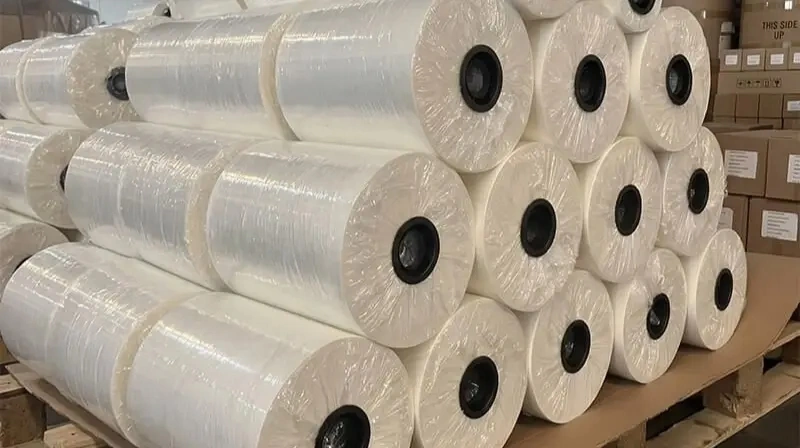
Gulungan kertas sublimasi Kertas bisa keluar dari pabrik dalam keadaan rata, kering, dan siap untuk printer berkecepatan tinggi, lalu tiba di luar negeri dengan tepi yang penyok atau kerusakan akibat kelembapan yang membuatnya sulit untuk digunakan. Spesifikasi lapisan kertas tidak berubah, namun kondisinya tidak lagi sesuai dengan yang diharapkan oleh lini produksi. Kesenjangan itulah mengapa pengemasan perlu diperhatikan sebelum pengiriman. Untuk gulungan lebar dan rute transportasi yang panjang, pengemasan melindungi lebih dari sekadar tampilan produk. Pengemasan melindungi bentuk kertas, kondisi penanganan, dan kemampuannya untuk bergerak selama proses pencetakan dan transfer panas.
Mengapa Kemasan Merupakan Bagian dari Kualitas Kertas Sublimasi
Kertas sublimasi adalah material produksi, bukan sekadar barang habis pakai yang bisa diperlakukan seperti kotak suku cadang. Tepinya harus tetap bersih, gulungan harus mempertahankan bentuknya, dan lembaran kertas harus tetap cukup kering agar dapat menerima tinta dan melepaskan pewarna secara terprediksi saat transfer. Persyaratan tersebut berlanjut setelah gulungan meninggalkan jalur pelapisan dan pemotongan.
Pengiriman ke luar negeri menambah kelembapan, getaran, beban tumpukan, penanganan pelabuhan, dan waktu yang lama di dalam kontainer. Sebuah rol mungkin lolos inspeksi keluar tetapi kehilangan nilai guna ketika intinya rusak atau lapisan luarnya menyerap kelembapan. Cacat yang terlihat mungkin kecil, sementara biaya muncul kemudian sebagai pelacakan yang buruk, pemborosan di tepi, atau proses pencetakan yang terhenti.
Apa yang Dapat Terjadi Akibat Kemasan yang Buruk Selama Pengiriman Luar Negeri
|
Kondisi kedatangan |
Risiko pada lini produksi |
Konsekuensi bagi pembeli |
|
Tepi yang remuk atau lepas |
Pelacakan web dan pemborosan di tepi jaringan |
Kehilangan material dan keterlambatan jadwal |
|
Lapisan rambut lembap atau keriting |
Bekas pengeringan dan variasi transfer |
Percobaan tambahan dan hasil yang ditolak |
|
Inti retak atau gulungan terdistorsi |
Ketidakstabilan pelepasan atau kegagalan pemuatan |
Biaya penghentian jalur produksi dan penggantian |
Kerusakan Tepi dan Gulungan Teleskopik
Tepi gulungan kertas adalah bagian pertama yang rusak jika kemasan kurang kokoh atau gulungan saling bergesekan. Tepi yang rata dapat menyebabkan kertas bergeser, tersangkut saat dimasukkan, atau memaksa operator untuk memotong beberapa lapisan sebelum mencetak. Pada gulungan yang lebar, kerusakan tersebut memengaruhi lebih dari satu bagian kecil dari suatu pekerjaan.
Fenomena teleskopik adalah tanda peringatan lainnya. Ketika lapisan bergeser ke samping akibat getaran atau tekanan penumpukan yang tidak merata, gulungan tidak lagi menampilkan permukaan yang bersih dan sejajar. Printer mungkin masih menerimanya, tetapi tegangan menjadi lebih sulit dikendalikan, dan jalur pencetakan dapat berhenti pada titik ketika tepi yang longgar mulai terlipat atau bergesekan.
Kelembapan, Pengerutan, dan Perubahan Permukaan
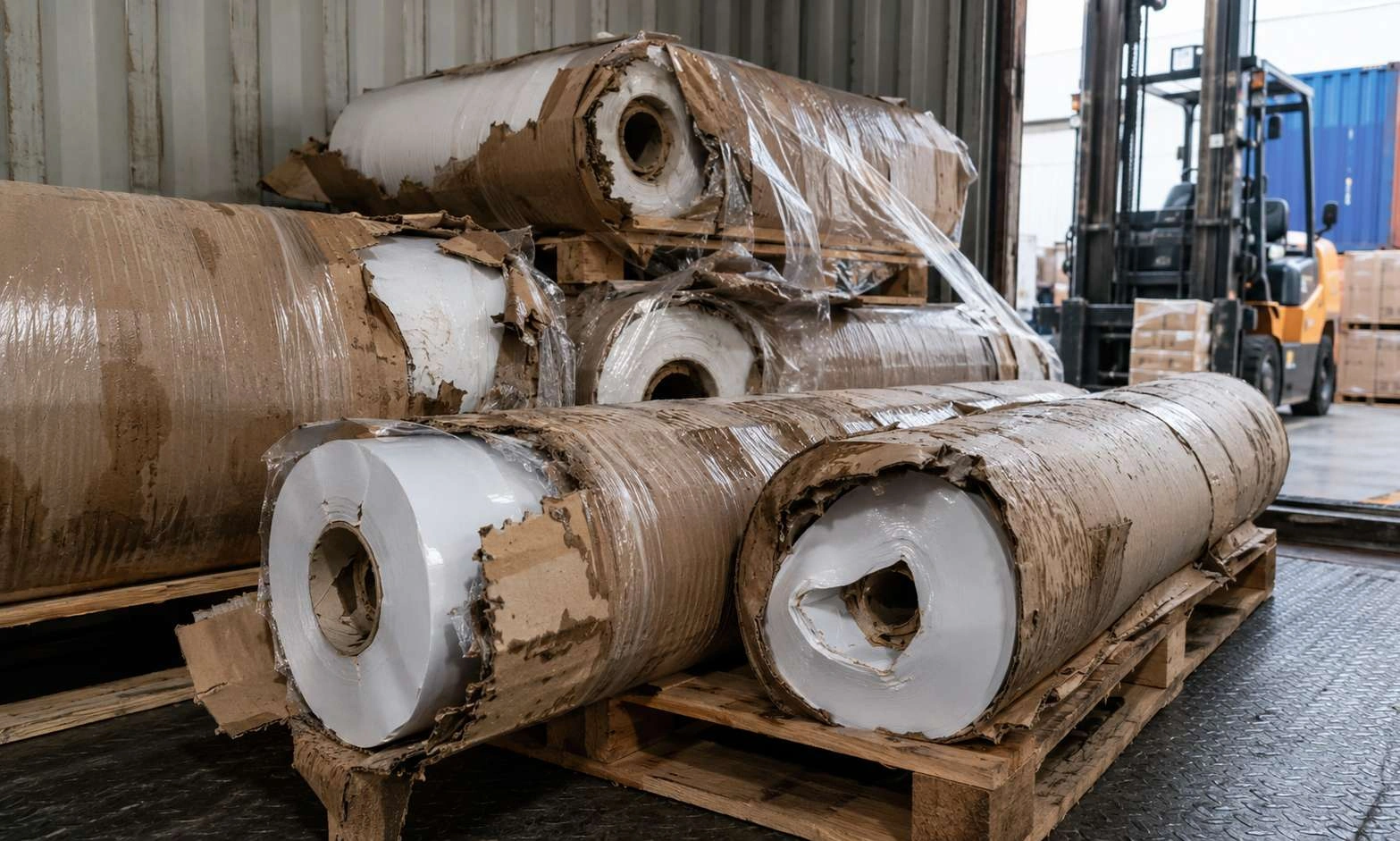
Kelembapan dalam kontainer dapat menembus kemasan yang lemah selama perjalanan panjang. Kelembapan memengaruhi kerataan kertas dan dapat mengubah perilaku lembaran kertas di bawah beban tinta yang berat. Operator mungkin melihat kertas melengkung, pengeringan lebih lambat, tanda saat penggulungan ulang, atau hasil transfer yang berbeda dari sampel yang disetujui.
Risiko tidak terbatas pada hujan atau kontak langsung dengan air. Perubahan suhu di dalam kontainer dapat menyebabkan kondensasi di sekitar gulungan yang tidak terlindungi dengan baik. Pada saat pembeli membuka kiriman, bagian luarnya mungkin terlihat baik, sementara lapisan pertama yang dapat digunakan telah kehilangan kondisi kering dan rata yang dibutuhkan untuk pencetakan yang stabil.
Kerusakan dan Deformasi Inti Akibat Tekanan Penumpukan
Inti gulungan yang rusak membuat proses pemuatan lebih sulit dan dapat menciptakan tegangan yang tidak merata sejak meter pertama. Jika benturan garpu, beban kompresi, atau penyangga internal yang buruk mendistorsi inti gulungan, gulungan tersebut mungkin tidak lagi terpasang dengan benar pada poros penggulung. Hal itu mengubah masalah transportasi menjadi masalah di sisi jalur produksi.
Biaya yang Ditanggung Pembeli Lebih Besar daripada Kerugian Akibat Gulungan yang Rusak
Gulungan yang rusak mungkin tampak seperti klaim pengiriman kecil sampai mencapai hari produksi yang dijadwalkan. Konverter yang menunggu jendela pengiriman yang singkat mungkin harus mengubah rencana pencetakan, menggunakan bahan lain, atau membiarkan peralatan menganggur sementara gulungan yang terkena dampak sedang diperiksa. Bagi distributor, insiden yang sama dapat menjadi keluhan dari pelanggan yang mengharapkan produk yang siap pakai.
Masalah ini juga mempersulit penentuan tanggung jawab. Jika inspeksi penerimaan tidak mencatat tepi gulungan, pembungkus luar, kondisi palet, dan kondisi inti, sulit untuk menentukan apakah cacat tersebut dimulai saat pengemasan, selama pemuatan, atau di gudang penerima. Perlindungan ekspor yang jelas dan pemeriksaan kedatangan yang dapat diulang mengurangi perdebatan tersebut sebelum menjadi sengketa.
Untuk pembeli yang mencari gulungan besar dari Changfa DigitalOleh karena itu, kemasan harus masuk dalam pembahasan persetujuan yang sama dengan berat kertas, lebar, panjang gulungan, dan kecepatan cetak. Ini adalah bagian dari bagaimana gulungan yang telah diuji tetap dapat digunakan setelah perjalanan laut, bukan detail logistik yang terpisah.
Langkah-langkah Pengemasan yang Melindungi Kertas Selama Pengiriman Ekspor
Lindungi gulungan sebelum mencapai palet.
Pengemasan ekspor dimulai dari gulungan. Permukaan gulungan perlu dilindungi dari kontak langsung, lapisan luar membutuhkan penghalang kelembaban, dan inti gulungan harus dilindungi dari benturan. Gulungan yang ditopang dengan baik cenderung tidak akan memendek saat dipindahkan dari gudang ke truk, kemudian ke dalam kontainer dan melalui proses penanganan di tempat tujuan.
Changfa Digital menggunakan penutup inti dan kemasan ekspor standar untuk gulungan kertas. Untuk pembeli dengan sistem penggulungan yang tidak standar, ukuran inti yang dibutuhkan harus dikonfirmasi sebelum produksi, bukan ditambahkan sebagai catatan pengiriman di kemudian hari. Inti, lebar, dan format gulungan khusus dapat memengaruhi perlindungan penanganan dan cara pelanggan memuat gulungan saat tiba.
Membangun Perlindungan Palet dan Kontainer yang Stabil
Palet mencegah gulungan menerima dampak penuh dari kelembapan lantai dan pergerakan forklift. Palet juga memberikan struktur yang jelas untuk pembungkusan dan penumpukan. Tujuannya bukan hanya untuk membuat palet yang rapi, tetapi juga untuk mencegah gulungan bergeser, tertekan di bagian tepinya, atau membawa beban yang merusak inti gulungan.
Sebelum pemuatan kontainer, pastikan posisi palet, berapa beban vertikal yang akan ditanggungnya, dan di mana kelembapan dapat masuk. Pembungkus film, pelindung sudut, pengikat yang kuat, dan celah yang cukup dari dinding kontainer semuanya membantu, tetapi hanya berfungsi jika gulungan sudah terpasang dengan aman pada palet.
Hal-hal yang Harus Dikonfirmasi Pembeli Sebelum Menyetujui Pesanan Ekspor
Mintalah spesifikasi kertas dan spesifikasi pengemasan secara bersamaan. Poin-poin pentingnya adalah berat kertas, lebar, panjang gulungan, ukuran inti, lapisan pelindung, susunan palet, dan jumlah gulungan per palet. Gulungan yang lebih lebar atau lebih panjang memiliki tekanan penanganan yang berbeda, sehingga deskripsi pengemasan umum tidak cukup untuk setiap pesanan.
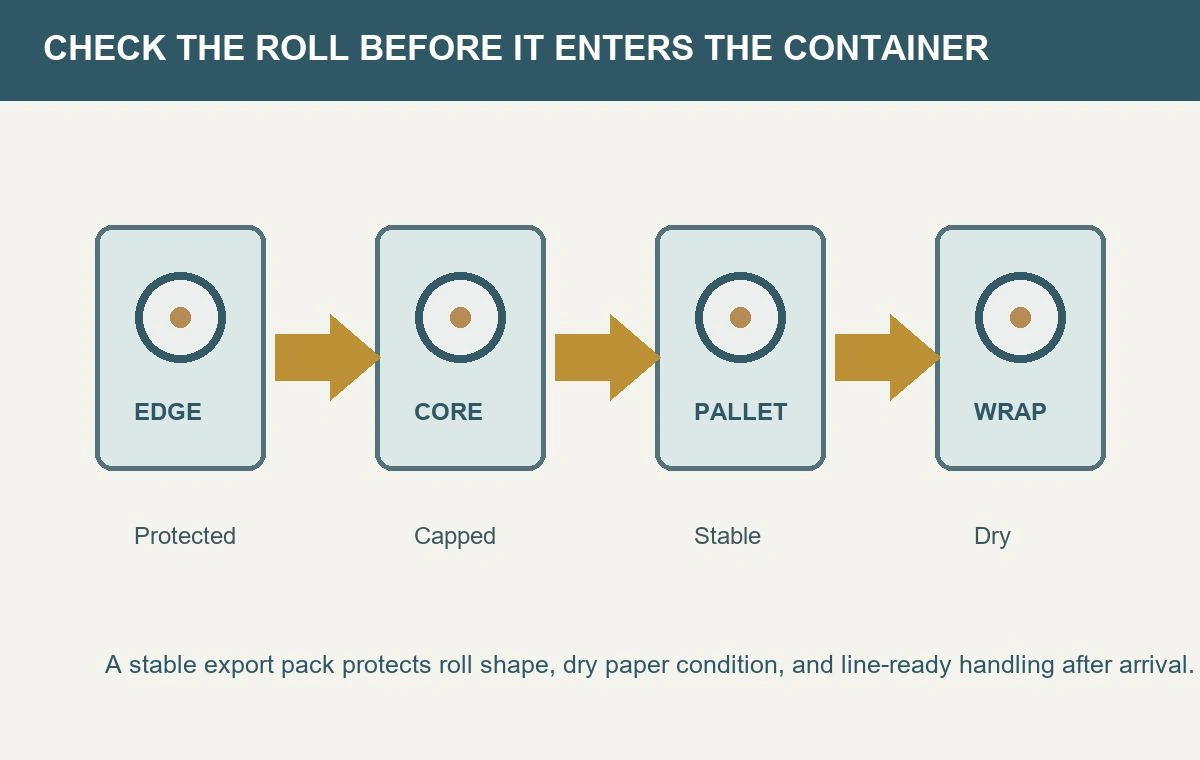
Protokol kedatangan harus disepakati sebelum kontainer tiba. Foto segel kontainer, palet, pembungkus luar, permukaan gulungan, tepi, dan inti sebelum membongkar atau menempatkan material ke dalam produksi. Jika kertas membutuhkan waktu untuk beradaptasi setelah pengangkutan, simpan gulungan dalam keadaan tersegel sampai berada di lingkungan produksi yang tepat.
Untuk kemasan khusus, sampel gulungan, atau permintaan OEM/ODM, Dukungan layanan digital Changfa Hal ini dapat menjadi bagian dari diskusi pra-pengiriman. Perusahaan mengelola kertas dasar, pelapisan, pemotongan, dan pengemasan secara internal, dengan empat jalur pelapisan, empat bengkel pemotongan, dan sepuluh mesin pemotongan. Hal ini memudahkan untuk mengkonfirmasi kertas dan kemasan sebagai satu spesifikasi pengiriman yang dapat diulang.
Untuk rute baru atau pesanan kontainer pertama, hubungi Changfa Digital dengan informasi tujuan, format gulungan, pengaturan printer, dan kondisi penyimpanan yang diharapkan. Detail tersebut membantu mengubah permintaan umum untuk pengemasan ekspor menjadi rencana praktis untuk pengiriman sebenarnya.
Pengemasan yang andal membantu gulungan kertas tiba dalam kondisi siap pakai, dengan tepi, inti, kondisi kering, dan bentuk yang utuh. Hal ini mengurangi klaim pengiriman yang tidak perlu, tetapi nilai yang lebih besar adalah dari segi operasional: pembeli dapat menerima kertas, memuatnya, dan menjaga rencana produksi tetap berjalan. Untuk pengiriman ke luar negeri, itu adalah bagian dari kualitas kertas.
FAQ (Pertanyaan umum)
Q1: Dapatkah kelembapan merusak kertas sublimasi selama pengiriman melalui laut?
A1: Ya. Kelembapan dan kondensasi yang tinggi dapat memengaruhi kerataan kertas, perilaku pengeringan, dan penanganan gulungan. Penghalang kelembapan, perlindungan palet yang stabil, dan penyimpanan terkontrol setelah tiba membantu mengurangi risiko tersebut.
Q2: Bagaimana seharusnya pembeli memeriksa kemasan kertas sublimasi saat tiba?
A2: Periksa dan foto kondisi kontainer, palet, pembungkus luar, tepi gulungan, permukaan gulungan, dan inti kertas sebelum material dibongkar atau diletakkan di printer. Simpan catatan tersebut beserta detail batch-nya.
Q3: Dapatkah Changfa Digital menyediakan kemasan ekspor khusus untuk kertas sublimasi?
A3: Ya. Pembeli dapat mendiskusikan ukuran inti, lebar gulungan, kemasan sampel, Kebutuhan OEM/ODM, dan kondisi tujuan sebelum produksi massal. Rencana pengemasan harus dikonfirmasi dengan spesifikasi kertas, bukan setelah gulungan dibuat.


