


What Causes Specks in Sublimation Prints? Tracing Paper Dust, Static and Lint
Venta caliente
APLICACIÓN
Phone:+86-15215969856 E-Mail: 396838165@qq.com

A white spot showed up on the tenth metre of a polyester run. The nozzle check from the start of the shift was clean. The sheet that had just left the printer was still on the table, and the pale fleck on it was not sitting in the ink. It lay on the coating, and it came off on a glove. On the pressed cloth that same fleck had already become a light hole in the print, which is what the floor called a printhead fault.
That call is quick to make and slow to undo. A head clean, a fresh bottle and the next roll do nothing to powder on a slit edge, or to a fiber that was on the fabric before the paper touched it. The finished cloth is the last place those causes can still be told apart. The order that still separates them is the paper, then the room and the handling, then the printer, then the fabric.
Section 1: What Does a Speck on the Finished Cloth Actually Show?
A white spot, a dyed fleck and loose powder are different marks
Dye that never landed leaves a white spot. Color that grabbed a fleck in the press and stayed in the polyester is another mark. Powder still loose on the sheet, or on the bench, is a third. Put the name of the mark on the job ticket before the next test.
The pressed cloth has already mixed four sources
Paper dust, shop dust, a spitting nozzle and a cutting-table fiber can share one square centimetre. Heat only sets the dye.
The printed sheet still separates ink from dust
Leave one length unpressed from the same metre. On that sheet a gap or a satellite drop is already inside the image. Dust beside the image shifts if you drag a dry glove across the coating. Once the press has run, both look like a hole in the print.
A nozzle check from the start of the shift does not explain this metre
The pattern from the start of the shift only proves the head could fire then. Print a fresh nozzle pattern with the bad metre still on the table. A full pattern beside a clean image takes the head off this mark.
Moisture haze is not a paper-powder speck
A damp shirt or a damp sheet clouds a patch after the press. Powder still shows on the slit, or comes off on a dark cloth, while the sheet is cold.
Section 2: Where Does Paper Dust Get Onto a Sublimation Roll?
Slitting leaves dust on the cut edge
Coating happens first. The knife comes after, and it sheds fiber plus coating crumbs along the cut. Run the edge across a dark cloth before you thread the printer. If that cloth comes away white, the nozzle pattern is the wrong test.
An even coating is not a clean surface
Wipe loose dust off the coat and it leaves. A pale lane that survives the wipe is in the coating, and it will track the whole roll as a lane, where specks would have been scattered.
A torn wrap and a bare core end pick up transit dirt
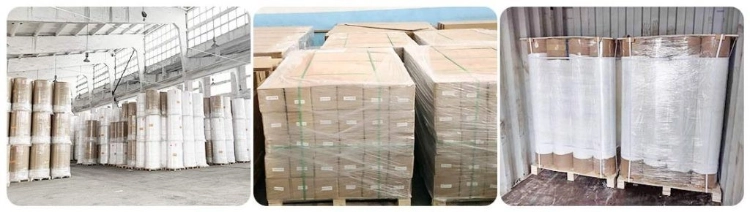
An intact bag is what keeps the face clean through the trip. A split bag, a crushed outer layer or a bare core lets the edge rub the pallet or the next roll. Check the wrap and the core end, then the outer metres.
The first metres and the roll end are the incoming check
At goods-in, look at the roll end and the wrap, wipe the slit, and look at the coating on the first two metres, still with no ink. If only those outer metres dirty the cloth, strip them and wipe further in. Powder that keeps coming off the edge goes to the paper supplier with that lot.
Heavy paper can still carry powder on the 100gsm Fast Dry Sublimation Paper Roll
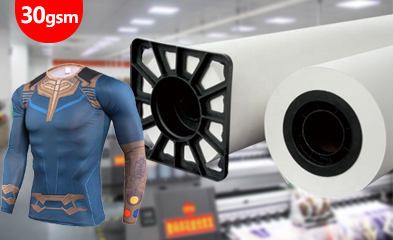
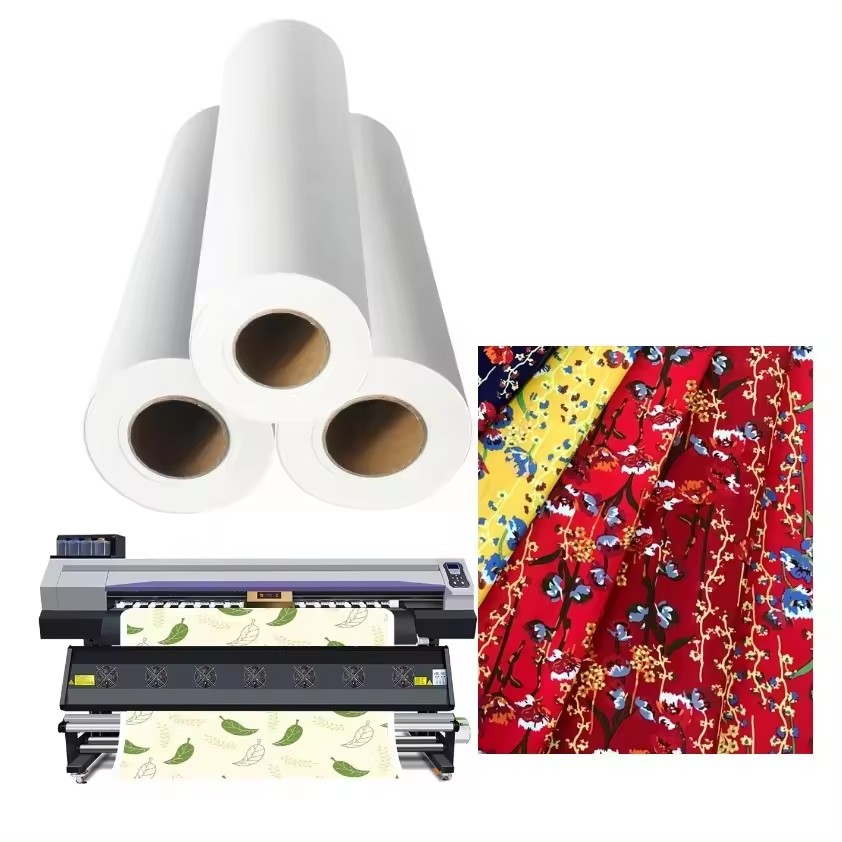
Shops put the Rollo de papel de sublimación seca rápida 100gsm on disperse-ink polyester work. It is slit at 91.4 cm, 111.8 cm, 127 cm, 162 cm and 183 cm, with about 100–200 m wound on. Ink goes down on a uniform coat and takes up fast. A white edge-wipe still means the gsm on the label is the wrong dial.
Section 3: How Do Static and Unwrapping Hold Dust on the Coating?
A dry web charges as it unwinds
As the roll turns, the web rubs the path. Dry shop air leaves a charge on it, and that charge holds loose dust against the face while the web is moving.
Charged coating holds dust that would have fallen off
Slit crumbs, dust from inside the wrap, and whatever is floating over the printer stick to that charged face and travel into the print in a scatter. Same roll, worse on a dry afternoon than it was at the start of the shift: check the room and the unwind before you blame the coating.
Sealed storage and unwind are different moments
For this 100gsm roll, a sealed pack held around 40–50% humidity keeps it flat, with a clean surface, while it sits in storage. Peel the wrap off and that condition is over. In a drier print room the web can pick up charge between the unwind and the head. The sealed bag only stopped storage dirt.
A clean outer metre can hide dirt near the core
Dust from a knocked edge, or dust against the core wrap, can stay quiet for hundreds of metres. Wipe at the outside and again well down the diameter, and keep both cloths with the lot.
The table and the loose end add dust the mill did not ship
A clean face off the slitter picks up powder if you open the wrap on a dusty table, drag the loose end, or shove the roll across a pallet. A second roll of the same lot, opened on a wiped table, points at the bench if it runs clean.
Section 4: How Do You Separate a Dirty Nozzle from Paper Dust and Fabric Lint?
A repeating mark already in the image is the head
A spit or a miss is already in the printed image, before any shirt is involved. It repeats in the print direction. A nozzle check printed at that moment shows the weak channel. Dust does not stay on one channel. Clean image, complete pattern: leave the head alone for this defect.
Powder that rubs off the unprinted coating is not a nozzle
Before you change the ink, wipe an unprinted patch of those same metres. Powder there never passed a nozzle, yet in the nip it blocks dye or carries dye onto the fiber.
Lint is on the fabric before the paper touches it
Lint and fly from the cutting table sit on the polyester, and the printed sheet does not show them. Roll the fabric before the sheet goes down. A clean sheet that specks only after the press had the particle on the cloth side.
A fiber that takes dye looks like ink after the press
On white polyester a pale fiber is easy to miss. The press dyes it into a dark fleck that looks like ink dirt, and washing leaves it once the dye has set. Find it on the fabric. On the unpressed sheet, paper powder still looks like powder.
Change one surface at a time
Press the next sheet on a piece of the same fabric after a lint pass. Speck gone: the cloth. Speck still there, with powder on the unpressed sheet: the paper face or the edge. Speck still there, and the nozzle check showing the channel: the head. One trial that swaps paper, ink and fabric together cannot name the swap that worked.
Section 5: What Order Should the First Article and the Supplier Note Follow?
Paper, then the shop, then the nozzle check, then the fabric
Roll first: wrap, core end, slit wipe, coating face. Then the bench and the air the web is running in. Print, and read that sheet before anyone presses it. A nozzle check waits for an ink mark on the sheet. Then the fabric, and one pressed piece.
Write down the lot, the roll position and the surface
“Specks” plus a date is a note nobody can recheck. The useful note carries the lot, the width, the gsm printed on the ticket, the distance down the roll, and the surface: bare coating, the printed image, or the fabric by itself.
The line’s published roll checks are gsm, width, core and the pack on Transfer Paper for Sublimation
On Transfer Paper for Sublimation, weights run 29gsm, 35gsm, 40gsm, 50gsm, 60gsm, 70gsm, 90gsm and 100gsm. Slitting covers 61 cm through 320 cm. Cores are 2 inch and 3 inch. Export packs leave on pallets with core caps. Match the dock roll to label weight, label width, the core that printer takes, and those caps and that wrap.
A 50gsm Factory Supply High Quality Jumbo Roll Sublimation Paper is checked at more than one position
For a long run, the Papel de sublimación de rollo Jumbo de alta calidad de suministro de fábrica 50gsm is wound at 61 cm, 91.4 cm, 112 cm, 122 cm, 162 cm or 183 cm, about 300–3000 m, after base paper, coating, slitting and packing. On a roll that long, the first article needs the outer metres and another wipe well down the roll.
Stop when the speck is on the coating or in the nozzle check
Pause if that coating still carries loose powder, or if the nozzle check shows the same channel as the mark. A clean printed sheet and a linted second piece that presses clean mean the cloth was the problem, and this roll stays on the printer.
Conclusión
The pressed cloth is a poor witness. The printed sheet, read before the press, still shows whether the mark is in the ink or sitting on the coating. The roll end, the wrap and the slit edge show whether that dirt travelled with the paper. A nozzle check shows whether the printer is repeating it. The fabric, looked at before it meets the paper, shows the lint. Changfa Digital rolls are sorted by that same reading: coating face, edge and pack, then one printed sheet and one pressed piece on the shop’s own printer and cloth. Send the printer, the printhead, the ink, the paper lot, the fabric and which surface held the speck.
Preguntas frecuentes
Q1: If the spot is white, does that mean a nozzle missed?
A1: Not by itself. A white spot on the pressed cloth can be powder that blocked the dye, a fiber that held the sheet off the cloth, or a nozzle that did not fire. The unpressed sheet from the same metre is what separates them. A gap that is already in the printed image, matched by the nozzle check, is the head. Powder that wipes off the coating is not.
Q2: Does a heavier coated paper shed less dust?
A2: Weight and a uniform coating describe how the sheet holds and releases ink. They do not describe the slit edge or the wrap. A 100gsm roll with a torn pack can carry more loose powder than a lighter roll that is still capped and sealed. The edge wipe answers the dust question. The gsm on the label does not.
Q3: When should production stop, and when is a lint pass enough?
A3: Stop when the powder is on the coating you are about to run, or when the nozzle check matches the mark. If the printed sheet is clean and the next piece, after a lint pass on that fabric, presses clean, keep the roll running and keep the fabric check in the routine. Record the lot and the surface either way, so the next delivery can be checked against the same edge and pack.


