


بيع ساخن
التطبيق
Phone:+86-15215969856 E-Mail: 396838165@qq.com

A shop boxed a white tee on Friday. The press setting was the one they use for team jerseys. The paper had fed straight. On Monday the customer sent a photo of a gray stain where the crest had been. Someone checked the side seam after the complaint. The tee was all cotton. The jerseys from that same wash were still bright, and the tags on them said polyester.
Keep both shirts by the press, tags facing out, with the percentages written under them. The next person who wants to try cotton can look at those two before loading a roll. On the jersey the dye stayed in the cloth. On the tee it sat on the yarn, and the wash lifted it.
Watch where the dye goes
On polyester the gas goes into the fiber
Under the press the dye becomes a gas. Polyester fiber takes that gas in. Once the shirt cools, the crest is in the cloth, not lying on it. Peel one. If it matches the file, wash it. It should still match.
We coat these rolls for disperse ink on polyester, with the coating kept even so the ink can leave the sheet in one pass. Use this roll on the jersey in the polyester carton. Run the cotton tee from the same file right beside it.
On cotton the dye never gets a fiber to hold it
Cotton fiber does not take the gas in. The color stays on the yarns. Reds come back pinkish. Blacks come back gray. Small type goes soft at the edges.
Skip the longer dwell. It scorches the tee, and the color is still sitting on top when you peel. Read the neck label. At 100% cotton, the next test is a different shirt, from a polyester carton. A fresh roll of the same paper will print that cotton tee the same way.
Look twice: once at the peel, once after a wash
The failure is already visible when the paper lifts
From the shelf, take the polyester jersey and the cotton tee. Same crest file. Same roll. Same seconds, same temperature you already trust on team shirts.
Peel shirt 1 first. A crest that matches the file means the roll and the heat are fine. Peel shirt 2. Expect a dusty crest. That dust is dye that never entered a fiber. Operators who only stare at shirt 2 spend the afternoon chasing a temperature. Shirt 1 already answered them.
Sell nothing until one shirt has been washed
Dye sitting on cotton cracks when the tee bends. A home wash takes more of it away. A photo shot at the press, and a parcel sent the same afternoon, is the hour before the customer complains.
Wash shirt 1 and shirt 2 together. Keep both by the press. Polyester is what you can sell. Cotton is the sample that stops the next rush order.
Then choose the fabric, or change the job
A blend still needs one washed shirt
50/50 is the shirt people hope will sneak through. Some of the yarns are polyester and can take a little dye. The cotton yarns cannot. Put that shirt next to a polyester one, same file. The 50/50 looks dusty. A small chest logo makes it obvious, because the cloth around the logo is bare.
Feel is a bad test. Combed cotton often feels smoother than a cheap mesh that really is polyester. Buyers still point at the smooth stack and call it poly. Open one carton. Read the side-seam tag on the top shirt and on one from the bottom. Press the top shirt before anyone marks the carton as cleared for sublimation.
If the tag is mostly polyester, wash that shirt and only then decide whether the color is fit to promise. A higher polyester number gives the gas more fiber. You still judge the washed shirt, not the number you remember from a phone call. If the tag is mostly cotton, this style leaves the sublimation list. Heavier paper will not turn those yarns into polyester.
Polyester stays on sublimation paper
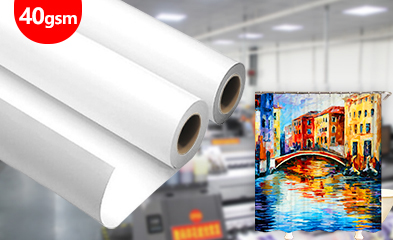
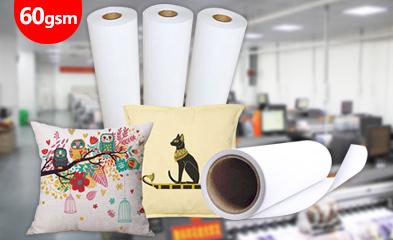
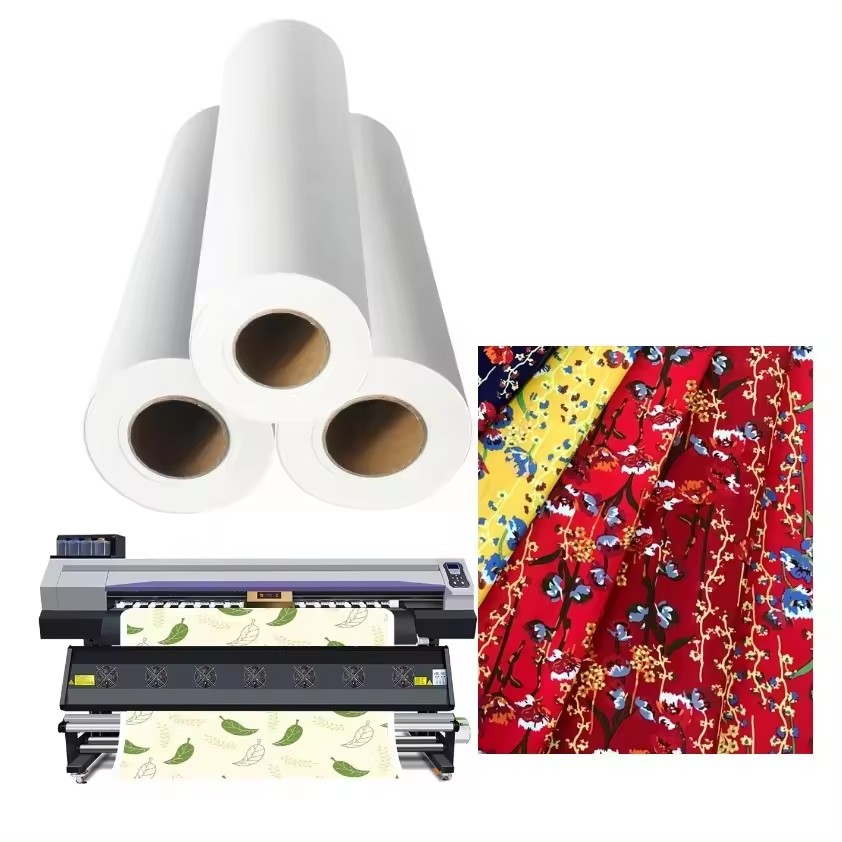
Use this paper on jerseys, flags, cushion covers and other polyester goods, with disperse ink. For a heavier piece, load the 100gsm fast-dry sublimation paper. It is made for that ink and that cloth. That roll is cut at 91.4 cm, 111.8 cm, 127 cm, 162 cm or 183 cm. Length sits around 100 to 200 metres. A 44-inch printer takes the 111.8 cm width. Polyester press for this roll is about 225°C and about 20 seconds.
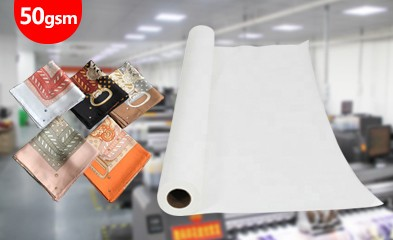
A faster fashion print can drop to a lighter weight in the same ورق التسامي للبوليستر, down to 29 gsm. The cloth is still polyester.
A cotton garment needs a different sheet and a different release. Follow full-color heat transfer paper on cotton for that work. It is its own press routine. Sprays and films sold for cotton are another routine again. Test the hand and the wash on the routine you actually run. This sublimation roll stays with the polyester work.
استنتاج
Start from the tag, the way that shop should have on Friday. Cotton left a stain after the wash. Polyester held the crest. A blend gets one washed shirt before you promise anything. Cotton-rich work moves over to heat transfer paper. تشانغفا الرقمية coats sublimation paper for disperse ink on polyester. Send the fiber from the tag, plus the printer and the ink, and we can line up a roll for the polyester job.
الأسئلة الشائعة
Q1: The art is only a small crest. Can the 50/50 shirt still go on this roll?
A1: Press one, then wash it. The crest will come out weaker than the same file on a polyester jersey, and the bare cloth around a small crest makes that weakness easy to see. Quote the job only if you would ship the washed shirt. Otherwise that style comes off this roll.
Q2: If I spray the cotton, can I keep feeding the same sublimation roll?
A2: The spray has its own feel and its own wash. It leaves this roll as a polyester paper. Shirts that must stay cotton follow the heat-transfer paper steps, or they get a spray test judged on its own. The sublimation roll goes back on the polyester work.
Q3: A polyester jersey is on the printer. Which roll do I load?
A3: Heavier polyester: the 100gsm fast-dry roll, about 225°C, about 20 seconds. A lighter fashion print: tell us the fabric and the ink, and we will name a lighter gsm from the same range. Either job still needs polyester in the tag.


