


HOT SALE
APPLICATION
Phone:+86-15215969856 E-Mail: 396838165@qq.com

Uneven sublimation transfer can hide inside a ten-centimeter sample. Across a 1.8-meter fabric panel, the same defect becomes impossible to ignore: one side looks lighter, the center is strong but the edges are weak, a solid background develops cloudy patches, or the shade begins drifting after the first fifty meters.
Uneven sublimation transfer on large panels is rarely solved by changing one temperature number at random. Large format sublimation printing makes small differences in heat, contact, tension, moisture, paper behavior, and machine condition visible across a much wider area. The fastest route to the root cause is to begin with the defect pattern. Where the defect appears often tells you which production variable to check first.
What Does the Defect Pattern Tell You?
Before adjusting anything, describe the problem and map where it appears; this prevents unnecessary changes and makes the defect pattern useful evidence.
|
Defect Pattern |
First Areas to Check |
|
One side consistently lighter |
Cross-width heat/contact, tracking |
|
Both edges light |
Edge heat, blanket/contact, width setup |
|
Center light, edges normal |
Heat/contact distribution |
|
Local cloudy patches |
Moisture, wrinkles, contact |
|
Double/shadow image |
Paper-fabric movement |
|
Starts good, gets worse |
Warm-up drift, tension, drying |
|
Large dark solids uneven |
Ink load, paper, transfer uniformity |
If the left side is always light, changing the RIP profile is unlikely to be the first useful move. The problem is physically tied to one part of the width.
That is the value of diagnosing uneven sublimation transfer by pattern rather than by guesswork.
Why Do Heat and Pressure Problems Become More Visible on Wide Panels?
A narrow test only samples a small section of the working area.
How Can Temperature Vary Across the Width?
Large format sublimation printing uses a much wider contact area than small-format pressing.
A cross-width difference often reflects incomplete stabilization, uneven heating across zones, blanket or contact changes, or loss of contact in one area; measure several positions before changing settings.
For large panels, check temperature across several positions rather than at only one convenient point.
The industrial heat-transfer machine range from Changfa Digital includes roll equipment for polyester textile work, where wide and continuous transfer makes cross-width control especially relevant.
How Does Heat Transfer Pressure Affect Color Uniformity?
Heat transfer pressure is really about consistent contact.
A section of fabric that is not contacting the paper in the same way can receive a different transfer result even if the displayed temperature is correct.
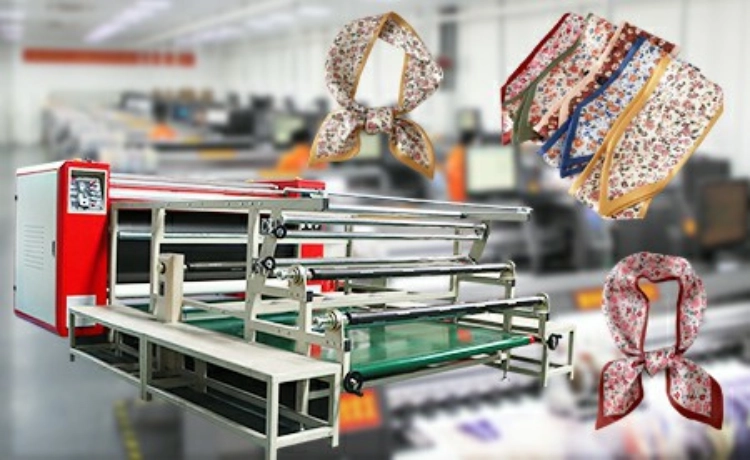
Changfa Digital’s JM-800 configuration uses a double pneumatic pressure system and lists effective working widths of 1700mm or 1900mm, with automatic blanket-deviation correction among its operating features. Those functions are relevant to wide-panel work because alignment and pressure consistency are part of the transfer condition.
Factories evaluating this type of line can review the JM-800 transfer machine when mapping heat transfer pressure and working width to their actual panel size.
Why Do Moisture and Surface Contact Create Local Uneven Areas?
Not every defect runs from edge to edge.
How Does Moisture Create Cloudy or Patchy Transfer?
Paper and fabric can both carry moisture from the workshop environment.
Under heat, moisture changes the way the transfer area behaves. On a large panel, one section can carry more moisture than another because of storage, handling, or fabric condition.
Moisture can show up as dull patches, local color variation, unstable transfer, or surface marks, so condition paper and fabric before the run.
Large format sublimation printing should therefore include material conditioning, particularly when paper or fabric moves between different storage and production environments.
Changfa Digital’s sublimation paper range covers multiple GSM values and industrial widths. Its 40gsm paper is available in widths from 132cm to 188cm; other paper families cover 142cm to 183cm, with several roll-length options.
The paper width needs to be selected so that the full printable and transferable area is handled consistently.
How Do Wrinkles and Paper-Fabric Movement Affect Sublimation Transfer Quality?
A wrinkle changes contact instantly.
Movement creates another defect: ghosting or a soft secondary edge.
Large panels are more sensitive because a small tension imbalance has more material to act on.
Check paper and fabric entry angle, roll tracking, tension, wrinkles before transfer, and movement after heating; grouping these checks around alignment, contact, and motion makes the defect easier to isolate.
Sublimation transfer quality is often improved more effectively by stabilizing material movement than by increasing temperature.
Why Can Uneven Transfer Appear Only After the Line Has Been Running?
Long-run problems deserve a different diagnosis from first-meter problems.
What Happens During Machine Warm-Up and Continuous Operation?
A roll heat transfer machine may behave differently during initial warm-up and after a long steady run, so record when the defect begins.
If the first panel is uneven but later panels stabilize, the issue may be connected with warm-up conditions.
If the first hundred meters are good and the problem develops later, check long-run heat stability, material tension and roll diameter, blanket condition, paper drying, and operator adjustments.
A roll heat transfer machine should be evaluated at the point where it normally runs during production, not only during startup.
Why Does Transfer Paper Matter on Large Dark Areas?
Large solid graphics put more ink onto the paper.
If the paper is not dry enough before winding or if the selected grade is poorly matched to the ink load, the transfer condition can become less consistent.
Changfa Digital paper products range from lightweight long-roll grades through heavier 60gsm, 70gsm, 90gsm, and 100gsm options. The right GSM depends on the printer, ink load, production speed, and fabric rather than one universal rule.
For protective handling during the transfer stage, Changfa Digital also supplies protective tissue paper as part of its sublimation product system.
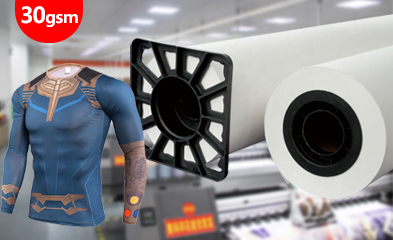
The protective-paper range includes 30gsm white and gray options in 160cm, 162cm, 180cm, and 182cm widths, with 1000m roll options.
How Can a Factory Test Cross-Width Transfer Uniformity Before a Live Order?
A simple test file can reveal a surprising amount.
What Should the Test Artwork Contain?
Use one full-width file combining a neutral gray and dark solid band, a smooth gradient, horizontal and vertical lines, and repeated color patches from left to right.
Print the test across the full intended width.
After transfer, divide the fabric visually into left, center-left, center, center-right, and right zones.
Compare each zone, then repeat the test after any adjustment so the production team can confirm whether the change actually solved the defect.
This makes uneven sublimation transfer easier to map than a complex photographic design.
What Production Conditions Should Be Logged?
Record the equipment and materials (printer, paper, ink, and fabric), job geometry (panel width), process settings (speed, temperature, and pressure), and machine state (warm-up and tension).
The goal is to make sublimation transfer quality measurable enough that the production team can confirm whether the change actually solved the defect.
How Should Buyers Plan Equipment and Materials for Wide-Panel Work?
Start with the widest job the line regularly needs to process.
The printer, transfer paper, fabric, and roll heat transfer machine should all support that width without forcing unstable edge handling.
Then check whether the machine can maintain the required contact and tracking over long production runs.
A line that handles wide graphics well on a five-meter test still needs to prove itself during realistic continuous work.
Before specifying a wide-panel line, share the target fabric width, ink load, and production speed with Changfa Digital to discuss the transfer-paper width, protective media, printers, and heat-transfer equipment that fit the job.
Conclusion
Uneven sublimation transfer becomes easier to troubleshoot when the defect pattern is treated as evidence.
One-sided lightness points toward cross-width conditions. Local cloudiness suggests moisture or contact. Ghosting points toward movement. Problems that appear only after long running need a warm-up, tension, or stability check.
Large format sublimation printing amplifies small production differences because a much wider surface has to stay controlled at the same time.
For stronger sublimation transfer quality, check heat distribution, heat transfer pressure, material tension, moisture, paper behavior, and roll heat transfer machine condition as one connected process.
That is more reliable than changing temperature, pressure, and profiles simultaneously and hoping the next panel improves.
FAQs
Q1: What is the most common cause of uneven sublimation transfer across a wide panel?
A1: There is no single cause, but cross-width differences in heat, contact, pressure, tracking, or material tension are strong starting points when one side or edge repeatedly transfers differently.
Q2: Can heat transfer pressure cause uneven color in large format sublimation printing?
A2: Yes. Uneven heat transfer pressure or contact can change how consistently the paper and fabric meet across the width, which can create lighter or stronger areas after transfer.
Q3: How can a roll heat transfer machine be checked for sublimation transfer quality?
A3: Transfer a full-width test containing solids, gradients, and repeated color patches. Compare left, center, and right sections while recording temperature, speed, pressure setup, tension, and warm-up condition.


