


The Hidden Costs of Sublimation Paper: Why High Transfer Rates Matter
Bán nóng
Ứng dụng
Phone:+86-15215969856 E-Mail: 396838165@qq.com

Walk into any busy print shop today, and you will likely hear the exact same complaint from the floor manager: keeping overhead down is getting harder every month. With shipping rates bouncing around and blank garment prices steadily climbing, business owners are desperately looking for any possible way to cut down their daily spending. Often, the very first thing they target is their paper supply. They spot a massive roll online from an unknown brand for a fraction of their usual price and hit the buy button, thinking they just saved a couple of hundred dollars. But a month later, they look at their books, and their actual profit margins have dropped. I see this happen all the time in dye sublimation printing. What looks like a brilliant bargain on the surface quickly turns into a massive headache on the production floor. The price tag on the cardboard box rarely tells the real story of what that roll will actually cost your business.
The Trap of the Lowest Price Tag
When you run a fast-paced printing business, saving ten or twenty cents per square meter feels like a clear financial win. It is very tempting to just stare at your monthly supply spreadsheet and pick the vendor offering the cheapest roll. But this basic math completely ignores the physical reality of the printing process.
What Happens During the Heat Press
To get a good result, the dye needs to turn into a gas and push deep into the polyester fibers of your garment. But cheap transfer paper usually lacks a proper, high-quality chemical coating. Instead of holding the dye right on the surface waiting for the heat, the raw paper fibers soak it up like a dry kitchen sponge. When the heavy heat press clamps down at 400°F, the cheap paper holds onto that dye tightly. The fibers refuse to let the color go, trapping the pigment inside the paper itself. You end up applying heat and pressure, but the color simply stays put.
The Reality of Your Monthly Bill
Because the paper holds onto the dye so stubbornly, your printer has to work twice as hard to compensate. Operators are forced to lay down a much heavier layer of liquid just to get a decent, visible image on the final fabric. So, while you saved a little money on the paper itself, your overall dye sublimation cost shoots straight up because you are running out of cyan, magenta, and black every few days. The math simply does not work in your favor when you step back and look at the whole month of production. You are buying cheap paper, but you are buying ink twice as often.
How Low-Grade Paper Drains Your Ink Supply
You might think the paper is just a temporary vehicle, something you toss away after a few seconds of pressing. However, the surface coating of that sheet dictates exactly how much color reaches the fabric and how much goes straight into the dumpster. Let’s break down the actual numbers.
The 30 Percent Problem
In a healthy production environment, a good roll of paper will release about 95% of the color onto the fabric. You pull the paper off the shirt, look at it, and it is basically blank. But when you use cheap paper, you often see a dark, heavy, ghosted image left behind on the sheet after pressing. That left-behind image represents real money you just threw away. Sometimes, poor-quality paper retains 20% to 30% of the liquid you sprayed onto it. It drinks the ink instead of passing it along.
Paying for What You Throw Away
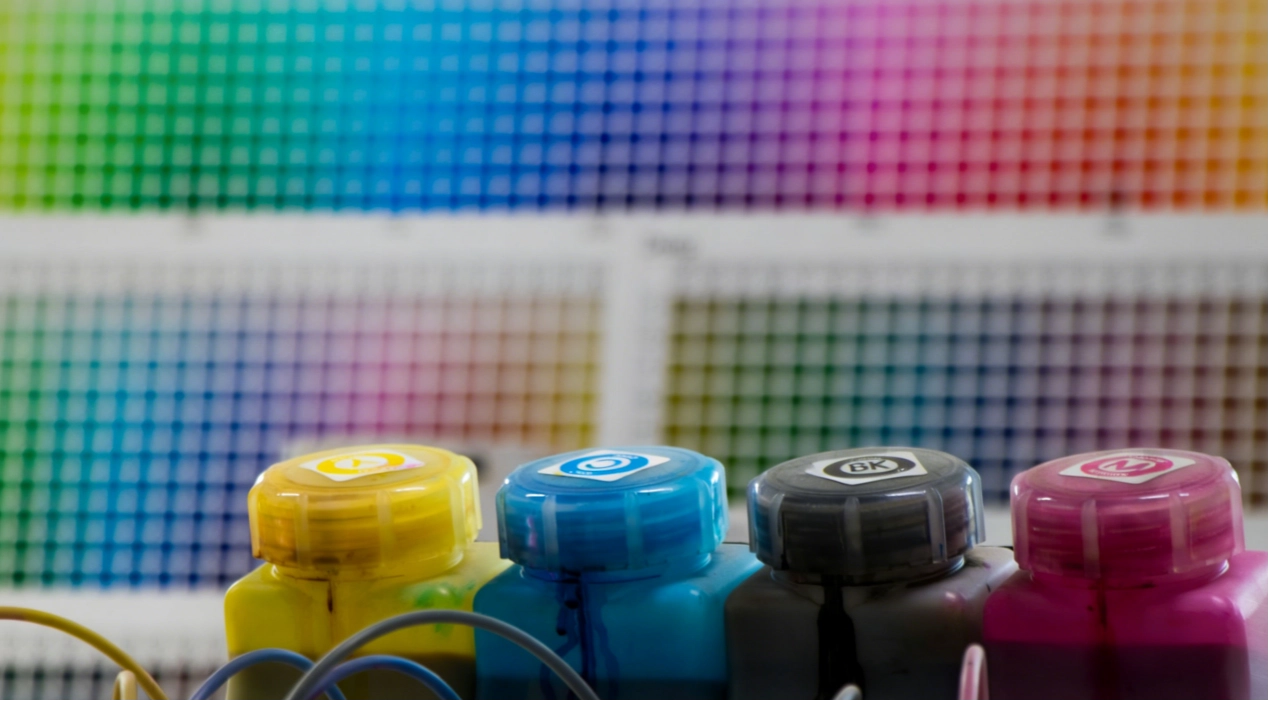
Think about how much a liter of good professional color costs. If you are leaving a quarter of it on the trash pile every single time you press a shirt or a mug, that mực thăng hoa waste adds up to thousands of dollars a year for a medium-sized shop. You are essentially paying top dollar to decorate your garbage cans. A high transfer rate is not just a nice marketing phrase on a brochure; it is the exact physical metric that keeps your liquid supply in the fabric where it belongs, rather than slowly draining your bank account.
The Heavy Toll on Your Final Product
Beyond the expensive materials you throw away, there is a much bigger problem creeping into your daily workflow. If the color does not leave the carrier sheet cleanly and evenly, your final product is going to look terrible. Your buyers do not care about your supply costs; they only care about how the shirt looks.
Faded Colors and Muddy Blacks
When the carrier sheet traps the color, your final fabric looks washed out and old before it is even worn. The deep, rich blacks turn into a muddy, dull gray that looks unprofessional. The bright, sharp reds look like a faded, dusty pink. To try and fix this, operators often try to slow down the printer to put down even more liquid, which slows down the whole shop and makes the paper warp. Ultimately, using poor materials directly ruins your sublimation print quality, making it impossible to charge premium prices.
The Nightmare of Rejected Orders
If a client orders 500 team jerseys for a local sports league and the team logos look faded or blurry, they will send the whole massive box back to you. Now, you have lost the blank garments, the labor time of your staff, and the client’s trust forever. The few pennies you saved on that cheap carrier sheet just cost you a $5,000 corporate order. When an entire batch goes straight to the donation bin because the colors look weak, you quickly realize this is one of the most painful hidden printing costs a business owner will ever face.
Calculating Your True Production Expenses
It is time to stop looking at the price per roll and start looking at the cost per finished, sellable item that goes out the door. When you add up the wasted liquids, the ruined blank shirts, and the extra labor hours spent re-printing bad orders, the entire picture changes.
Investing in the Right Materials
To protect your profit margins and keep your clients happy, you need materials that work together efficiently. You need paper with a specialized microporous coating that keeps the liquid on the absolute surface, combined with liquids that vaporize quickly and cleanly under heat. That exact combo is what keeps money in your pocket. Changfa kỹ thuật số engineers its products specifically to solve these exact problems for commercial print shops, focusing heavily on getting the maximum yield out of every single drop.
Making the Switch
By switching to a system designed for maximum release, you immediately drop your liquid consumption. You can find paper engineered specifically for maximum yield and zero curling at Changfa kỹ thuật số‘s paper section. Pairing this with high-density, smooth-flowing liquids means you get bright, sharp fabrics on the very first try, with almost nothing left on the sheet. When you stop wasting expensive materials on the floor, your shop finally becomes truly profitable and much easier to manage.
Kết luận
Running a successful printing business comes down to smart math, not just hunting for the cheapest supplies on the internet. Falling for the trap of the lowest price tag on a roll of paper is a incredibly fast way to drain your liquid supplies, ruin your blank garments, and frustrate your best paying clients. The true cost of your materials includes every drop that ends up in the trash and every single order you have to reprint because of poor colors. By focusing on a high transfer rate and professional-grade supplies, you protect your bottom line and deliver vibrant, long-lasting products. If you are tired of wasting money on materials that fight against your machines, liên hệ với chúng tôi today to test supplies that actually respect your business and your profit margins.


