


Горячая Продажа
Приложение

Phone:+86-15215969856 E-Mail: 396838165@qq.com
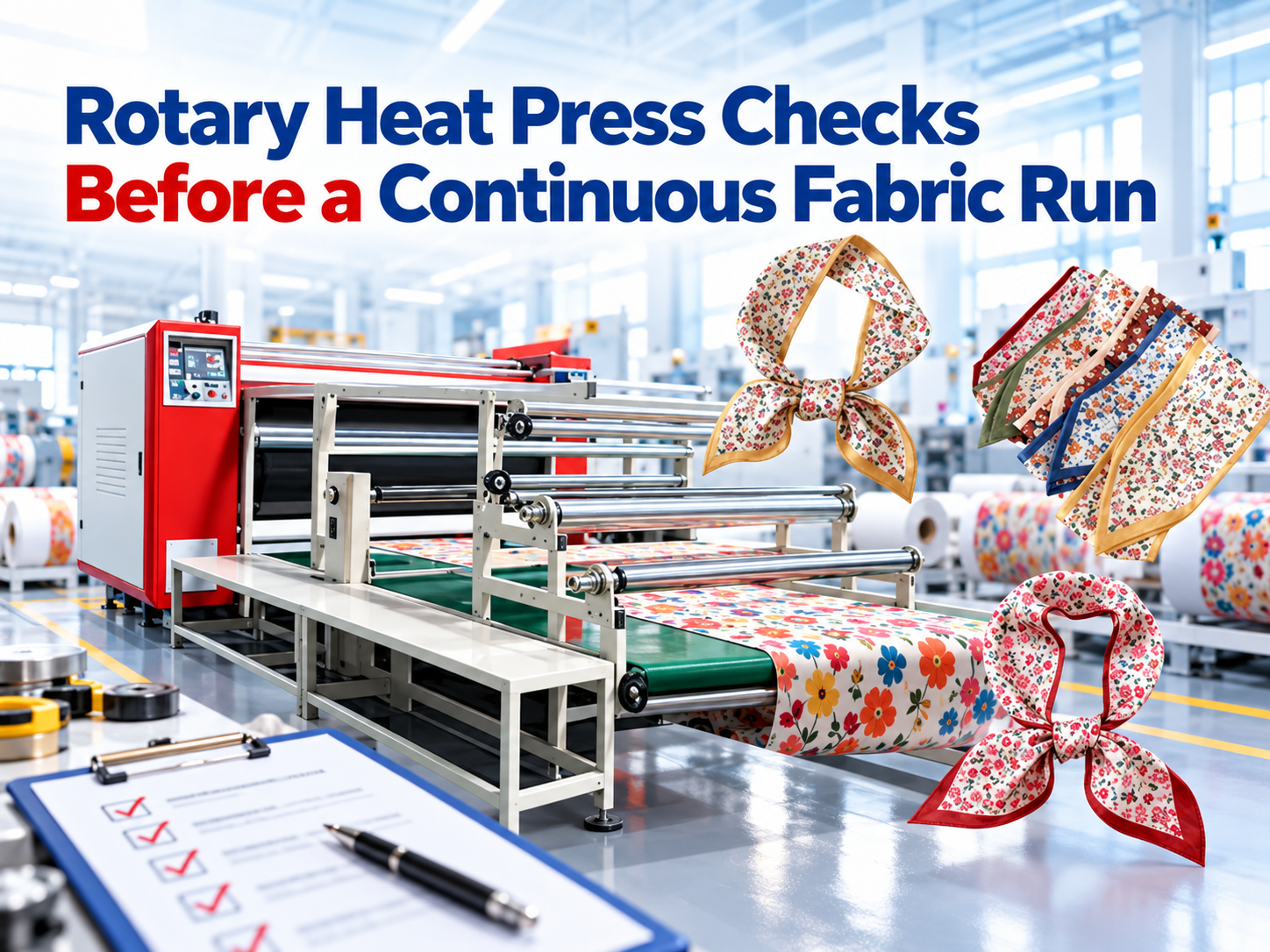
A rotary heat press can look ready because the drum turns, the temperature display is stable, and a short sample transfers well. Continuous fabric production exposes a different set of problems. The material path, belt tension, pressure, fabric width, and colour result can drift after several minutes of running.
The right preparation is not a longer version of a flatbed press check. A roll-to-roll line has its own handoff between printed paper, fabric, drum, belt, and cooling. The operator needs to qualify that handoff before a full order enters the machine.
Check the Material Path Before Temperature
Match Roll Width, Fabric Width, and Transfer Width
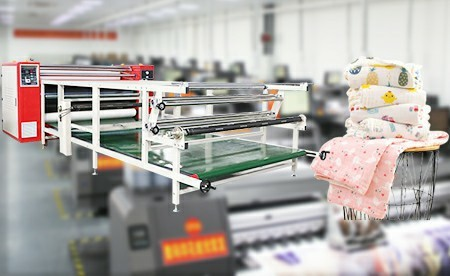
Start with the material path. The paper, fabric, and drum need to run in a straight line without a compressed edge or an unsupported section. If one material is wider than the others, the extra edge can fold, catch, or create a pressure difference across the image.
The operator should measure the usable fabric width, the printed image width, the paper width, and the drum contact area. A large format heat press can handle several widths, but every change has to be checked. A rotary heat press can handle a range of widths, but every width change can alter belt tracking and pressure distribution. It is safer to set the machine for the order than to assume the previous setting will carry over.
Inspect Drum, Belt, and Tension
Inspect the drum surface, belt seam, guide rollers, and tension before the run. A roll to roll heat press depends on those parts staying aligned for the full order. A worn belt, a damaged seam, or a roller that does not turn freely can produce a repeating mark that looks like a printing defect. The roll to roll heat press should be stopped before that mark becomes part of the order. Check both sides of the material path, not only the operator side.
The same Ассортимент теплообменных машин needs a stable unwind and rewind condition. If the fabric pulls to one side, the operator may compensate with tension and create a new distortion. The machine should run with controlled tension rather than constant manual correction.
Establish a Stable Temperature and Pressure Window
Measure Across the Drum, Not at One Point
A display reading is not a complete temperature map. Heat can vary across the drum width, around the circumference, or when production speed changes. Use the machine’s measurement method and the approved process for the order to check the working area, not one convenient point.
Speed changes the time the material spends under heat. A brief trial may look correct while a faster or slower full run behaves differently. The operator should record the selected speed with the temperature and pressure, because the three settings belong together.
Separate Pressure Problems From Fabric Problems
Pressure marks, poor release, and colour variation can come from different sources. A belt that is too tight, a drum that is not parallel, or a fabric that changes thickness can all create a similar-looking defect. Before changing ink or paper, inspect the material path and pressure. An industrial heat press can make a material problem look like a machine problem when the path is not stable.
For a `large format heat press`, the fabric finish also matters. A coated or textured textile may need a different contact condition from a smooth knit. The test should use the actual fabric, not a convenient scrap that behaves differently.
Run a Qualification Pass Before Production Starts
Use an Order-Representative Sample
Cut a sample from the same fabric roll and keep the paper, ink, artwork, and transfer settings aligned with the full order. Include the widest image, the densest colour, a fine line, and an edge area. Run the sample through the full machine path rather than stopping after the heated section.
The qualification pass should continue long enough to reveal drift in temperature, belt tracking, tension, or colour. If the machine changes after several metres, the operator needs to know before the full roll is committed.
Inspect Colour, Hand, and Edge Behaviour After Cooling
Check the transferred image after the material has cooled. Compare colour density, sharpness, hand feel, edge release, and surface marks. Some changes are easier to see after the fabric relaxes than immediately after the drum.
The industrial heat press should be judged against the approved sample, not a preferred appearance. If the result drifts, identify whether the change follows the paper, the fabric, the drum position, or a machine setting. A defined comparison keeps the correction targeted.
Define the Stop Conditions
Write down the conditions that require the line to stop: repeating belt marks, edge folding, visible temperature loss, a splice that will not pass safely, colour outside the approved range, or pressure that cannot be held across the width. The operator should not have to invent a decision during a live order.
Stop conditions are part of the production recipe. They protect the customer’s deadline and make the cause easier to trace when the run resumes.
Keep the Machine Repeatable During the Run
Watch Drift, Not Only the First Metre
Check the first metre, then keep checking at planned intervals. Belt tracking, temperature, pressure, and colour can change as the roll diameter decreases or the machine heats through. A stable first sample does not prove a stable full run.
Record the time, roll position, fabric roll change, and any adjustment. If the same correction appears at the same point in every order, the issue may belong to the machine setup or the material specification rather than the operator.
Record Maintenance and Changeover Events
Maintenance events should be linked to production results. A belt change, roller adjustment, drum cleaning, or fabric supplier change can affect the transfer. Keep a short maintenance note with the machine and the order so the next run can compare like with like.
This record is also useful when the workshop evaluates a new machine. A `heat transfer machine` decision becomes clearer when the team knows which defects were caused by the machine, which came from the material, and which were corrected by the approved setup.
Where Changfa Digital’s Roll Machine Fits
A Production Line Conversation
A relevant machine for continuous fabric work is the 1000mm roll poly textile heat transfer machine. Changfa цифровой lists it for poly-fabric digital printing. The machine is only one part of the line. Paper width, fabric width, ink, transfer conditions, and maintenance still decide the final result.
For a line evaluation, send the fabric type and width, expected run length, printed image width, paper specification, transfer requirements, available floor space, and the current defect. Changfa Digital can then discuss the equipment within the production context instead of treating the press as an isolated purchase.
What to Confirm Before the Order
Confirm the material path, temperature and pressure window, speed, belt condition, splice handling, stop conditions, and approved sample. Repeat the check after any change to the fabric, paper, belt, or machine setting.
The goal is a rotary heat press that can be repeated, not one that performs well only during a demonstration. A continuous run is a system test, and the preparation should match that reality.
Вывод
A rotary heat press should be qualified as a continuous material path, not as a heated drum alone. Check the width match, belt and drum condition, tension, temperature distribution, pressure, and the way the fabric behaves after cooling. Use an order-representative sample and define the stop conditions before the full run begins. During production, watch for drift and record maintenance or changeover events so the next order starts from evidence. Changfa Digital’s roll machine and heat transfer range provide the equipment context, but the operator still owns the approved setup. The difference between a good sample and a stable production run is the discipline applied between them.
Часто задаваемые вопросы
Q1: What should I check first on a rotary heat press?
A1: Check the material path before changing temperature. Confirm that the paper, fabric, drum, belt, and edges run in a straight line with controlled tension.
Q2: How long should a rotary heat press qualification run be?
A2: Run long enough to reveal drift once the line has been moving for several minutes, and include the widest image, dense colour, fine lines, and an edge area. The exact length depends on the order and machine.
Q3: What information should a buyer send when evaluating a roll heat press?
A3: Send the fabric type and width, run length, image width, paper specification, transfer conditions, floor space, and current production defect. The machine recommendation should follow those facts.


