


HOT SALE
APPLICATION
Phone:+86-15215969856 E-Mail: 396838165@qq.com

The customer approves the sample. The color looks right. Fine detail is clean. Production starts.
A few hundred meters later, the result is no longer quite the same.
This is one of the hardest problems in sublimation bulk production because the sample did not necessarily fail. It proved that one combination of artwork, printer, ink, paper, fabric, and heat-transfer settings worked under one set of conditions.
Bulk work adds time, multiple rolls, material batches, machine temperature, tension, and operator changes.
That difference between a good sample and stable bulk work is where sublimation quality control matters most.
What Should Sublimation Sample Approval Actually Lock?
A sample needs to become a production reference rather than simply something the buyer likes visually.
Which Settings Should Be Recorded With the Sample?
A practical sublimation sample approval record should identify:
- artwork version;
- printer;
- print mode or PASS;
- ink;
- transfer paper;
- fabric;
- RIP/profile;
- transfer temperature;
- speed or dwell time;
- approval date.
Without those details, sample to bulk textile printing can become an investigation based on memory.
The production team knows the bulk result is different, but not which condition moved.
Why Should the Physical Sample Be Kept?
Photos are useful for email approval but weak as color standards.
Camera processing, lighting, display settings, and image compression can all change the appearance of a shade.
Keep the approved physical sample with the job record.
The sample gives a visual reference. The recorded settings give a technical reference. Together they make sublimation sample approval much more useful when a repeat order or quality dispute appears.
Why Can Materials Change Sublimation Color Consistency?
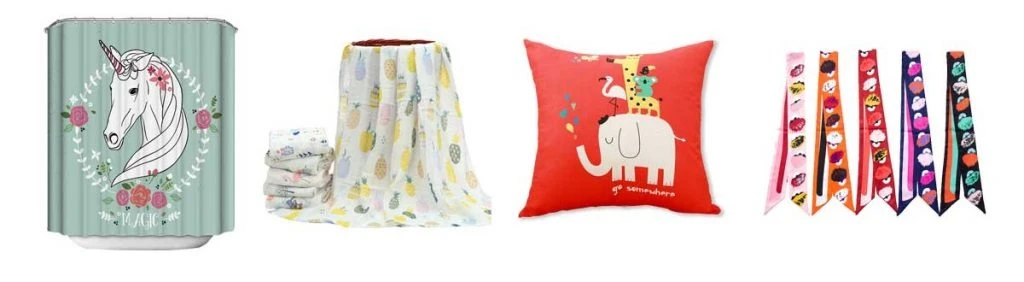
A small material change can create a visible transfer change.
How Can Transfer Paper and Ink Create Drift?
Paper GSM, coating behavior, ink load, storage condition, and batch identity all influence how the printed image behaves.
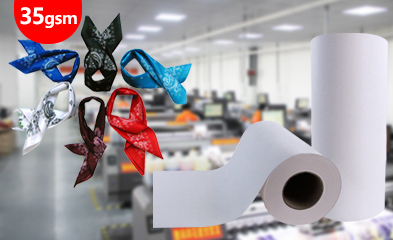
Changfa Digital’s 40gsm sublimation transfer paper is one example of a defined paper specification for digital textile printing. Changfa Digital’s broader paper range covers numerous GSM and width combinations for different production requirements.
For sublimation bulk production, the lesson is simple: record which paper was used for the approved sample.
Ink needs the same discipline.
Changfa Digital supplies standard CMYK sublimation ink for Epson I3200 configurations using 2–4 nozzles, high-density ink for I3200 systems with more than 8 nozzles, and high-density ink for Atexco Kyocera systems.
Those inks should not be treated as one identical liquid simply because all belong to the sublimation category.
Factories building a controlled color workflow can compare a defined formulation such as the 1962 Series CMYK ink against the configuration used for the approved sample.
How Can Fabric Create a Difference Even When the Printed Paper Looks the Same?
A printed paper can be consistent while the finished fabric changes.
Fabric variables include:
- polyester content;
- spandex content;
- GSM;
- knit construction;
- finishing;
- production batch.
A 100% polyester interlock and a polyester-spandex fabric do not respond identically during handling and heat transfer.
This is why sublimation color consistency cannot be controlled only at the printer.
Why Does a Long Run Expose Problems a Sample Cannot Show?
A short strike-off is normally produced under close attention. A production roll tests the system for much longer.
What Changes During Continuous Printing?
Long printing runs expose:
- ink-supply stability;
- nozzle condition;
- transfer-paper feeding;
- drying;
- take-up tension;
- operator shift changes.
A deviation that is difficult to notice across one meter can become obvious across several hundred meters.
That is why sample to bulk textile printing needs an intermediate first-off or pilot step.
What Changes During Continuous Heat Transfer?
Heat transfer adds another group of variables:
- operating temperature;
- transfer speed;
- pressure;
- paper tracking;
- fabric tension;
- blanket condition.
The first few meters after warm-up may not behave exactly like the center of a long roll.
Changfa Digital’s roll heat-transfer equipment range includes several configurations intended for polyester textile transfer work. When planning sublimation quality control, the heat-transfer stage needs its own production checks rather than being treated as a fixed background process.
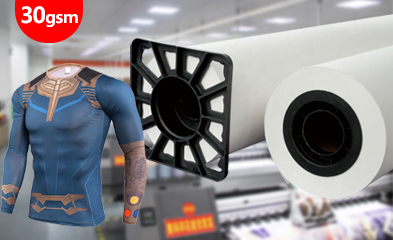
Changfa Digital also supplies 30gsm white and gray tissue/protective paper in 160 cm, 162 cm, 180 cm, and 182 cm widths with 1000 m roll options. Protective material can help keep unwanted transferred dye away from the machine and surrounding surfaces during continuous work.
How Should a Factory Move From Approved Sample to Bulk?
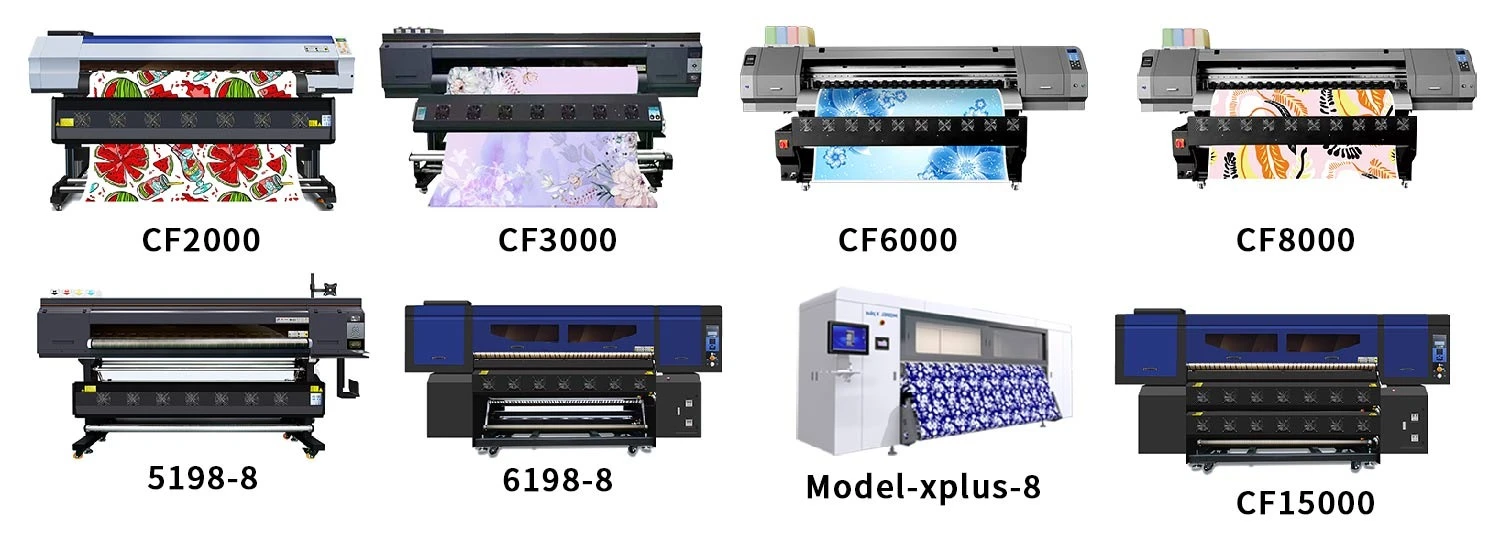
The most useful bridge is a controlled first-off.
What Should the Pilot Be Compared Against?
Run enough material for the line to reach normal working conditions.
Then compare:
- color;
- sharpness;
- pattern repeat;
- usable width;
- fabric condition;
- transfer uniformity.
If the first-off passes, record the settings that actually produced it.
The chain becomes:
sample → approved standard → pilot → sublimation bulk production.
That makes the transition into bulk far safer than moving directly from a small strike-off to the full quantity.
How Often Should Bulk Production Be Checked?
Inspection points depend on order length and risk, but checking only the first and final meter gives very little control.
During the run, periodically review:
- transferred shade;
- nozzle condition;
- paper and fabric identity;
- tension;
- alignment;
- transfer condition.
This turns sublimation quality control into part of production rather than something that begins only when the customer complains.
How Should Sample-to-Bulk Drift Be Troubleshot?
When the output no longer matches the approved sample, changing everything at once usually makes the problem harder.
Where Should the Team Start?
Return to the last known good record.
Check in a logical order:
- artwork and RIP/profile;
- nozzle condition and ink;
- transfer paper;
- fabric;
- transfer settings;
- tension and tracking.
This keeps sample to bulk textile printing troubleshooting connected to known conditions.
Why Should Only One Major Variable Change at a Time?
Suppose paper, temperature, profile, and ink are changed together and the color comes back.
The order may be saved, but nobody knows which change fixed it.
The next bulk batch can fail for the same reason.
A strong sublimation sample approval record makes sublimation color consistency easier to restore because there is a clear reference to return to.
For operations that also need a protection layer during continuous transfer, the Changfa Digital protective tissue paper gives production teams another component to consider when controlling the complete transfer environment.
Conclusion
Samples pass while bulk orders fail because the two stages do not test the same amount of process stability.
A sample proves color and design under one short set of conditions. Sublimation bulk production adds duration, roll changes, material batches, tension, machine behavior, heat-transfer stability, and operator changes.
The answer is not constant adjustment. It is better sublimation quality control.
Lock the conditions during sublimation sample approval, keep the physical reference, run a realistic pilot, and inspect the process at defined points. When sample to bulk textile printing is managed this way, sublimation color consistency becomes easier to maintain and much easier to troubleshoot.
FAQs
Q1: Why can sublimation color consistency change after a sample has been approved?
A1: Bulk production introduces longer runs, new paper or fabric batches, ink behavior, machine temperature, tension, and transfer conditions that may not be visible during a short sample.
Q2: What belongs in a sublimation sample approval record?
A2: Record the artwork, fabric, paper, ink, printer, print mode, RIP/profile, transfer temperature, transfer speed or dwell time, and keep the approved physical sample.
Q3: How can sample to bulk textile printing be controlled more reliably?
A3: Use the approved sample as the baseline, run a representative first-off before releasing the full order, record the final working settings, and inspect important variables at defined points throughout production.


