


HOT SALE
APPLICATION
Phone:+86-15215969856 E-Mail: 396838165@qq.com
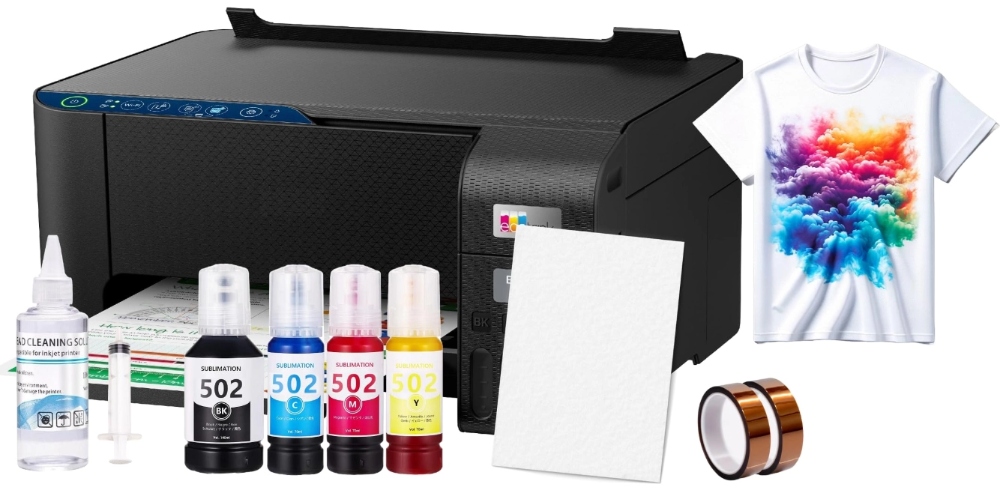
Choosing printable heat transfer paper for inkjet printing is rarely about finding something that “works.” At a professional level, most papers can transfer an image. The real question is whether the paper performs consistently under your ink load, press rhythm, and production scale.
Your decision directly affects ink absorption behavior, drying stability, transfer efficiency, and long-term repeatability. A paper that looks fine in short tests can still introduce risk when you move into continuous runs, wider formats, or higher color density. This article focuses on how to evaluate printable heat transfer paper as a production component rather than a consumable.
Who Is Changfa Digital, and Why Does Its Manufacturing Model Matter in Heat Transfer Paper Selection?
When you evaluate heat transfer paper seriously, supplier structure matters as much as paper specifications. Changfa Digital works as a fully integrated sublimation paper manufacturer, covering base paper selection, coating formulation, precision coating, slitting, and export packaging within one production system.
With more than 15 years in sublimation paper manufacturing and digital printing services, Changfa Digital runs multiple coating lines and slitting workshops, supported by high-capacity equipment imported from Germany. In other words, we have monthly output at an industrial level, while keeping coating consistency stable across large batches, which means fewer surprises when switching from sampling to real production.
Rather than acting as a paper reseller, we position ourselves as a long-term production partner for transfer paper applications that demand reliability, scale, and controlled customization. If you are interested in us, you can explore our full production scope and capabilities via our official website.
What Really Determines Whether Heat Transfer Paper Works Well with Inkjet Printing Systems?
Inkjet compatibility is not defined by printer brand or ink type alone, but by how ink droplets behave the moment they contact the paper surface.
How coating structure and ink absorption balance affect dot stability, line sharpness, and transfer completeness
Printable heat transfer paper must absorb ink fast enough to prevent dot spread, but hold it close enough to the surface to allow full release during heat transfer. If absorption is too slow, you see bleeding and soft edges; if too deep, color density drops after transfer.
Coating uniformity plays a larger role than nominal gsm. Even coating thickness across the roll ensures consistent ink load handling from edge to edge, which is critical when you print wide graphics or solid backgrounds. At higher print speeds, this balance becomes less forgiving, and paper inconsistency quickly shows up as banding or uneven color.
How Should You Decide Between Lightweight and Medium-Weight Sublimation Paper for Different Production Goals?
Paper weight is often discussed in isolation, but in practice, it is a production decision tied to speed, ink density, and fabric type.
Why lower gsm paper improves speed and efficiency, while increasing sensitivity to coating quality and press control
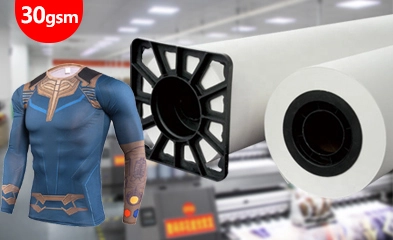
Lightweight sublimation paper is widely used in fast-moving textile production because it heats quickly, releases efficiently, and reduces material cost per square meter. However, lower gsm papers place more pressure on coating performance. Any inconsistency in coating will be amplified during high-speed printing.
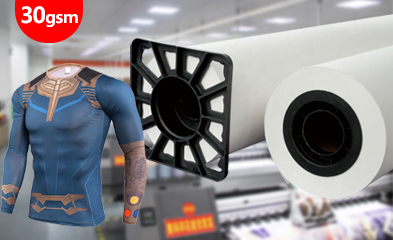
For controlled environments and stable ink profiles, lightweight solutions such as 30 gsm non-tacky sublimation heat transfer paper are often chosen for sportswear, fashion textiles, and long-run printing where speed and efficiency are priorities. In these scenarios, non-tacky behavior after printing also reduces handling issues, stacking marks, and contamination before transfer.
When Does Higher Gsm Sublimation Paper Become the Safer Choice for Inkjet Transfer?
There are cases where stability matters more than speed, especially when ink coverage is heavy or production conditions fluctuate.
How medium-weight paper improves ink holding capacity, color saturation, and press tolerance under variable conditions
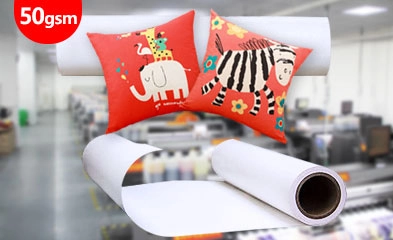
Medium-weight sublimation paper provides a larger buffer for ink absorption and drying. This can reduce risk when you work with deep blacks, photographic images, or mixed artwork containing both fine detail and solid fills.
A 50 gsm sublimation paper is often selected when production involves varied fabric textures, higher ink density, or less predictable ambient conditions. The added weight helps maintain flatness, improves handling during feeding, and tolerates longer dwell times under the heat press without distortion. This means that the trade-off is slightly slower heating and higher material cost, balanced by fewer defects and more consistent transfer yield.
How Do Paper Width, Roll Length, and Slitting Precision Affect Inkjet Workflow Efficiency?
Paper specifications go beyond gsm. Physical format directly affects how smoothly your production runs.
Why consistent roll geometry reduces feeding errors, edge curl, and alignment drift during long inkjet runs
Wide-format inkjet systems are sensitive to roll quality. Poor slitting accuracy or inconsistent core alignment can cause feeding resistance, edge curl, or lateral drift during printing. Over long runs, these issues accumulate into waste and downtime.
Consistent roll length also matters when you schedule production. Predictable roll output reduces changeovers and minimizes interruptions during continuous printing. When paper width and roll length are matched precisely to your equipment and press layout, material flow becomes predictable rather than reactive.
What Quality Risks Should You Actively Avoid When Choosing Printable Heat Transfer Paper?
Not all quality issues appear immediately. Some only emerge after repeated cycles.
How uneven coating, unstable base paper, or poor moisture control quietly degrade print repeatability over time
Uneven coating can lead to inconsistent color transfer across the width of the print. Base paper instability may cause curl or shrinkage under heat, affecting registration. Moisture imbalance can introduce ghosting or reduce transfer efficiency.
These risks often remain hidden during short tests. They become visible only after continuous production, repeated shipments, or seasonal changes in humidity. That is why supplier process control matters more than isolated sample performance.
Why Does Factory Scale and Process Control Matter More Than Sample Test Results?
A good sample is that a paper can work. It does not prove that it will work every time.
How large-scale coating lines, standardized packaging, and export-grade handling protect consistency across shipments
High-capacity coating lines allow tighter control of coating weight and drying behavior, and standardized slitting and export packaging protect roll integrity during transport. Together, these factors reduce variation between batches and shipments.
When your production depends on repeatability, factory discipline becomes part of your quality system, even if you never see it directly.
How Can OEM and Customization Capability Influence Long-Term Paper Selection Strategy?
Customization is not about changing paper for novelty, but about alignment.
Why controlled customization allows you to align paper behavior with specific inks, fabrics, and press profiles
Our OEM service allows you to fine-tune coating behavior, roll dimensions, and packaging to match your ink formulation, fabric type, and press parameters. When managed properly, it reduces downstream adjustment and troubleshooting.
For long-term programs, a customized paper profile can stabilize output and reduce waste more effectively than frequent process corrections.
Final Thoughts: How Do You Make a Confident, Repeatable Choice Instead of Chasing Trial-and-Error?
The best printable heat transfer paper is not defined by a single specification, but defined by how well it fits your ink load, production speed, press conditions, and scale requirements.
By evaluating coating behavior, paper weight strategy, physical format, and supplier process control together, you move from reactive testing to controlled production. That shift is what turns heat transfer paper from a variable into a stable part of your workflow.
FAQs
Q: Is lower gsm sublimation paper always better for high-speed inkjet printing?
A: No. Lower gsm improves speed and efficiency, but only when coating consistency and press control are stable. Otherwise, transfer loss and image defects increase.
Q: Why can two papers with the same gsm behave differently during transfer?
A: Differences usually come from coating formulation, coating uniformity, and base paper quality, not gsm alone.
Q: How do you assess whether a sublimation paper supplier is suitable for long-term production?
A: Look beyond samples. Evaluate coating capacity, slitting precision, packaging standards, and the ability to maintain consistency across large batches.


