


HOT SALE
APPLICATION
Phone:+86-15215969856 E-Mail: 396838165@qq.com
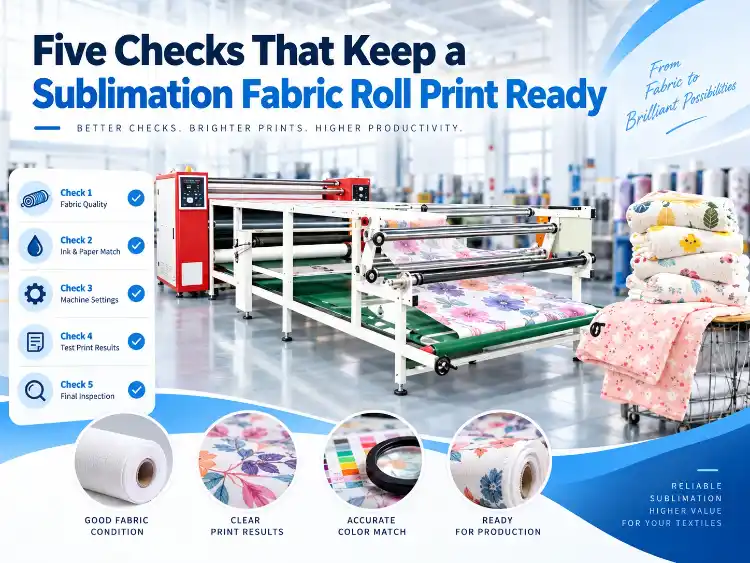
Receiving inspection is the last low-cost moment to reject a sublimation fabric roll. Once the material enters a multi-hour print and transfer sequence, a hidden width problem, unstable edge, or contaminated surface can consume paper, ink, labor, and machine time. The fabric may still look acceptable in a one-meter hand sample.
These five checks are arranged in the order that production risk usually appears. They apply to apparel, home textile, and signage work, but the acceptance target changes with the final product. The point is to approve a roll for a defined process rather than assign it a generic pass mark.
Approval Starts With the Fabric Itself
Polyester Content and Coating
Disperse dye bonds with polyester or a compatible polymer surface. A high-polyester fabric usually gives a more direct transfer path, while a cotton-rich blend can leave lighter color where the dye has no compatible fiber to enter. A polyester fabric for sublimation also needs the right construction for the final product; fiber percentage alone does not describe stretch, drape, shrinkage, or surface stability.
Inspect the approved sample beside the incoming roll under the same light. A coating, anti-crease finish, or surface treatment can change how the image releases from the paper. If the sheen, hand, or face orientation differs, print a small comparison before releasing the batch.
Roll Construction and Face Orientation
Record which side faces the transfer paper. For many fabrics that information is obvious, but coated, brushed, or double-sided constructions can create ambiguity. Mark the direction on the packaging and use the same orientation during sampling and production. A reversed roll may print without an obvious mechanical error and still produce a different visual result.
The construction record also needs the fabric name, batch, roll length, core diameter, and intended product. That information makes a later color or tension complaint traceable to the actual material received.
A receiving sample should also show how the fabric behaves after release from the roll. Some materials spring back into shape immediately, while others retain a fold or edge line long enough to affect printing. Let the sample relax under the same conditions used before production, then compare its width and surface again. This extra step catches handling damage that may not be visible while the roll remains under tension.
Width and Tension Decide How Much Fabric Is Really Usable
Measure the Usable Print Zone
Nominal width includes selvedge, edge treatment, and areas that may not track cleanly. Unwind several meters and measure the zone that can carry a reliable image under normal production tension. Repeat the measurement later in the roll if the order depends on full-width panels.
Compare that usable zone with the printer’s working width, the artwork repeat, and the required cut allowance. A roll listed as wide enough can still force a narrower layout once edge behavior and finishing waste are included.
Record the measurement method along with the result. Tension, measuring position, and the amount of fabric allowed to relax can change the usable width by enough to matter on a large panel. Production teams benefit from one repeatable method across receiving, sampling, and the start of each customer order.
Watch Winding and Edge Behavior Through the Roll
A crushed core, telescoped wrap, hard band, loose layer, or wavy edge can change tension as the diameter falls. The first meters may feed perfectly while the middle or end drifts. Run enough material to watch tracking after the roll has settled into the machine.
Damage at the outer wrap may be removed as waste. Damage that returns through the roll, or an edge that changes direction under tension, needs a quality decision before the customer order starts.
Print and Transfer Need One Combined Test
Choose a Test Pattern That Exposes Repeat Problems
Use a compact chart with fine lines, solid CMYK blocks, gradients, repeat marks, and a known color target. Print it at the start, middle, and end of the roll. The solid areas reveal drop volume, fine lines expose missing nozzles, and repeat marks show tracking or image-placement drift.
The CF-8000 digital printer is presented for wide-format polyester textile production. Match the test to the actual machine width and operating setup rather than assuming that one print profile covers every fabric.
Match Paper, Ink, and Transfer Conditions
Fabric approval without a paper and transfer check is incomplete. Paper release affects image transfer, while ink load, pressure, dwell time, and cooling affect final color and hand feel. Use the intended production combination and record every setting that can change the result.
A 100gsm sublimation paper roll is one option for workflows that need a heavier paper grade. The correct grade still depends on the printer, image load, fabric, and transfer line. Judge the complete system, not the fabric in isolation.
Review the Fabric After Transfer and Finishing
The printed roll can pass before heat changes the material. Check color, sharpness, surface marks, edge stability, shrinkage, and hand feel after transfer. If the final product involves washing, stretching, sewing, or folding, include the relevant finishing step in the approval sample. This catches problems that a flat printed test may hide.
Evaluate the material at the same stage the customer will see it. A fabric approved immediately after transfer may fail after washing, stretching, or folding. The approval record should name the finishing sequence and preserve a sample from the same stage.
Wholesale Repeat Orders Live or Die on Records
Keep the Approval Sample Traceable
Sublimation fabric wholesale orders often include several colors, widths, and delivery dates. Keep a sealed sample from the approved roll and attach the fabric composition, batch, width, core, paper grade, ink series, transfer conditions, and finishing result. The record gives the next operator a real reference instead of a verbal description.
When a new batch arrives, compare it with the approved sample before the first production panel. A visual match in the warehouse is useful, but the transferred result remains the decisive test.
Store and Rotate the Remaining Rolls
Keep unused rolls away from water, direct sun, dust, and sharp temperature changes. Support the full roll rather than the core alone, protect exposed edges, and rotate older stock first. Partly used rolls need wrapping and a return-to-service label that shows the remaining length and last production use.
The sublimation paper range provides a way to compare roll formats after the fabric, printer, and transfer requirements are known. The product center adds the current printer, ink, and paper categories when a broader configuration review is needed. Paper selection follows the production task; it does not replace fabric approval.
Conclusion
A print-ready sublimation fabric roll passes five connected decisions: compatible fiber and surface, stable roll construction, usable width under tension, transfer performance with the chosen paper and ink, and traceable handling for repeat orders. A narrow test cannot prove every one of them.
Share the fabric composition, usable width, core diameter, roll length, printer model, paper grade, ink series, transfer conditions, and expected order length with Changfa Digital. That information allows the relevant printer, ink, and paper format to be compared with the actual production path.
FAQs
Q1: Which fabrics work with sublimation printing?
A1: Polyester and compatible polymer-coated materials give the most direct bond. Blended fabrics can work when testing confirms the required color depth, surface quality, and final hand feel.
Q2: Why is nominal roll width not enough for planning?
A2: Selvedge, edge curl, coating margins, and tracking reduce the usable print zone. The planning width must come from the fabric measured under production tension.
Q3: What belongs in a wholesale roll approval record?
A3: Record the fabric composition, batch, width, core, paper grade, ink series, transfer settings, finishing result, approved sample, and remaining roll length.


