


HOT SALE
APPLICATION
Phone:+86-15215969856 E-Mail: 396838165@qq.com

All-over sublimation printing for cut-and-sew apparel depends on more than getting the artwork onto polyester fabric. Before cutting starts, factories need to control panel layout, bleed and seam allowance, usable printing width, ink coverage, paper stability, fabric movement during heat transfer, and the approval of critical graphics. A file can be dimensionally correct on screen and still create problems after transfer if these production variables are not checked together. The article focuses on the printing and transfer stages that determine whether all over print apparel is genuinely ready for cutting and sewing.
Why Does All-Over Sublimation Printing Need a Different Pre-Production Plan?
Unlike a chest logo or another placement print, all-over dye sublimation treats the garment as a group of printed panels. A front panel, back panel, sleeve, collar, or side panel may carry artwork right to the cut edge. That changes what needs to be approved before production begins.
Garment Panels Drive the Print Layout
The starting point is the garment pattern, not the overall size of the finished shirt. Each panel has its own shape, orientation, seam position, and printed area. Those pieces then need to fit efficiently within the available printing width.
For all over print apparel, this means artwork preparation and material planning are linked. A designer may be able to move a graphic several centimeters on screen, but production must still leave enough room for neighboring panels, cutting tolerance, and the actual usable width of the paper and fabric.
This is also why a production printer such as the High Speed Sublimation Printer 5198-8 is better evaluated by usable layout capacity than by speed alone. Its maximum print width is 1800mm, giving the production team a real boundary for panel nesting.
Bleed, Seam Allowance, and Safe Zones Protect Edge Coverage
Bleed extends artwork beyond the final cutting line. Seam allowance reserves fabric for joining one panel to another. A safe zone keeps important logos, text, numbers, or visual details away from areas where cutting and sewing can change their appearance.
These three areas should not be treated as the same margin. If a background color is expected to reach the garment edge, the artwork should continue through the bleed area. A player number or brand mark, by contrast, may need more distance from the seam.
That distinction is especially useful in cut and sew sublimation, where the graphic must survive both cutting and assembly.
Repeating Patterns and Engineered Graphics Need Different Controls
A random floral or camouflage repeat can tolerate small changes in where a seam crosses the design. Engineered graphics cannot.
Stripes that continue from front to back, a logo positioned close to a side seam, or geometry that must meet across two panels requires much tighter control. The production team should identify these seam-critical areas before printing so they receive extra attention during sample approval.
That is one of the reasons all-over sublimation printing needs a different pre-production plan from a simple placement job.
How Should Print Width Be Planned Before Cut-and-Sew?
The width shown in a machine specification is only one number. For cut-and-sew production, buyers need to work backward from the actual nested panel layout and compare that with the usable widths of every stage.
Panel Nesting Determines Usable Print Width
Panel nesting means arranging garment pieces across the printable area with as little unused space as practical. Two orders for the same finished garment size can have different width requirements because their panel shapes or graphic orientations differ.
For example, rotating a sleeve panel may improve material yield for one design but become impossible for another if the graphic has a fixed direction. Good nesting therefore balances artwork orientation, panel quantity, bleed, and usable width.
This is where cut and sew sublimation becomes a production-planning task rather than simply a printing task.
Printer, Paper, Fabric, and Calender Width Must Match
The effective width should stay compatible through the whole transfer route:
printer → transfer paper → fabric → calender.
A wide printer cannot use its full layout if the chosen paper or transfer machine creates a narrower working limit.
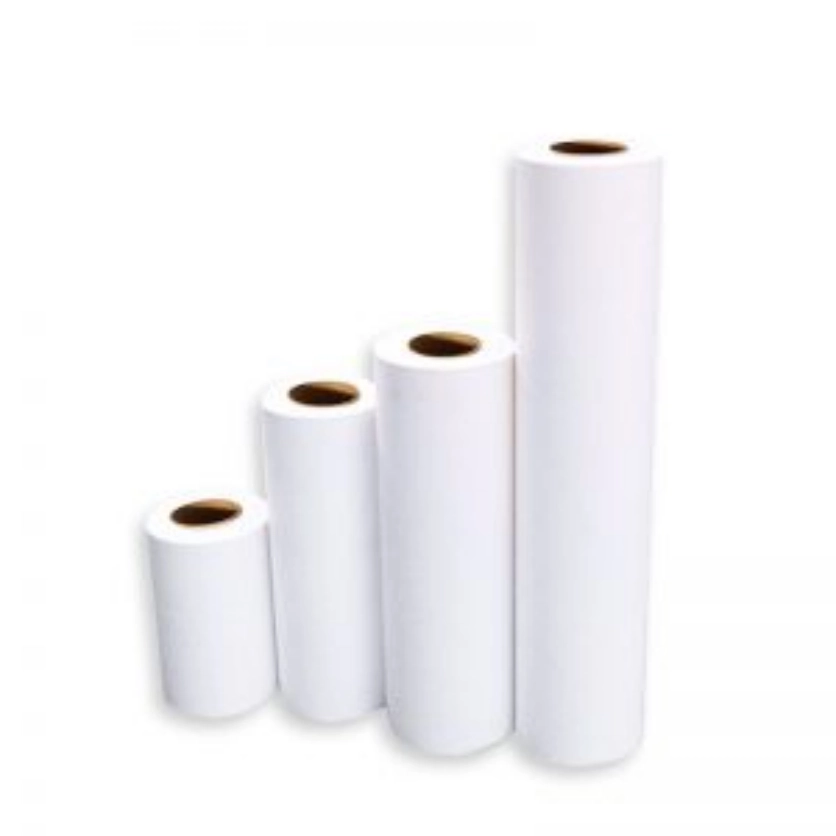
Changfa Digital’s 40gsm Sublimation Transfer Paper is available in widths including 132, 142, 152, 153, 155, 160, 162, 172, 180, 183, and 190cm, with 1000m roll length. That range lets buyers select a roll around the planned layout rather than forcing every apparel job into one standard width.
Safety Margins and Layout Efficiency Affect Material Yield
Filling every millimeter of nominal width is rarely the best goal. Edges may require running clearance, while the artwork itself needs bleed around each panel.
The better metric is usable yield: how many approved panels are obtained from a meter of printed and transferred material.
A slightly different paper width or nesting arrangement may allow another sleeve or body panel to fit across the roll. Across a bulk order, that difference can matter more than a small change in headline printing speed. Sublimation printing for apparel works best when width planning starts before the production file is finalized.
Why Can Correct Artwork Still Produce Misaligned Cut Panels?
The digital file is dimensionally fixed. Polyester fabric under heat and tension is not. Once printed artwork moves through the transfer stage, the physical material becomes part of the accuracy equation.
Heat and Tension Can Shift Fabric Dimensions
During transfer, paper and fabric pass through controlled heat and pressure. Fabric construction, feed tension, transfer direction, and operating conditions can affect how the material sits after that process.
This matters because cutting follows the transferred fabric, not the original computer file.
For simple repeating patterns, small dimensional movement may have little visual effect. With engineered all over dye sublimation artwork, however, a small shift can move a stripe, number, or seam-critical graphic away from its intended position.
Stretch Fabrics Need Physical Transfer Tests
Polyester-spandex fabrics add another variable because the material can respond differently under handling and heat than a stable 100% polyester construction.
The practical solution is a physical transfer test using the intended fabric, ink, paper, and transfer setup. The transferred piece can then be measured against the expected panel dimensions before bulk material is committed.
For cut and sew sublimation, this test is more useful than relying only on the digital garment template. It shows what the production material actually does.
Cross-Seam Graphics Magnify Small Deviations
A few millimeters may be irrelevant in an abstract background but obvious where two lines are expected to meet at a side seam.
Cross-seam artwork deserves a separate checkpoint. Instead of checking only overall color and print sharpness, the sample should be cut and assembled around the critical seam.
This gives buyers a practical distinction between a print that looks attractive while flat and one that is genuinely ready for all over print apparel production.
How Do Ink Load and Transfer Paper Affect Full-Coverage Artwork?
Full-coverage designs can place much heavier demands on the printing stage than a small logo. Large dark backgrounds, gradients, photographic areas, and saturated color fields increase the amount of ink carried by each square meter of paper.
Solid Backgrounds Increase Ink and Drying Demand
A panel filled with navy, black, or another strong corporate color may carry substantially more ink than artwork with large white spaces. Drying behavior therefore needs to remain stable across the whole panel.
If high-coverage areas are still too wet when the paper is handled or rewound, the risk of unwanted marks increases. A suitable paper and ink combination helps the roll leave the printer in a condition that is easier to manage through the next production step.
That makes ink loading an important part of all-over sublimation printing rather than just a color-setting decision.
Paper GSM Must Match Coverage and Run Conditions
There is no useful rule that says one GSM is automatically best for every AOP order. Paper weight should be considered together with ink coverage, production speed, roll handling, fabric, and the actual transfer trial.
Changfa Digital’s 40gsm paper is designed for disperse ink and polyester fabric and is positioned for long-roll textile applications. The wider Changfa Digital sublimation-paper range also gives factories room to select another weight when the production condition calls for it.
This is a more practical way to plan all over dye sublimation than choosing paper by GSM alone.
Ink-Paper-Fabric Matching Supports Repeat-Run Consistency
The same artwork can behave differently when one component of the production combination changes. For that reason, a successful bulk recipe should identify the ink, paper, fabric, and transfer settings together.
Changfa Digital’s Sublimation Ink Series includes standard CMYK ink for Epson I3200 2–4 nozzle setups, high-density ink for larger I3200 configurations, and an option for Atexco Kyocera heads. That gives factories a practical basis for matching the ink system to the actual printer before approving the complete transfer combination.
For sublimation printing for apparel, repeatability matters more than simply obtaining a strong first sample.
What Should Be Approved Before Cutting Starts?
The most expensive time to discover an alignment or color issue is after hundreds of panels have already been cut. Approval should become progressively more physical as production moves closer to the garment.
Printed Paper Is Not the Final Approval Point
Printed paper is useful for spotting obvious missing lines, layout errors, or incorrect artwork. It is not the final color or dimensional reference.
Sublimation develops through heat transfer. The production team therefore needs to continue the approval process after the image has moved from paper into the intended textile.
Stopping approval at the printed-paper stage leaves unanswered questions about fabric response, transfer color, and physical panel size.
Transferred Fabric Confirms Scale, Color, and Position
The transferred fabric is the first point where buyers can judge the real combination of print scale, color, material behavior, and positioning.
Measure critical panel areas after transfer. Check whether key graphics still sit inside their safe zones. Compare strong brand colors against the approved target under consistent viewing conditions.
This step is particularly valuable for all over print apparel because the cutting pattern will be applied to this physical material.
A Sewn Sample Checks Seam-Critical Graphics
Some issues cannot be judged on a flat piece of fabric.
If a stripe should continue across a side seam, or a geometric element needs to meet between panels, one sewn pre-production sample gives far better information than another screen mockup.
The goal is not to demand perfect continuity from every decorative repeat. It is to identify the design elements where seam position is visually important and approve those points before bulk cutting.
Production Settings Should Be Locked for Reorders
Once an order passes approval, record the combination that produced it.
Useful records include printer mode, ink configuration, paper GSM and width, fabric type, transfer width, operating settings, artwork version, and approved panel dimensions.
When the customer reorders several months later, these records give the production team a working reference instead of rebuilding the process from memory. That is especially valuable for all-over sublimation printing programs with recurring teamwear or branded apparel.
How Can Buyers Build a More Repeatable All-Over Apparel Workflow?
Repeatability comes from treating printing and heat transfer as one connected production route. Buyers should look for the stage that limits accuracy, capacity, or consistency and work outward from there.
Match Printer Output With Transfer Capacity
A fast printer provides little benefit if transferred rolls are waiting for the next stage. The printer and calender do not need identical headline speeds, but their practical capacities should support the same planned daily output.
For wide apparel layouts, working width matters just as much. Changfa Digital’s JM-800 Roll Heat Transfer Machine provides 1700mm or 1900mm effective-width configurations, double pneumatic pressure, and automatic blanket deviation correction. Those are useful planning points when the transfer stage needs to support long polyester runs.
Use Long-Run Testing Before Bulk Production
A short sample checks appearance. A longer run checks whether the process stays stable.
For bulk cut and sew sublimation, the production trial should be long enough to reveal gradual feed changes, drying behavior, transfer consistency, and dimensional drift. Check representative panels from the beginning, middle, and end rather than approving only the first acceptable meter.
That provides much stronger evidence that the combination is ready for production.
Record Width, Ink, Paper, Fabric, and Transfer Settings
A useful production record does not need to be complicated. It should simply make the approved setup reproducible.
Record the printer and usable width, ink system, paper specification, fabric, transfer settings, panel layout version, and any critical measurement points. If one variable changes later, the team can retest that change instead of adjusting several parts of the process at once.
This makes repeat orders easier to control and gives production teams a clearer way to investigate any variation.
A Multi-Stage Supplier Setup Simplifies Compatibility Checks
Changfa Digital covers several stages used in polyester sublimation production, including printers, sublimation inks, transfer paper, and roll heat-transfer equipment. Its paper production also runs through base paper, coating, slitting, and final roll preparation.
For buyers planning a new all-over apparel program, this creates a practical way to discuss several connected specifications in one production context. Instead of sending only a request for “sublimation paper,” buyers can share the printer, planned panel width, fabric, ink configuration, expected coverage, transfer equipment, and order volume.
When those inputs are available, contact Changfa Digital to compare the production combination around the actual garment program. That gives the discussion a much clearer starting point than selecting each stage around an isolated specification.
Conclusion
All-over sublimation printing becomes ready for cut-and-sew only when the transferred fabric—not just the digital file—meets the required panel size, color, position, and repeatability. Buyers should connect artwork layout with usable width, bleed and seam allowance, ink coverage, paper behavior, fabric response, and heat-transfer conditions before bulk cutting begins. A controlled printer-ink-paper-transfer combination gives apparel production teams a clearer approval point and makes repeat orders easier to reproduce.
FAQs
Q1: What Is the Difference Between All Over Print Apparel and Placement Printing?
A1: All over print apparel uses artwork across complete garment panels, often extending to edges and seams. Placement printing keeps a design inside a defined area on a finished garment. AOP therefore requires earlier control of panel layout, bleed, seam position, usable width, and transferred-fabric dimensions.
Q2: Why Is Cut and Sew Sublimation Used for Full-Coverage Apparel?
A2: Cut and sew sublimation allows flat polyester fabric or garment panels to receive the full design before final assembly. Printing first gives artwork more freedom to reach panel edges and work across the garment structure. The transferred material can then be checked, cut, and sewn according to the approved pattern.
Q3: What Should Buyers Test Before Bulk All-Over Sublimation Printing?
A3: Test the intended artwork, printer, ink, transfer paper, polyester fabric, and heat-transfer conditions together. Check transferred panel dimensions, key colors, edge coverage, seam-critical graphics, and repeatability over a longer run. Keep the approved settings for later bulk runs and repeat orders.


