


HOT SALE
APPLICATION
Phone:+86-15215969856 E-Mail: 396838165@qq.com

A custom fabric order can look almost finished before production has started. The artwork is approved on screen, the buyer has a target color, and a fabric has been discussed.
Turning that file into hundreds of meters of stable custom sublimated fabric is the harder part.
Artwork, fabric construction, transfer paper, ink, printer settings, and heat transfer all influence the finished roll. A good one-meter sample proves the design can work once. Bulk production has to prove that the process can keep working.
That is why custom sublimation fabric production is better treated as a controlled sequence rather than a single printing step.
What Needs to Be Fixed Before the Artwork Enters Production?
The first source of trouble can be inside the file itself.
Which Artwork Details Need to Be Locked?
Before production, confirm:
- final dimensions;
- repeat size;
- repeat direction;
- artwork resolution;
- approved color references;
- usable print width;
- file revision.
A repeat can look seamless on a monitor and still create a visible join when tiled across a wide textile roll.
Keep one approved version. If the order is repeated months later, the production team should not have to guess which artwork was used.
Which Parts of the Design Need the Most Testing?
Not every section of a design has the same risk.
Important test areas include:
- dark solid colors;
- gradients;
- small logos;
- fine lines;
- repeat boundaries;
- critical brand colors.
A sample containing only the easiest part of the artwork can hide problems that appear later.
That matters in custom printed polyester fabric because surface structure and stretch can change the way the transferred image is seen.
Why Should Fabric Be Fixed Before Final Color Approval?
Fabric is part of the visual result.
How Do Interlock and Stretch Fabrics Behave Differently?
Changfa Digital’s sportswear fabric range includes several constructions.
GZP-001 is a 100D interlock with a width of 153 cm, weight of 155 gsm, and 100% polyester composition.
GZS-001 is a 75D SP fabric at 185 cm wide and 160 gsm, made from 92% polyester and 8% spandex.
GZS-004 is another 75D SP option at 155 cm wide and 160 gsm, with 88% polyester and 12% spandex.
Those fabrics are not interchangeable simply because all contain polyester.
A smoother interlock can display fine graphic detail differently from a stretch polyester-spandex knit. Stretch also changes how the material travels through heat transfer.
The Changfa Digital fabric selection article gives buyers another reference when comparing textile structures for industrial sublimation.
How Should the End Product Guide Fabric Choice?
Start with what will be made.
A fitted sports garment may need stretch and recovery. A loose jersey may place more value on airflow. Some fashion applications care more about surface feel and visual detail.
A custom printed polyester fabric should therefore be chosen according to the final use before the final sample is approved.
If the fabric changes afterward, the approved sample no longer represents exactly the same production condition.
How Does the Digital Textile Printing Process Move From File to Fabric?
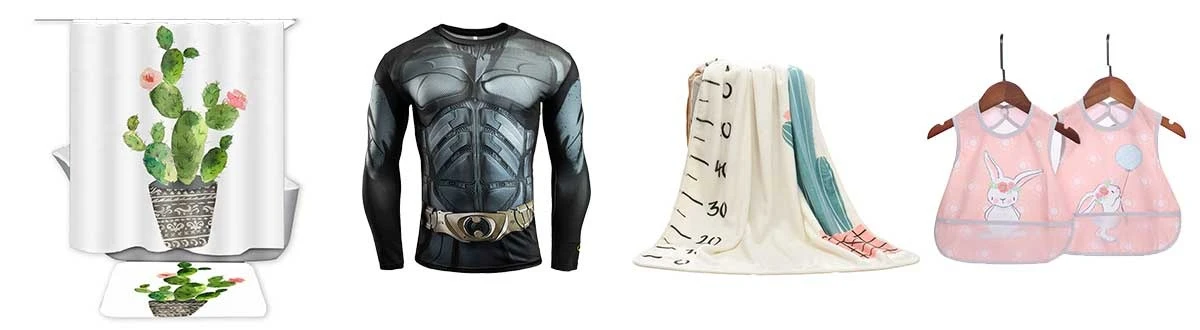
The printer is important, but it is only one part of the digital textile printing process.
Why Do Paper and Ink Need to Match the Job?
In transfer sublimation, the printer first places the image on coated transfer paper. Heat later drives the dye from the paper into the polyester textile.
Paper needs to handle the chosen ink load and production speed without creating unnecessary drying, feeding, or image-definition problems.
Ink needs to match the printing system as well.
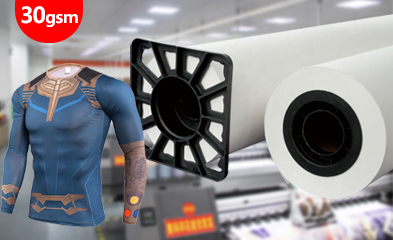
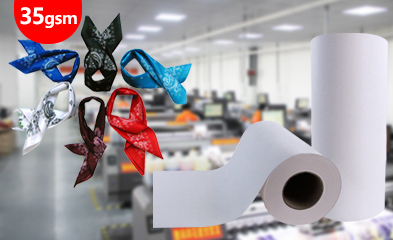
For lighter production setups, Changfa Digital’s 30gsm sublimation transfer paper provides one paper option for disperse ink and polyester-textile printing.
That paper decision is part of sublimated fabric manufacturing, not something that should be separated completely from the artwork and fabric.
What Should the Strike-Off and Pilot Run Prove?
The strike-off establishes the approved look.
Record:
- artwork;
- fabric code;
- paper;
- ink;
- printer;
- print mode;
- RIP/profile;
- transfer settings.
A pilot run then checks whether those conditions stay stable over more material.
During the pilot, watch:
- feeding;
- drying;
- ink supply;
- tension;
- repeat alignment;
- transfer uniformity.
This is where the digital textile printing process begins to behave more like the real order.
How Does Sublimated Fabric Manufacturing Stay Consistent in Bulk?
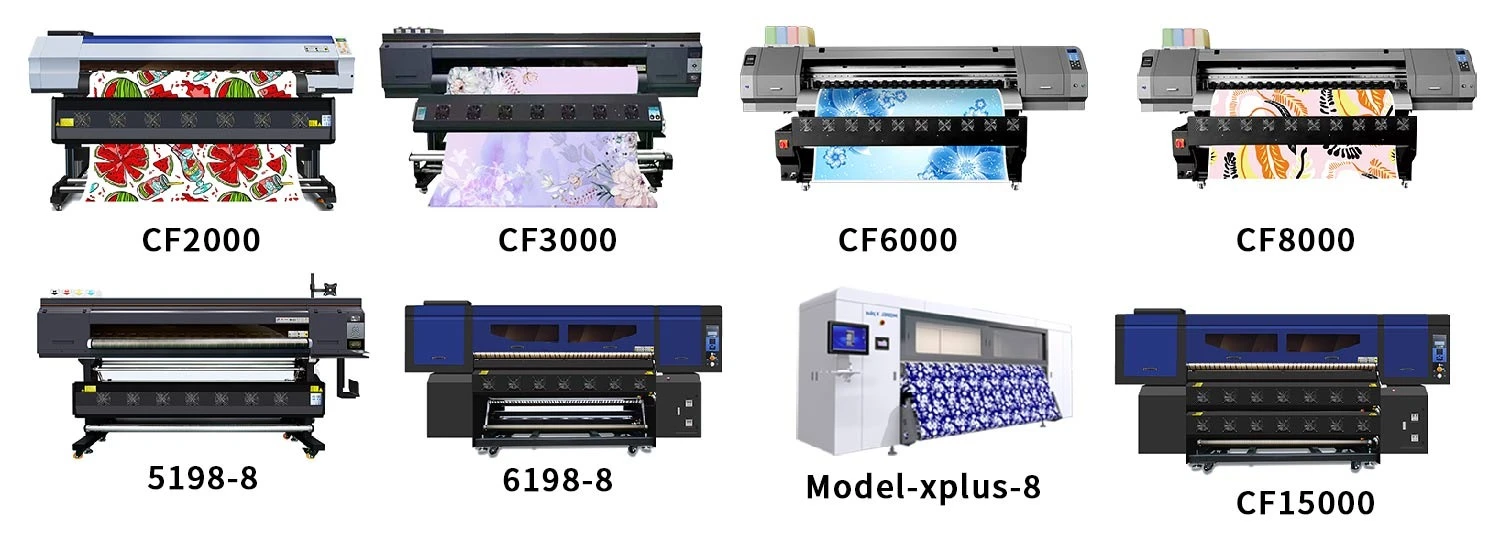
The approved sample should remain available when production begins.
What Should Be Checked at the Start of the Roll?
Compare the first production section with the strike-off.
Check:
- shade;
- sharpness;
- pattern repeat;
- usable width;
- fabric surface;
- transfer uniformity.
If it does not match, stopping at the beginning is cheaper than discovering the difference at the end of the roll.
That first-off comparison forms an important bridge between custom sublimation fabric sampling and actual production.
What Needs to Be Checked During a Longer Run?
Long jobs need defined checkpoints rather than constant adjustment.
Useful checks include:
- nozzle condition;
- paper identity;
- fabric batch;
- roll tension;
- transfer temperature;
- tracking;
- shade consistency.
With a repeating custom printed polyester fabric, repeat alignment also deserves periodic checking.
Changfa Digital covers paper, sublimation ink, printers, heat-transfer equipment, protective tissue paper, and polyester sportswear fabrics. Buyers who need to coordinate several parts of the workflow can review Changfa Digital’s product system before moving a custom order from sampling to bulk.
What Should a Buyer Provide Before Requesting Custom Fabric?
A useful inquiry should describe the production need, not only ask for a price.
Provide:
- artwork;
- end use;
- preferred composition;
- width;
- target GSM if known;
- stretch requirement;
- order quantity;
- color reference;
- sample requirement.
If the fabric will enter an existing printing or transfer line, include that information as well.
This gives the supplier enough context to discuss suitable custom sublimated fabric rather than sending a generic textile that may not fit the actual application.
Conclusion
Custom sublimated fabric is made through a chain of connected production decisions.
Artwork must be prepared for full-width printing. Fabric needs to match the final use. Paper, ink, printer settings, and heat transfer then need to work together.
The approved strike-off provides the visual standard. The pilot run tests whether that standard can survive a longer production condition.
When sublimated fabric manufacturing is handled this way, custom sublimation fabric becomes easier to reproduce and easier to inspect when repeat orders return.
FAQs
Q1: What information is needed before producing custom sublimated fabric?
A1: Useful information includes artwork, end application, fabric composition, width, approximate GSM if known, quantity, important color references, and any required stretch.
Q2: Is custom sublimation fabric always made from 100% polyester?
A2: No. Some applications use 100% polyester, while sportswear can use polyester-spandex blends. The right fabric depends on stretch, structure, weight, and the intended finished product.
Q3: Why is a pilot run useful in the digital textile printing process?
A3: A pilot run exposes longer-run issues that a small sample may miss, including feeding, tension, ink supply, drying, repeat alignment, transfer stability, and fabric behavior.


