


Phone:+86-15215969856 E-Mail: 396838165@qq.com
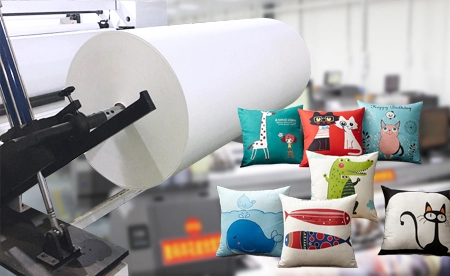
Sublimation printing stands out as one of the most effective techniques for creating long-lasting, vivid apparel, especially in the athletic wear and promotional T-shirt sectors. However, stable outcomes depend on far more than printer performance alone. Fabric components, surface finish, material thickness, and stretch properties all influence dye movement throughout the heat transfer stage. Transfer paper functions as the essential medium, which controls how smoothly ink travels from the print head onto the textile. Choosing unsuitable paper commonly results in subdued shades, unwanted ghost images, or inconsistent manufacturing speed.
Selecting appropriate 승화 전송 종이 involves aligning paper characteristics closely with fabric structure and daily production routines. Various T-shirt materials call for distinct transfer behaviors. Proper coordination among these elements markedly enhances color fidelity, transfer effectiveness, and overall process reliability.
Why Does T-Shirt Fabric Type Affect Sublimation Results?
Before choosing transfer paper, a comprehensive understanding of fabric composition becomes necessary since it determines the possibility of a permanent dye bond.
How do fiber types influence dye bonding?
Exposed to heat, sublimation dyes establish chemical links with polyester strands. Natural materials like cotton fail to form lasting bonds with these dyes, for which sublimation primarily suits polyester garments or items featuring polyester surface treatments. In mixed compositions, dye uptake largely correlates with polyester proportion. Greater polyester percentages generally produce stronger color permanence following transfer.
Does fabric texture affect print clarity?
Even, closely woven surfaces reflect illumination uniformly, thereby rendering printed motifs crisper and hues more intense. Materials exhibiting rougher finishes or open-knit patterns disperse light rays, gently softening graphic elements and slightly lowering apparent contrast. Athletic polyester varieties such as interlock or birdseye constructions demonstrate superior sublimation compatibility due to their regular surface arrangement, while coarser textiles often undermine perceived image crispness.
How Do Fabric Thickness and Density Influence Paper Selection?
Fabric grammage and knit compactness significantly shape dye penetration patterns during pressing.
Do lightweight sports T-shirts need faster transfer?
Thin polyester shirts take up dyes swiftly because fibers warm rapidly and allow for quick diffusion. Manufacturing setups focused on lightweight athletic tops gain advantages from papers engineered for prompt ink liberation, thereby shortening cycle periods while preserving vivid coloration. In addition, accelerated transfer reduces ghosting risks and boosts output capacity in busy production environments.
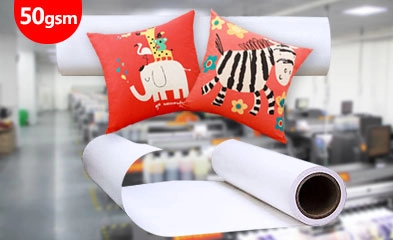
For such applications, 50 gsm 승화 전송 종이 delivers well-balanced ink capture combined with efficient release behavior. This type supports reliable dye delivery without compromising structural integrity, rendering it appropriate for general polyester T-shirt production that requires stable color and production speed.
Why do thicker fabrics require controlled ink release?
Denser or heavier textiles absorb dyes more gradually. Excessively rapid ink release sometimes creates irregular diffusion patterns, causing mottled visual effects. Papers featuring enhanced structural rigidity permit measured, uniform dye deposition, thereby ensuring consistent penetration throughout the material thickness.
How Does Fabric Stretch Influence Paper Choice?
Modern T-shirt designs frequently incorporate elastic components to enhance comfort and garment conformity.
Can stretch fabrics distort printed patterns?
Elastic textiles undergo repeated extension and contraction when worn. Although sublimated dyes elongate and fibers, motifs occasionally are altered when clothing experiences tension. Should fabric remain stretched or improperly aligned during pressing, design distortion may become fixed in the final product.
Should paper stability increase for stretch garments?
Increased stability often is beneficial. Papers with higher grammage deliver superior size steadiness, contributing to accurate registration between printed artwork and fabric surface during heat transfer. Such stability reduces shifts and helps prevent misalignment when handling stretch-prone materials that are challenging to position consistently.
How Can Production Speed Affect Paper Requirements?
High-volume T-shirt manufacturing tends to seek a balance between image quality and actual throughput.
Do fast production lines need rapid drying papers?
Fast-dry coatings prevent smearing in the process of high-speed accelerated printing and facilitate clean transfers. These specialized surfaces minimize residue while allowing shortened pressing intervals, thereby elevating overall manufacturing productivity.
When should heavier papers be used?
Heavier transfer papers accommodate high ink loads and complex artwork by maintaining positional accuracy during pressing. Fast-dry coatings help reduce residue while allowing faster transfer cycles, which improves production efficiency.
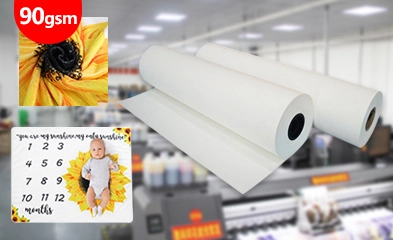
In challenging production scenes, 90 gsm fast-dry sublimation transfer paper provides heightened size control and regulated ink delivery, making it well-suited for denser fabrics or artwork requiring exact color reproduction.
Who Supports Reliable Sublimation Transfer Material Supply?
Achieving steady transfer performance relies not solely on paper grade but also on production consistency and stable material availability.
Numerous sublimation printing facilities worldwide rely upon Changfa 디지털, a trustworthy manufacturer of transfer papers. With experience of more than fifteen years in digital textile printing technologies, we maintain several coating installations and dedicated slitting operations that can generate extensive grammage varieties. Our complete vertical integration, from initial base paper treatment through coating application, final conversion, and international distribution, ensures consistent coating behavior and stable transfer characteristics. Our substantial monthly output volumes, measured in thousands of tons, support printing enterprises globally, enabling them to sustain stable workflows while meeting diverse textile requirements.
How Can You Match Transfer Paper to Real Production Needs?
Paper selection should be based on actual fabric properties and specific operational demands.
What fabric characteristics should be evaluated first?
Primary factors include material composition, thickness level, knit structure, and elastic characteristics. Smooth polyester constructions generally respond favorably to quicker ink release mechanisms, while heavier or elastic varieties benefit from papers that provide greater positional stability. Systematic trials across representative fabric samples confirm reliability before undergoing bulk manufacturing.
How can paper mismatch be avoided?
Proper selection should balance transfer speed, structural stability, and color deposition efficiency. Conducting practical evaluations under the real production circumstances prevents unexpected difficulties. Matching paper performance to both artwork complexity and fabric properties reduces material waste and supports consistent output quality.
FAQ는s
Q: Can sublimation transfer paper work on cotton T-shirts?
A: Sublimation dyes primarily attach to polyester fibers; consequently, cotton garments generally require different decoration approaches unless polyester surface treatments exist.
Q: Why do some polyester shirts show uneven color after transfer?
A: Variations in material density, residual moisture levels, or incompatible paper release characteristics frequently produce irregular dye penetration patterns.
Q: What transfer paper weight works best for mixed T-shirt production?
A: Intermediate grammage papers commonly offer a reasonable compromise between transfer effectiveness and operational dependability when processing diverse fabric types.


