What Are the Key Differences Between Heat Transfer Paper and Sublimation Transfer Paper?
Phone:+86-15215969856 E-Mail: 396838165@qq.com
Heat transfer paper and 昇華の転送紙 differ mostly in how ink joins materials, which affects print strength, color results, and surface match. Heat transfer uses sticky layers to place ink on many kinds of items, while sublimation applies strong heat to turn dye into gas that bonds forever with polyester or coated surfaces. Factors like printer type, coating ways, paper thickness, and final use strongly shape outcomes. Choosing reliable sublimation materials from skilled makers helps keep steady standards, efficient production, and long-term equipment stability.
What Sets Heat Transfer Paper Apart from Sublimation Transfer Paper?
Why does the printing mechanism influence your choice of transfer paper so heavily?
Knowing how heat transfer paper and sublimation paper work with ink and materials is basic for choosing the right one. Heat transfer paper is made with a special top layer that allows ink, usually pigment or dye type, to sit on top of the film layer. This part then moves to the material with heat and pressure. Sublimation paper supports a change in form—sublimation ink turns to gas under heat and enters the polyester surface to make a lasting join.
The main difference rests in ink-material contact. Heat transfer paper just moves ink through sticky layers, while sublimation paper helps dye gas enter man-made fibers. As a result, ink kind, heat range, and material match prove vital. Sublimation needs high heat, usually over 180°C, to start the dye step, whereas heat transfer can work at lower heat based on the sticky used.
How does your printer type affect the usability of heat transfer paper for sublimation printers?
A usual question comes up—can heat transfer paper work in sublimation printers? The answer is no. Sublimation printers are made to use sublimation inks that need papers coated specially to hold dye bits for a short time before they turn to gas in heat pressing. Heat transfer paper might not take sublimation ink well, which causes color changes or fading. Besides, incompatible paper types can result in clogged print heads and poor print resolution due to the mismatch in ink absorption properties.
This is quite important for companies that put money in sublimation setups and want to ensure optimal performance. Using wrong mixes not only harms print standards but might damage tools and raise care costs.
Why Should You Consider Coating and Weight When Choosing Transfer Paper?
How do coating technologies affect image clarity and ink retention?
Coating ways play a big part in how well a picture moves to a material. Top coatings in sublimation papers often have tiny holes or nano builds that hold dye until high heat starts. This prevents early ink release and spreading, which ensures bright colors and clear lines.
Sublimation papers with microporous coatings retain dye before high-temperature activation. Heat transfer papers depend on surface film layers that carry printed designs and peel to materials under heat, which can lead to limited strength over time. The difference directly influences washing resistance, UV resistance, and longevity of the transferred image.
What role does paper weight play in production speed and cost-efficiency?
Picking the correct paper thickness is key to balancing standards with work speed. Light sublimation papers, such as 30 gsm non-tacky sublimation heat transfer paper, allow quicker drying and less ink use, which is ideal for high-speed production environments. These are often used for lighter fabrics or short-term promotional items where efficiency is prioritized.
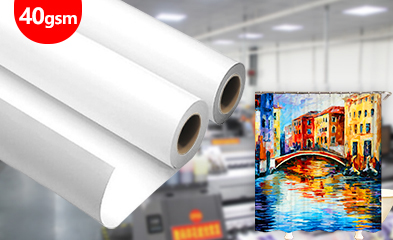
Heavier choices like 40 gsm 昇華紙 forms give better shape hold, mainly forlarge-format or detailed cloth tasks. However, they might increase handling difficulty and material costs. Choosing the right thickness ensures the balance between working speed and image quality that is vital for companies scaling up operations.
Where Do Application Scenarios Diverge Between the Two Paper Types?
Why is substrate compatibility a decisive factor in selecting transfer paper?
The choice of material largely determines whether heat transfer or sublimation paper should be used. Sublimation only works well on polyester or polymer-coated surfaces because the dye needs to chemically bond with the material. Sublimation requires polyester or polymer-coated surfaces for permanent dye bonding.
Heat transfer papers can stick to a wider range of materials, including cotton, blends, ceramics, wood and others, but often with at the expense of durability. In contrast, heat transfer paper works on cotton, blends, ceramics, and more—but often lacks wash durability. Ensuring compatibility between substrate and transfer method is important for achieving color fastness and steady product quality.
How does end-use determine whether sublimation or heat transfer is more suitable?
Use-case scenarios often dictate the optimal method. Cloth makers like sublimation for polyester clothes because it gives vibrant all-over prints with a soft feel that does not crack or peel. Promo item makers might choose heat transfer mehods for hard items like cups or wooden plaques where vinyl stickies give better hold.
Your product line dictates which method delivers optimal results over time. Understanding the final usage environment—whether it’s outdoor exposure, frequent washing, or tactile expectations—will help professionals choose appropriately between sublimation and heat transfer.
Are There Specific Products That Help You Maximize Efficiency?
What makes some sublimation papers more reliable for high-speed digital printing?
For print workers using fast machines like Epson I3200 or Kyocera heads, media trust stays must. Papers like 40 gsm sublimation transfer paper keep flat under heat and pressure. This prevents problems like bending or curling that can disrupt wide-format alignment.
Quick absorption traits are needed to prevent ghosting effects during rapid production cycles, and reduced curling improves alignment accuracy on wide-format printers. These traits ensures clean registration across large surfaces and allow unbroken work in quick places.
Why is choosing a trusted supplier critical to your workflow stability?
Steady paper standards stay key for keeping output levels across different jobs and customers. Low materials not only affect sight results but also tool lasting from jams or head blocks.
Working with skilled makers like Changfa Digital gives calm. Changfa Digital is professional sublimation paper manufacturer and provides the service of digital printing for more than15 years. We are the factory for sublimation papersfrom base paper to make coating and slitting and ship to all of the world. Our control over every step, from base paper processing to final slitting, ensures reliable quality at large sacle.
Who Is Changfa Digital and Why Should You Trust Their Expertise?
How does Changfa Digital support professionals seeking reliable print media solutions?
チャンファ デジタル has specialized in research-driven development of sublimation media for over a decade. Our vertically integrated manufacturing process includes four coating lines, ten slitting machines, and advanced German-imported production lines—all geared toward delivering performance-driven print solutions.
Our item range covers bend choices like light 30 gsm non-tacky sheets for quick drying cycles, as well as strong 40 gsm forms for hard cloth work, all made for compatibility with modern digital printers. With a monthly export volume of 120 containers globally, Changfa has proven its capability in supporting high-volume commercial demands.
If you’re looking to streamline your process without compromising output quality, Changfa Digital offers tailored solutions that align with your production goals while maintaining technical integrity.
FAQについて
Q: Can I use heat transfer paper in a sublimation printer if I already have one?
A: No, heat transfer paper is not built to work with sublimation inks or steps; it might harm the printer or give bad results.
Q: Is it possible to sublimate onto cotton using any kind of special sublimation paper?
A: Usual sublimation needs polyester; yet special coatings can be put on cotton fabrics alone before using sublimation ways.
Q: How do I choose between 30 gsm and 40 gsm sublimation papers for my printing business?
A: Use 30 gsm for light fabrics and quick finish jobs; choose 40 gsm when better hold or large size moves needing exact line up is needed.