


Phone:+86-15215969856 E-Mail: 396838165@qq.com
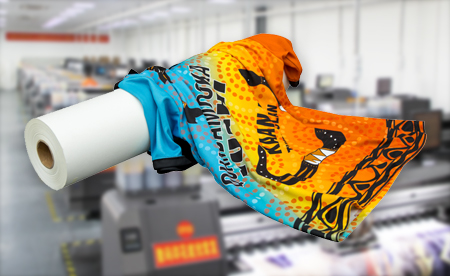
Outdoor graphics work splits by surface, not by weather. Vinyl, wraps and rigid boards belong to eco-solvent, because the image has to live on a surface that dye cannot enter. Flags, fabric banners and outdoor fabric belong to sublimation, because the dye ends up inside the polyester fibre and there is no printed film left outside to fail. The eco solvent vs sublimation question turns on which surface the job is printed on, and on what each route then demands in drying time, finishing and consumables.
The Job Families Outdoor Work Arrives In
Vinyl, Wraps and Rigid Boards
Self-adhesive vinyl, vehicle wraps, decals and rigid signage panels are eco-solvent work, and no honest comparison moves them. Eco-solvent ink is pigment carried in a mild solvent that keys into the surface of PVC-based media, so the printed image sits in and on the surface of the material. Sublimation dye needs polyester fibre to enter; on a vinyl sheet or an aluminium board there is nothing for it to enter, and the route simply does not apply. A shop taking wrap and board work needs the eco-solvent line and its finishing, because on these jobs the printed surface faces weather, washing and abrasion directly.
PVC Banner Material
Solid PVC banner stock sits in the same family. It takes eco-solvent ink directly, and a finished banner is a printed sheet that loads its frame and fixings across its whole area. The route handles this stock at high print speed per square metre. The banner’s outdoor life is then a property of the ink system and whatever protective film is applied over it, which the next section takes up.
Flags and Outdoor Fabric
Knitted flag fabric and mesh polyester behave differently outdoors. They move with the wind and let air pass through the weave, so a flag or a mesh banner loads its pole and frame far less than a solid sheet of the same size. Printing them by sublimation puts the colour inside the fibre rather than on top of it. There is no film riding on the fabric as it flexes, flaps and folds, nothing at the surface to crack along a fold line or peel at an edge, and the finished piece rolls, folds and ships exactly like unprinted fabric. This is the work sublimation owns outdoors, and it is production work: feather flags, event fencing mesh, fabric banners and soft signage for outdoor retail.
Fabric Graphics on a Replacement Cycle
A large share of outdoor fabric work is not expected to stay up for years. Event graphics, seasonal retail campaigns and exhibition pieces are replaced on a schedule measured in weeks or months, and their value is in fast turnaround and clean colour rather than in a multi-year rating. Sublimation serves this family directly, because the piece comes off the calender finished. Shops already running a sublimation line for sportswear or interior fabric can take this work as it stands, and the open questions sit in paper grade and ink load rather than in any new finishing step.
What Each Route Demands Once Printing Starts
Drying, Outgassing and Lamination
Eco-solvent printing carries a clock that print speed figures do not show. A print can feel dry to the touch while it is still releasing solvent, and the release continues after the job leaves the printer. Laminate applied too early traps the solvent under the film, and the result shows up as bubbles, lifting edges or a silvered finish. Outgassing time is part of the job cost on the eco-solvent route, along with the laminate film and the labour of applying it. Current eco-solvent ink systems carry published outdoor ratings of about three years unlaminated, and lamination extends that life while adding scratch and UV protection. For long-term fixed signage on vinyl, that rated and laminated system is the documented benchmark, and this article does not argue otherwise.
The Transfer Step and What Follows It
Sublimation runs on a different clock. The print goes onto transfer paper first, and the fabric is finished in one heat step: for roll work the calender runs at 225°C for about 20 seconds, inside a 200–250°C window, and the dye leaves the paper as gas and fixes inside the polyester. What comes off that step is finished and dry. It can be rolled, folded, hemmed and shipped with nothing left to cure and nothing to protect. On turnaround, the eco solvent printer vs sublimation comparison therefore runs on different totals: print speed plus outgassing and lamination on the eco-solvent side, print speed plus a 20-second transfer on the sublimation side.
Where the Durability Argument Actually Sits
The two routes protect an image in opposite places. Eco-solvent leaves the image at the surface and buys its outdoor life with ink chemistry and, for serious work, a laminate layer over the top. Sublimation puts the image inside the fibre, so the protection question disappears: there is no coating to delaminate and no film to maintain, and the fabric’s own service life is the limit. On vinyl, eco-solvent’s rated system wins and should be specified as such. On fabric that moves, folds and gets replaced on a cycle, sublimation’s inside-the-fibre image is the more suitable construction, and it asks for no finishing budget to get there.
Running Both Routes in One Shop
Room, Heads and Media on the Eco-Solvent Side
Eco-solvent is milder than the solvent systems it replaced, but it is not solvent-free, and the print room still needs ventilation. Printheads stay healthy with regular use, and the route is unforgiving about matching: media, ink and RIP profile have to belong together, or banding and off-colours follow. All of it is standing overhead that belongs in the route’s real cost per job, next to laminate stock.
Paper Grade and Ink Load on the Sublimation Side
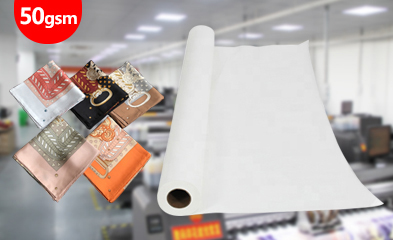
Sublimation moves its running questions upstream, to the paper. Full-coverage flag and banner work lays down heavy ink, and the paper has to hold that load through printing and give it up cleanly at transfer. The grade built for this work at チャンファ デジタル is the 100gsm fast dry paper: its ink-load rating is five stars, the maximum on the grading scale, its transfer rate runs over 98%, and the coating holds rich ink loads without bleeding, so heavy designs come off the calender with clean lines and no wet edges. It stays flat on large prints instead of curling, comes in widths from 91.4 to 183 cm on rolls of 100–200 m, and transfers at the same 225°C for about 20 seconds. Lighter work draws on the rest of the range, 29–100 gsm with mid grades transferring at 95–98% under the same conditions, and widths up to 320 cm for wide banner work. The flags and soft signage guidance works through the width and ink-load matching in detail.
Colour on Fabric
Colour closes the argument for fabric work. Sublimation colour on polyester is the more vibrant of the two routes, because the dye is distributed through the fibre the light reaches. Eco-solvent printed onto fabric gives a muted result by comparison, since the pigment sits on fibres it was not formulated for.
結論
Run each outdoor job through the same short check. Is the surface vinyl, wrap film, PVC banner stock or a rigid board? It goes eco-solvent, with outgassing time and laminate in the quote. Is it polyester fabric: flags, mesh, banners, event or retail graphics? It goes sublimation, and the decisions to settle are paper grade against ink load and width against the calender. Is the fabric piece staying up for years as fixed signage? Reconsider the surface itself before choosing the route, because rated multi-year life is a vinyl-and-laminate specification. To have the split worked out for your own mix, send the surfaces you print, the fabric jobs you currently turn away or outsource, your printer and calender widths, and your typical run lengths, and the routes can be assigned job family by job family.
FAQについて
Q1: How should sublimation paper rolls be stored between jobs?
A1: Rolls stay sealed in a dry space at about 40–50% humidity until they go on the printer. Held that way, the paper stays flat and print-ready; rolls left open in a damp room pick up moisture and curl, and the first metres of a banner run show it.
Q2: How does ink stock differ between the two routes?
A2:Eco-solvent ink is consumed as cartridges matched to the printer and its profiles, and stock turns over with the machine’s regular use. Sublimation ink stock needs deliberate rotation by date, since disperse ink ages on the shelf whether the printer runs or not; the ink stock rotation guide sets out how shops order that rotation.
Q3: What does each route keep consuming after the printer is bought?
A3. Eco-solvent keeps consuming laminate film and application labour on every job that needs outdoor protection, on top of ink and media. Sublimation keeps consuming transfer paper by the roll, graded to the ink load of the work, with no finishing consumable behind it. The eco solvent vs sublimation ink and media bill therefore differs less in the print itself than in what each route still needs after printing.


