


Penjualan Panas
Aplikasi
Phone:+86-15215969856 E-Mail: 396838165@qq.com
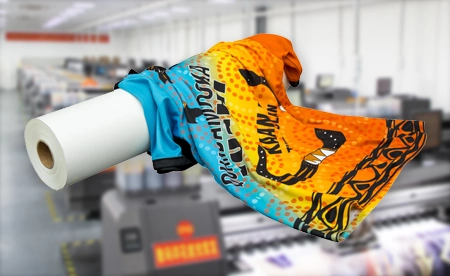
Sublimation printing on T-shirts has emerged as a critical technology for creating sportswear, advertising clothing, and stylish garments, as require bright colors and exceptional durability. Different from traditional surface-based printing, sublimation infuses ink directly into polyester strands, enabling fabrics to remain breathable and resistant to cracking or peeling.
However, reliable printing outcomes rely heavily on effective coordination among material standards, transfer paper characteristics, ink composition, and pressing conditions. Slight inconsistencies often produce ghosting, color fading, or uneven transfer. This article outlines core technical elements that promote steady sublimation performance while enhancing workflow efficiency and repeatability in professional production environments.
Why Does Sublimation T-Shirt Printing Require Process Precision?
Grasping the reasons behind sublimation’s sensitivity to procedural changes is valuable before choosing supplies or modifying machinery.
What Makes Sublimation Different From Other Printing Methods?
During sublimation, colorant shifts directly from solid form into vapor state through applied warmth and force, skipping any liquid stage. The vapor then enters polyester threads and locks permanently as cooling occurs, integrating hue deeply in the textile.
Since ink integrates fully into fiber composition, resulting prints show far greater resistance to wear than conventional surface applications. But this same mechanism necessitates exact regulation of warmth levels, applied force, and duration. Any mismatch hinders thorough application or generates hue irregularities.
Why Do Minor Errors Lead to Visible Defects?
Tiny procedural shifts rapidly create noticeable flaws. Inadequate warmth yields muted tones, while overly intense conditions risk burning material or altering thread structure. Irregular force application sometimes causes double imaging from sheet movement. Dampness present in paper or textiles interferes with vapor formation, resulting in spotty shade distribution.
Therefore, careful attention throughout every production phase is indispensable.
How Should Fabric Selection Be Evaluated for Sublimation T-Shirts?
Material choice fundamentally shapes achieved brightness levels and transfer permanence.
Which Fabric Types Deliver the Best Color Performance?
Fabrics containing substantial polyester portions enable efficient ink bonding with threads. Even surfaces promote crisp outline definition, and uniform knitting patterns avoid irregular ink pickup. Numerous athletic textiles, including interlock knits or bird-eye constructions, demonstrate strong compatibility, yielding intense shades while preserving airflow qualities.
Mixtures featuring reduced polyester percentages generate subdued vibrancy since natural fibers absorb sublimasi tinta poorly.
How Does Fabric Weight Influence Print Results?
Thinner materials warm rapidly but risk deformation under excessive force or warmth. Thicker options demand extended exposure periods but frequently produce deeper tone richness. Appropriate settings matched to material density help prevent dulling or irregular application. Thoughtful fabric decisions enhance productivity while minimizing discarded resources.
Why Is Sublimation Paper a Critical Success Factor?
Transfer paper performance significantly affects ink release effectiveness and ultimate shade accuracy.
How Does Paper Weight Affect Ink Release?
Paper thickness governs retained ink quantity during application. Lighter varieties generally allow superior ink release, boosting efficiency and cutting excess usage. Thicker papers offer improved physical steadiness, though potentially hold excess colorant when surface treatment falls short. Proper gram-weight selection aligned with operational pace and ink volume supports uniform results.
When Should Ultra-Light or Fast-Dry Papers Be Used?
Quick-drying varieties are particularly advantageous in rapid production lines where printed materials proceed swiftly toward pressing stages. Swift-setting coatings avoid smearing and shorten idle periods, preserving a smooth operational rhythm. Lightweight papers also decrease handling and transport demands without compromising application quality.
How Does Ink Behavior Influence Final Print Quality?
Ink properties require careful matching with both transfer medium and textile attributes.
Why Does Ink Density Matter in Sublimation Printing?
Concentrated formulations enhance tone richness and solid-area coverage, increasing overall image liveliness. Over-application, however, risks spreading or delayed setting, especially in wet environments. Carefully balanced compositions deliver seamless transitions absent excessive buildup.
Contemporary sublimation formulations frequently incorporate eco-conscious carriers, wide reproducible shade ranges, and reliable performance during extended high-volume operations without blocking print heads.
How Do Environmental Conditions Affect Ink Performance?
Ambient warmth and moisture levels impact drying speed alongside flow behavior. Elevated dampness prolongs setting time and raises smudge potential, while lower temperatures alter thickness and uniformity. Stable workshop atmospheres contribute to foreseeable outcomes and decrease processing mistakes.
How Should Heat Press Parameters Be Controlled?
Final pressing completes ink infusion, rendering precise regulation of conditions vital.
What Temperature and Time Ranges Are Typically Required?
Standard sublimation cycles generally range between 190–210 degrees Celsius across 30–60 second intervals, varying according to textile density and paper specifications. Inadequate exposure leaves residual ink behind, while prolonged application risks material discoloration or pattern warping. Duration adjustments must correspond to material characteristics and equipment capability.
Why Is Pressure Uniformity Essential?
Consistent force application ensures full surface contact, eliminating shadow marks or duplicated patterns. Variable distribution leads to patchy ink penetration and blurred boundaries. Periodic equipment verification maintains dependable performance throughout successive production groups.
How Can Material Choices Improve Production Efficiency?
Operational effectiveness increases substantially when selected components complement processing velocity and output volume.
Which Paper Options Support High-Volume Production?
Among suppliers of sublimation transfer paper, Changfa Digital stands out for the integration of large-scale coating capacity, raw material control, and global distribution into a stable supply system. Running multiple coating and slitting lines, we can produce thousands of tons of products each month, meeting the demands for global printing sectors with the same standards. Our vertical integration from base paper coating through precise slitting ensures predictable ink release and drying behavior across large-format applications. With more than fifteen years dedicated to digital supply solutions, we produce high-quality products that achieve a balance between substantial throughput, high efficiency, and great performance.
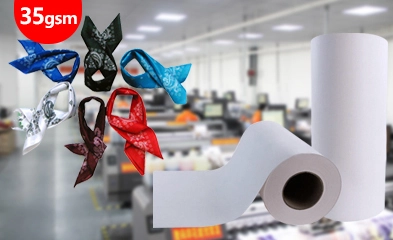
A practical example is the 35 gsm kertas transfer sublimasi, which facilitates efficient ink transfer and reduces material consumption during large-scale T-shirt production.
Which Paper Performs Best for Fast-Drying Applications?
In high-speed workflows, stable drying performance is particularly important. Optimized coating technology enables paper to absorb ink quickly while preserving structural integrity throughout printing and transfer phases.
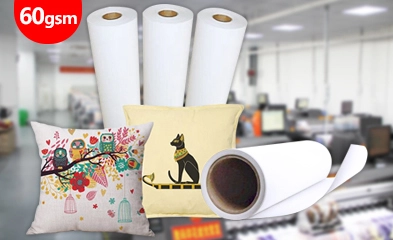
yang 60 gsm kertas sublimasi kering cepat combines the feature of rapid absorption with stable roll performance, making it suitable for roll-to-roll production requiring continuous printing and immediate transfer.
How Can Common Sublimation Defects Be Prevented?
Frequent sublimation imperfections typically stem from incompatible components or gradual procedural shifts.
What Causes Ghosting and Color Blur?
Double imaging arises primarily from paper displacement before or during pressing cycles. Overly forceful application or improper warmth environments also soften the detailed edges. Firm paper positioning combined with carefully managed conditions effectively counters these occurrences.
How Can Color Fading Be Avoided?
Appropriate warmth duration secures thorough ink bonding. Textiles rich in polyester content, paired with compatible ink-paper systems and steady thermal regulation, help sustain shade strength following repeated cleaning and light exposure.
Kesimpulan
Reliable sublimation results on T-shirts rely on the overall management of fabric properties, transfer paper, ink formulations, and pressing specifications. Proper material selection directly influences both color quality and production efficiency.
When all elements coordinate effectively, sublimation technology produces enduring, vibrant effects that can withstand long-term service while meeting the demand for large-scale production.
FAQ (Pertanyaan umum)s
Q: What polyester percentage works best for sublimation T-shirts?
A: Materials containing substantial polyester portions yield the brightest and most enduring application outcomes.
Q: Does lighter sublimation paper always improve transfer quality?
A: Not automatically. Paper thickness should correspond appropriately to ink volume and processing tempo requirements.
Q: Why does humidity affect sublimation printing?
A: Elevated moisture content disrupts proper setting and ink transfer, producing irregular shade patterns.


