


HOT SALE
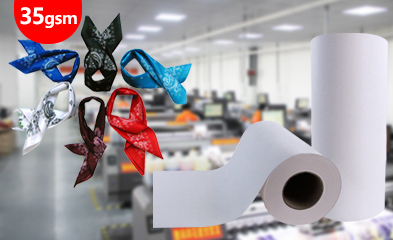
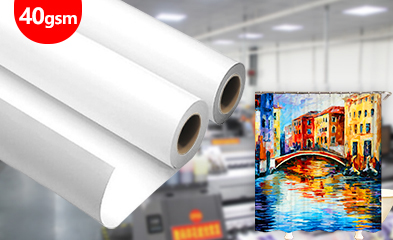
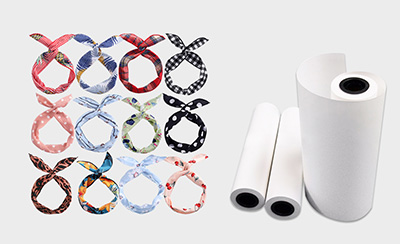
APPLICATION
Phone:+86-15215969856 E-Mail: 396838165@qq.com
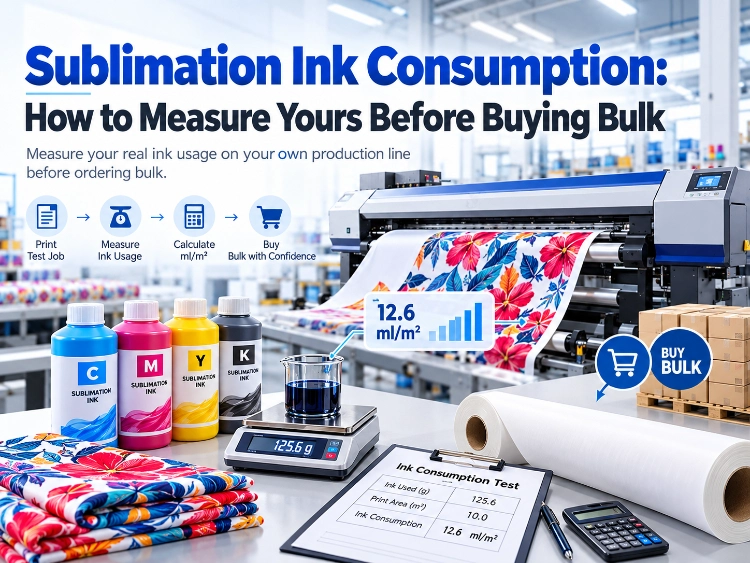
The barrel order said 20 litres. The work that would drink it was booked in metres. The missing figure sat between them: millilitres per square metre on the shop’s own line, with its own Sublimation Ink, the Sublimation Paper, the fabric and the print mode that will run it.
What Does a Bulk Ink Quote Decide, and What Is Left Open?
The litre price, and the line it leaves blank
A bulk quote settles one number, the price per litre, and leaves the expensive one open: how many millilitres a square metre of fabric will take on the press that runs the job. That second number is the one you’ll actually pay against. Bulk ink arrives in barrels and bulk packs, or as one-litre bottles packed twenty to a carton. The litre price covers all of those formats. The consumption figure is what decides the cost of the work.
A dealer’s average beside the shop’s own counters
An average quoted by a dealer, or read off a supplier calculator, was built on other machines, other patterns and other ink limits. Supplier calculators often state the assumption they lean on. The common one is a solid fill across the whole page, which is the most ink a sheet can hold. That assumption is a ceiling. Your own press sets the number you order against.
Barrels are bought in litres, work arrives in metres
Ink is bought in litres. Fabric is measured in metres. Consumption per square metre is the bridge. Take it away and the purchase order sits in litres while the plan sits in metres.
The ink that never reaches fabric
Head checks, capping flushes, purges at job and colour changes: each of them pulls ink out of the container and puts nothing on the fabric. A rate that counts printed output alone describes a press that cleans itself for free.
Five figures to settle before ordering
Five figures belong on the decision sheet. How many metres the period will run. How much ink a square metre takes, measured on the press. What cleaning draws in a week. What transfer efficiency the press setting gives. What lead time the last delivery took.
Which Production Variables Set Ink Consumption per Square Meter?
Coverage: the design file sets most of the draw
Coverage moves the figure further than any machine setting. A full-bleed photographic panel and a light front print ask the same press for very different volumes. The design file records which one is about to run. Solid coverage across a whole sheet puts ink on every square centimetre. A logo on a shirt front leaves most of the sheet dry.
Ink limits, passes and the profile in use
A RIP profile sets an ink limit. That limit caps the ink the heads lay down. Pass count decides how much of it reaches the paper. Two profiles on one press draw different volumes from the same file. The profile name goes on the job record, beside the ink and the paper.
Cleaning cycles that print nothing
Automatic cycles draw ink. So do manual flushes. So does the purge after a nozzle check. None of it touches fabric. Keep the volume on its own line, and it can be added back when the rate sizes an order.
How much printed ink lands on the jersey
Transfer takes 225 degrees Celsius and 20 seconds. That setting moves 95 to 98 percent of the ink on the paper into the fabric. The rest stays on the sheet. A cooler press or a shorter dwell leaves more of it behind, so the same printed volume delivers less colour at a higher cost per square metre.
Two fabrics, two rates
A light interlock and a heavier knit take different volumes for the same depth of colour. Fibre, weight and finish set the difference. The rate that counts comes off the fabric about to run.
How Should a Shop Measure Consumption on Its Own Line?
Write down the machine, ink, paper and fabric
The record comes before the arithmetic. Printer and printhead. Ink series and batch. Paper grade and roll width. Fabric and lot. RIP profile. Print mode. Print width joins them in the same record. Stock paper runs 29 gsm to 100 gsm, on 2-inch and 3-inch cores.
Print the real pattern, not the test chart
A test chart covers a share of the sheet that no order repeats. A few metres of the real pattern beat a page of test bars. Run them at the job’s speed and resolution, then measure that run.
The bottle on the scale, morning and midday
The ink container sits on the scale at the start of the run. It goes back on at the end. The difference is what the run drank. Divide by the square metres printed in that window, so the cleaning volume stays in the figure.
Divide the millilitres by the square metres
The arithmetic is short. Millilitres drawn, over square metres produced. For a figure that will size an order, cleaning volume goes into the numerator. It came out of the same barrel as the ink that reached the fabric.
Run it twice before ordering
Run it again on another day: same machine, same ink, same paper, same fabric, same profile. Two readings in close agreement are safe to order against.
How Does a Measured Rate Become a Cost per Square Meter?
From litre price to cost per square metre
Pack volume divided by the measured rate gives the area one pack covers. Divide the pack price by that area. The ink cost per square metre falls out. For illustration, assume a draw of 1.5 millilitres per square metre on a one-litre bottle: that bottle would cover about 660 square metres. Spread the bottle price across those square metres and the ink line is set. Millilitres with millilitres, metres with square metres, and two quotes sit on comparable numbers.
Paper, fabric, press hours and the second operator
Under the ink rate sit paper per square metre, jersey per square metre, press hours against metres run and operator minutes per run. A lower litre price moves the ink line and leaves the other four where they were.
Approve colour before the cost sheet
A cheaper ink can move colour after transfer. The rework lands on the same cost sheet as the saving. Colour approval goes on the fabric that will carry the print, before the ink line is priced.
Compare two inks on one combination
Change the ink and nothing else. Same pattern, same paper grade, same fabric lot, same press setting. Give the trial a second variable and absorption or transfer can cover for the ink, so the comparison stops saying anything about either one.
The rate belongs to the line
Print width, cleaning routine and ink limit differ from press to press. Every press carries its own rate on the same ink. Each line that draws its own barrel needs its own figure.
How Should Bulk and Barrel Offers Be Compared Before Ordering?
Pack size, handling and the price per litre
The biggest pack carries the lowest litre price. A barrel brings a pump, a bunded store and a rotation plan. Pack size belongs against the volume the line draws in a period.
Series and pack format against the measured rate: 1513 Series CMYK Sublimation Ink, 1962 Series CMYK Sublimation Ink, 1983 Series CMYK Sublimation Ink
Changfa Digital supplies CMYK sublimation ink in several series. Packs run from one-litre bottles, twenty to a carton, up to barrels and bulk packs for wholesale. Three series cover the range: 1513 Series CMYK Sublimation Ink, 1962 Series CMYK Sublimation Ink and 1983 Series CMYK Sublimation Ink. Each carries its own packaging reference. Pack format is a series decision as well as a volume decision. Size it from the volume the line draws.
A swatch from every new lot
A swatch of the new lot beside the previous one, run on the same paper before the job goes up. Neutral greys move first, and a shift caught here is a re-profile rather than a rejected order.
Store temperature and rotation against order size
Paper stays sealed in a dry room. Changfa Digital keeps its own rolls around 40 to 50 percent humidity. Ink containers stay closed, dated, and rotated oldest first.
When a cheaper litre costs more per square metre
A cheaper litre can raise cleaning volume, slow the run, or push colour rework. Each one lands on the cost per square metre. The litre saving has to cover all three.
When Should the Rate Be Re-measured and How Is It Kept?
Ink, paper, fabric or print mode changes
Change the ink series or batch, the paper grade, the fabric, or the print mode, and the old rate is out of date. Re-measure, and move the reorder point with it.
A new printhead, pump, damper or cleaning routine
A new head draws more ink on the same metre count. Printed output will not show it. Maintenance goes on its own line, with a fresh measurement after the work.
One dated sheet per order family
One dated sheet per order family. Six lines: ink per square metre. Cleaning volume per week. Paper and fabric cost per square metre. Press metres per hour. Price per litre. Supplier lead time.
The reorder point from measured use
Metres the period expects, multiplied by the measured rate, plus the cleaning volume for the period, plus cover for the supplier lead time. The figure comes off the shop’s own press, which is what makes it worth ordering against.
The sheet as a supplier brief
Send that list to Changfa Digital. Printer model. Printhead. Series and pack in use. Paper grade. Roll width. Fabric. Run length. The defect on the line now. The measured rate. The cleaning volume. That is how the recommendation ends up matching the combination.
Conclusion
A rate belongs to one machine, one print mode, one ink, one paper and one fabric. Count the millilitres that leave the tank, cleaning included, divide by the square metres off the press, and that sheet carries the cost per square metre and the reorder point.
FAQs
Q1: Can a supplier consumption figure be used as our buying benchmark?
A1: Use it as a cross-check. It came off another machine, another pattern and another ink limit, so the benchmark for an order is the rate measured on the shop’s own press.
Q2: How many test runs are needed before the rate is used for a bulk order?
A2: Two runs of the same locked combination, on different days. Close agreement between them is what makes the figure safe to size an order with; a single run only gives a starting point.
Q3: Does a lower price per litre always lower the cost per square meter?
A3: Only while the measured rate holds. Change the ink, the ink limit or the transfer result and the cost follows the new rate, whatever the litre price says.


