


HOT SALE
APPLICATION
Phone:+86-15215969856 E-Mail: 396838165@qq.com
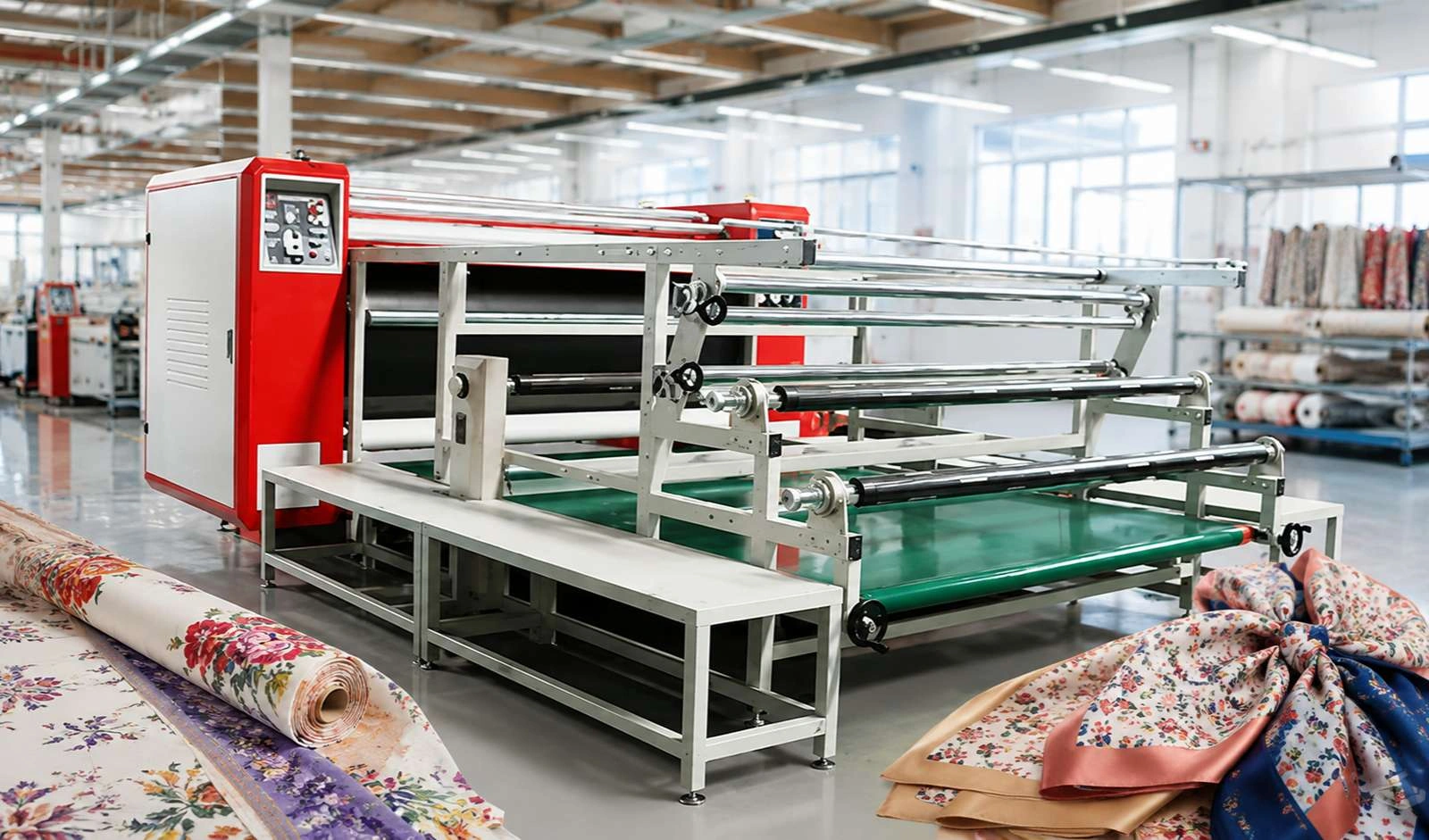
In large-scale projects, problems often arise from a minor mismatch: the printer runs faster than the transfer line, the working width is too narrow, or pressure changes from one side of the roller to the other. After several hundred meters, those small differences become color variation, rework, material waste, and delayed shipment.
What Is a Heat Transfer Machine?
A heat transfer machine uses heat, pressure, and controlled running time to move dye from printed sublimation paper into polyester fabric or coated materials. During sublimation, the dye changes into gas under heat and bonds with the material instead of remaining as a thick surface layer.
The machine controls the final transfer stage. It affects color release, image sharpness, edge definition, fabric coverage, and production consistency.
A machine may have a strong heating system, but that alone does not guarantee good results. The transfer paper must dry properly, the ink load must suit the paper, the fabric must be compatible, and the roller must maintain stable contact. Products such as sublimation paper should be tested under the same conditions planned for bulk production.
How Heat Transfer Fits into the Sublimation Workflow
The typical production chain is Design file → RIP processing → Printer → Sublimation ink → Sublimation paper → Drying and rolling → Heat transfer → Polyester fabric → Cooling → Inspection.
The heat transfer machine sits close to the end of this process, so defects at this stage are expensive. A weak transfer cannot always be corrected later. If the color is light, the edges are unclear, or the fabric receives uneven pressure, the finished roll may need to be reprinted or rejected.
This is especially important for sportswear, home textiles, flags, banners, and other products that are produced in long runs. A short sample may look acceptable while a full roll reveals uneven color or unstable winding.
Start with the Application Requirements
Before comparing models, define the work the machine must handle. A large sportswear order may need continuous operation and consistent processing of elastic polyester fabric. A flag or banner project may require a wider working area and careful control of the fabric’s backside. A mixed production line may need several widths and different speeds rather than one machine running at maximum capacity all day.
If the application is unclear, the machine may be technically capable but commercially unsuitable. The result can be low utilization, frequent changeovers, or a transfer stage that limits printer output. The best test uses the actual fabric, printed paper, ink, pattern density, and planned production length.
Match the Roller Width to the Production Line
Roller diameter and effective width directly affect the machine’s working range. The paper, fabric, printer, and protective paper should fit the same production width. A wider printer does not help if the transfer machine cannot handle the roll.
|
Model |
Roller diameter |
Effective width |
Transfer speed |
|
JM-800 |
800 mm |
1700 / 1900 mm |
300-500 m/h |
|
JM-600 |
600 mm |
1700 / 1900 mm |
120-300 m/h |
|
JM-420 |
420 mm |
1700 / 1900 mm |
80-200 m/h |
|
JM-200 |
200 mm |
1200 / 1700 mm |
20-60 m/h |
If the width is too small, fabric edges may need extra handling, layouts may require splitting, and edge waste can increase. The test should place the full-width paper, fabric, and tissue paper on the machine and check whether the active transfer area is covered without exposed or contaminated edges.
Check Temperature Control, Not Just Maximum Temperature
Sublimation transfer depends on stable heat. The important point is not simply whether the machine can reach a high temperature. It is whether the temperature remains consistent across the roller and during long operation. Poor control can cause incomplete dye release, pale color, left-to-right variation, fabric damage, or higher reprint rates.
Use the intended operating temperature, the same paper, the same fabric, and the planned running speed. Measure the left side, center, and right side of the working area, then repeat the check after continuous operation. The listed models describe heating time as about one hour when reaching 200°C, using that condition as an example; actual warm-up time should be confirmed for the selected configuration.
Evaluate Pressure Stability Across the Full Width
Pressure determines how evenly the printed paper and fabric contact the heated roller. A pressure problem may not appear in a narrow test, but it becomes obvious on a wide textile roll. Insufficient or uneven pressure can lead to weak transfer, left-to-right color differences, missing details, and unstable results on thicker or elastic fabrics.
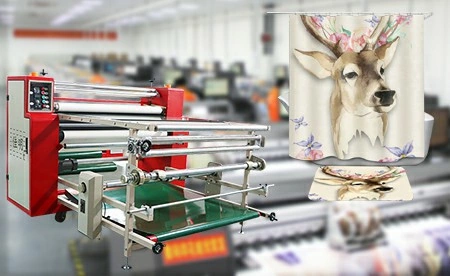
Changfa Digital’s JM-800 and JM-600 are listed with double pneumatic pressure systems, while JM-420 and JM-200 use single pneumatic pressure systems. The test should use a wide pattern with solid blocks, fine details, and gradients. Inspect the left, middle, and right sections after transfer.
Match Transfer Speed with the Whole System
The machine’s published speed is only one part of the calculation. Real production speed must match printer output, ink volume, paper drying, fabric handling, and cooling capacity. Running too fast may cause incomplete transfer, ghosting, poor color density, unstable winding, or paper misalignment. Running too slowly can leave the printer waiting and raise labor and energy cost per meter.
Compare low speed, normal planned speed, and the upper speed expected during busy periods. Check the beginning, middle, and end of the roll for color, edge sharpness, drying, winding tension, blanket cleanliness, and back staining.
Estimate Maintenance Cost Before Purchase
Large projects turn maintenance into a production issue. Cleaning stops, operator time, rejected fabric, and delayed delivery may cost more than the replacement part itself. Review blanket cleaning frequency, heating components, rollers, bearings, pneumatic parts, conveyor alignment, spare parts, and recommended service intervals.
Protective tissue paper also belongs in this calculation. Tissue paper can help reduce dye residue, backstaining, blanket contamination, and cleaning interruptions. Changfa offers 30gsm white and grey paper in common widths of 160 cm, 162 cm, 180 cm, and 182 cm, with a standard roll length of about 1000 m.
Run the protective paper with the actual transfer paper, fabric, temperature, pressure, and speed. After a long run, inspect the blanket, fabric backside, paper edges, and winding condition.
Confirm After-Sales Support and Spare Parts
A machine purchase is also a service decision. Before approval, confirm installation, commissioning, operator training, remote troubleshooting, warranty coverage, and spare parts availability. Ask about heaters, bearings, belts, pneumatic parts, control components, maintenance instructions, and technical response time.
Changfa Digital Service can support discussions involving samples, OEM/ODM requirements, and process matching. The product range also includes paper, ink, printers, heat transfer machines, and protective paper, which is useful when the consumables and equipment need to work as one line.
For large orders, the supplier should confirm that the tested configuration will remain unchanged in mass production. A small change in roller setup, paper width, ink, or control settings can affect the final result.
FAQ
Q1: What is the most important factor when choosing a heat transfer machine for a large project?
A1: The most important factor is system matching. Working width, temperature stability, pressure uniformity, transfer speed, fabric type, and printer output must fit together. A high published speed may still create rework if the paper is not dry or the fabric cannot run steadily at that speed.
Q2: How should buyers test a heat transfer machine before placing a bulk order?
A2: Use the actual sublimation paper, ink, fabric, pattern, temperature, pressure, and planned running speed. Run a long roll and compare the beginning, middle, and end for color, transfer strength, edge clarity, winding, blanket cleanliness, and back staining.
Q3: Why should tissue paper be included in the machine test?
A3: Tissue paper protects the transfer environment. It helps reduce dye residue on the blanket and unwanted marks on the fabric’s backside. Its width, flatness, winding stability, and replacement timing should be checked under real production conditions.


